Innovative electric heater system for molten salt for the electrification of high-temperature industrial processesNEILOS
In the NEILOS research project, researchers are developing solutions for the decarbonisation of industry through the electrification of high-temperature process heat. As cheap surplus electricity from renewable sources is only available for a limited time, the project uses molten salt as an efficient storage medium to close the gap to a constant heat supply.
The focus here is on the recovery of hydrogen from ammonia (NH3 cracking). By using molten salt as a heat transfer medium at temperatures of 600 to 650 °C, conventional burner-heated systems can be replaced. This not only increases the efficiency and service life of the systems, but also significantly reduces the cost of hydrogen production. This is a decisive step for the industrial utilisation of green energy sources in Germany.
Molten salt as the key to high-temperature processes above 600 °C
While the current state of the art for molten salt components is around 560 °C, NEILOS pushes the limits to over 600 °C. This increase in temperature makes it possible to open up new process heat applications and significantly increase the storage capacity with the same salt mass. In the project, critical key components such as salt pumps, valves and innovative salt electric heaters are being developed and tested under real conditions in the technical centre. Particular attention is being paid to materials research in order to control corrosion and salt decomposition under these extreme conditions. The technological basis for large-scale industrial applications is laid by demonstrating a pumped circuit with over 2,000 targeted operating hours.
Innovative ammonia cracker for the hydrogen economy
Ammonia is considered one of the most promising chemical carriers for importing hydrogen over long distances. An endothermic cracking process is required to release the hydrogen at its destination (e.g. a German seaport). NEILOS is developing a concept for a new type of plate reactor that is heated directly with molten salt. In contrast to burners, the salt ensures an even temperature distribution, which enables the use of cost-effective catalyst mixtures and prevents material wear due to temperature peaks. The initial aim of the NEILOS project is to achieve a hydrogen yield of over 90 % at a throughput of 5 kg/h on a pilot plant scale.
Sector coupling reduces costs and saves resources
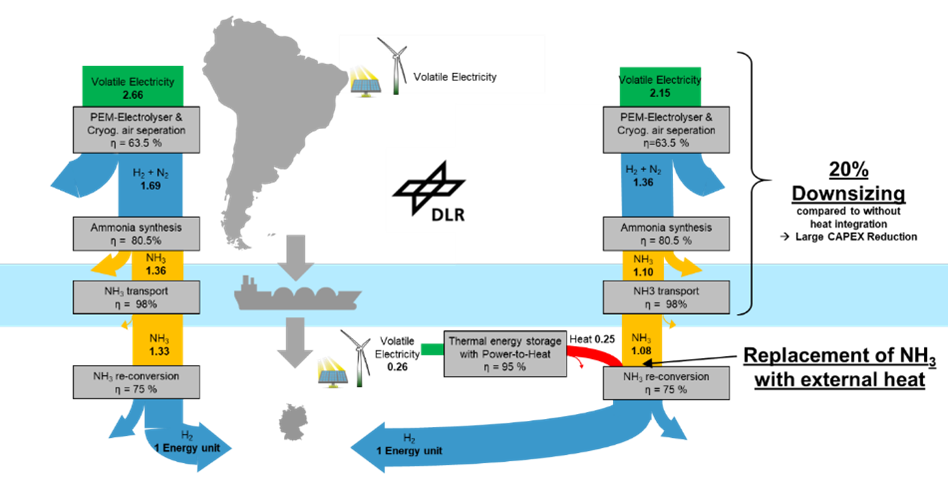
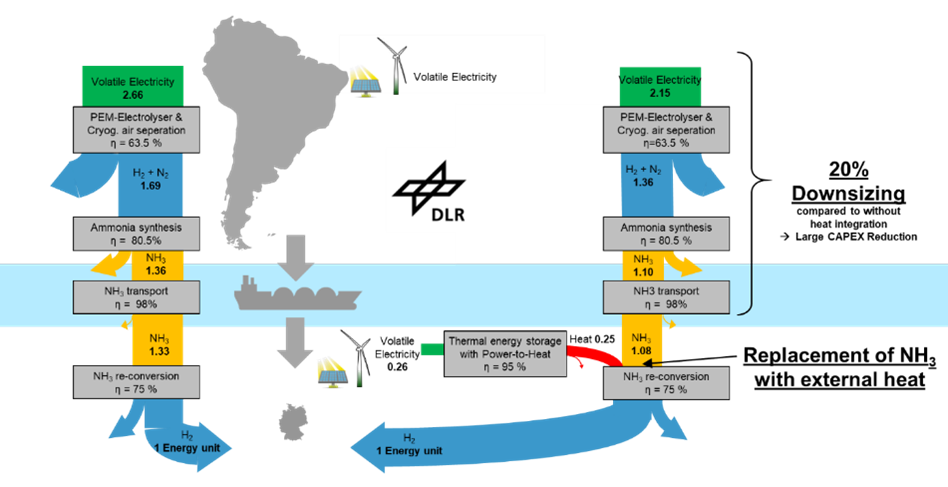
The integration of thermal energy storage (TES) into the hydrogen supply chain allows for optimal sector coupling. By temporarily storing energy in the form of heat, the installed capacity for electrolysis and ammonia synthesis can be reduced by around 20 %. This leads to considerable savings in investment costs (CAPEX). The results from NEILOS are to be incorporated directly into the planning for real industrial sites, such as the Aurubis plant in Hamburg, in order to demonstrate the economic feasibility of hydrogen production from ammonia.
Aim of the project
The development of robust, industrially scalable components for the energy transition in order to establish Germany as a technology leader for green hydrogen infrastructures.
NEILOS at a glance
Project | Innovative electric heater system for molten salts for the electrification of high-temperature industrial processes (NEILOS) |
|---|
Duration | 1.2.2026 - 31.7.2029 |
| | - DLR Institut für Technische Thermodynamik
- KSB SE & Co. KGaA (KSB)
- Siemens Energy Global GmbH & Co. KG (SE)
- Universität Rostock (UR)
- GESMEX Exchangers GmbH (GESMEX)
- Outokumpu Nirosta GmbH (OTK)
- GRAP-Green Ammonia Power GmbH
- Aurubis AG
|
Support | BMWE Basic funding of the DLR |