Modular, chemical-independent battery system for satellites
PULSE
In the PULSE project, researchers at the DLR Institute of Engineering Thermodynamics are developing a modular battery system that combines different cell chemistries and system architectures in a common structure. The aim is to create a versatile energy system for space applications in the field of CubeSats and small satellites using flexible electronics and autonomous software as well as a scalable structure.
A central element is the development of advanced algorithms for determining the state of charge (SoC) and the state of health (SoH), which enable precise and robust monitoring of the battery during operation. The focus is on lithium-sulphur technology, which offers a significantly higher energy density and lower weight than today's lithium-ion cells.
PULSE Modular Battery System
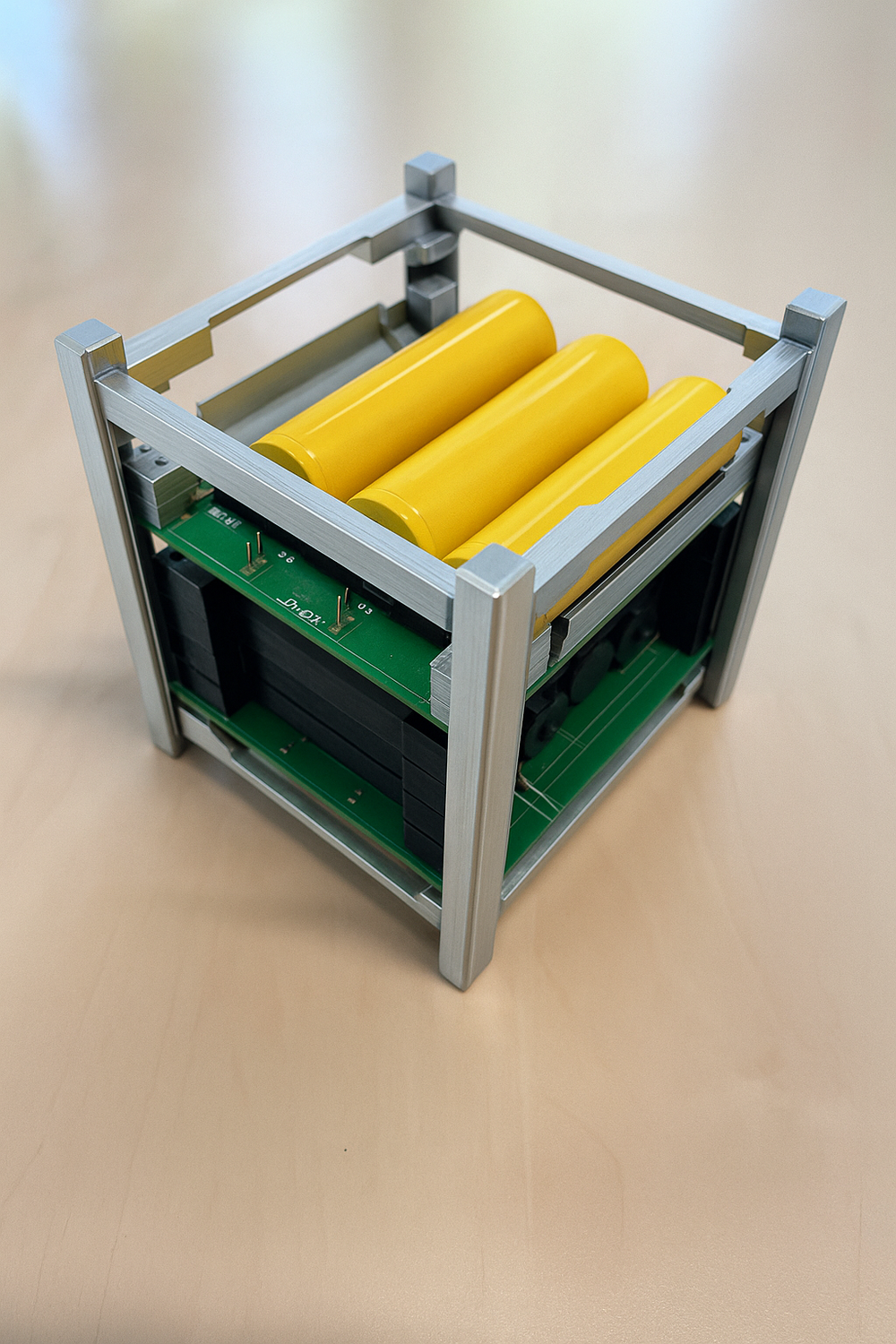
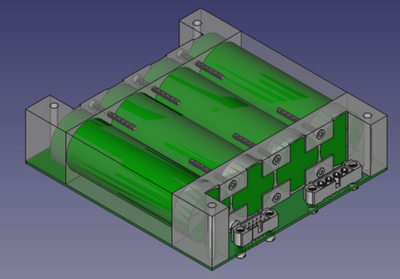
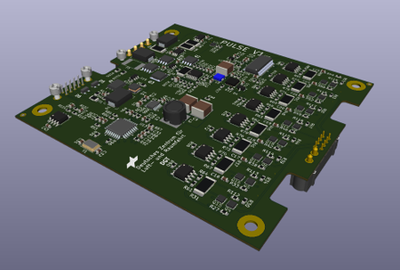
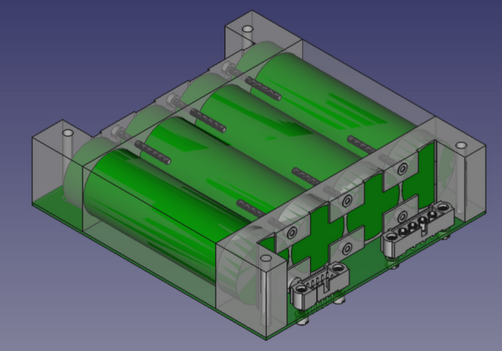
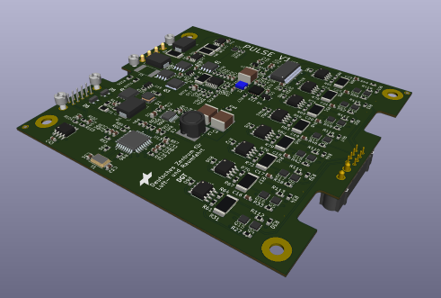
Variations of the modular and scalable PULSE battery System with structure, electronics and battery cells
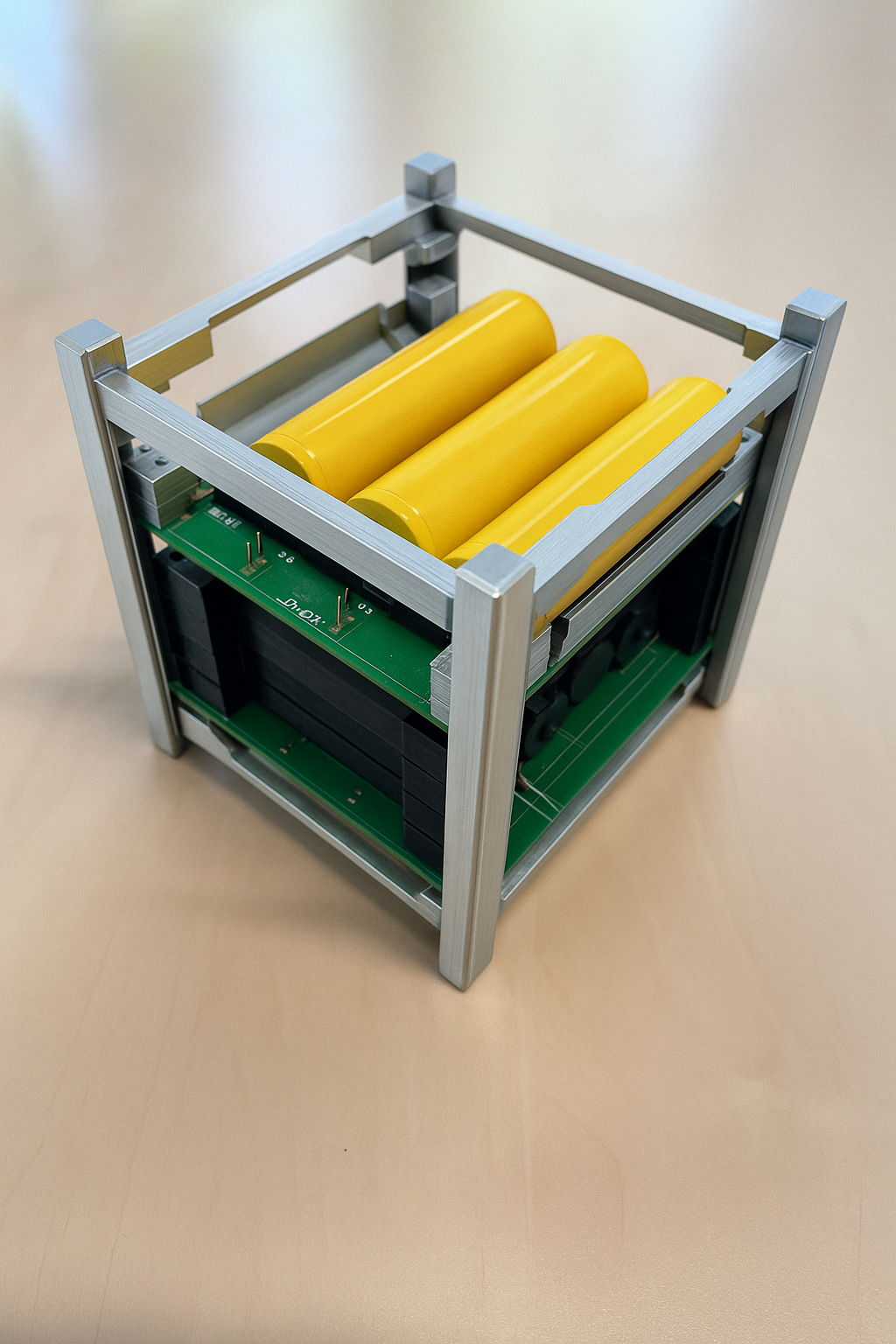
Modular battery system with cylindrical cells and integrated electronics
The exhibit shows a battery system in the CubeSat form factor with cylindrical cells, structured aluminium frame construction and integrated electronics. This design allows the flexible integration of different cell types and operating strategies.
The development includes electrical and thermal modelling as well as tests in realistic environments to investigate the behaviour and reliability of new cell chemistries.
Multi-chemistry capability: A platform for the batteries of the future
The PULSE system has been designed to support cell chemistries ranging from classic lithium-ion to post-lithium systems such as lithium-sulphur or solid-state cells.
Modular interfaces allow hardware and software to be quickly customised without changing the overall system. The integrated software platform enables autonomous condition monitoring and the implementation of SoC/SoH algorithms to record the health status of the battery in real time. This allows new cell types to be tested and characterised with minimal integration effort.
Future prospects: scalable architecture for space travel and beyond
The modular concept developed in the PULSE project serves as the basis for future satellite and mission-specific battery systems.
In the long term, the technology is to be transferred to scaled systems - for larger satellite platforms, aviation applications or ground-based energy storage systems.
With its combination of modular hardware, intelligent software and advanced state algorithms, PULSE contributes to the development of sustainable, high-performance energy storage systems "Made in Europe".
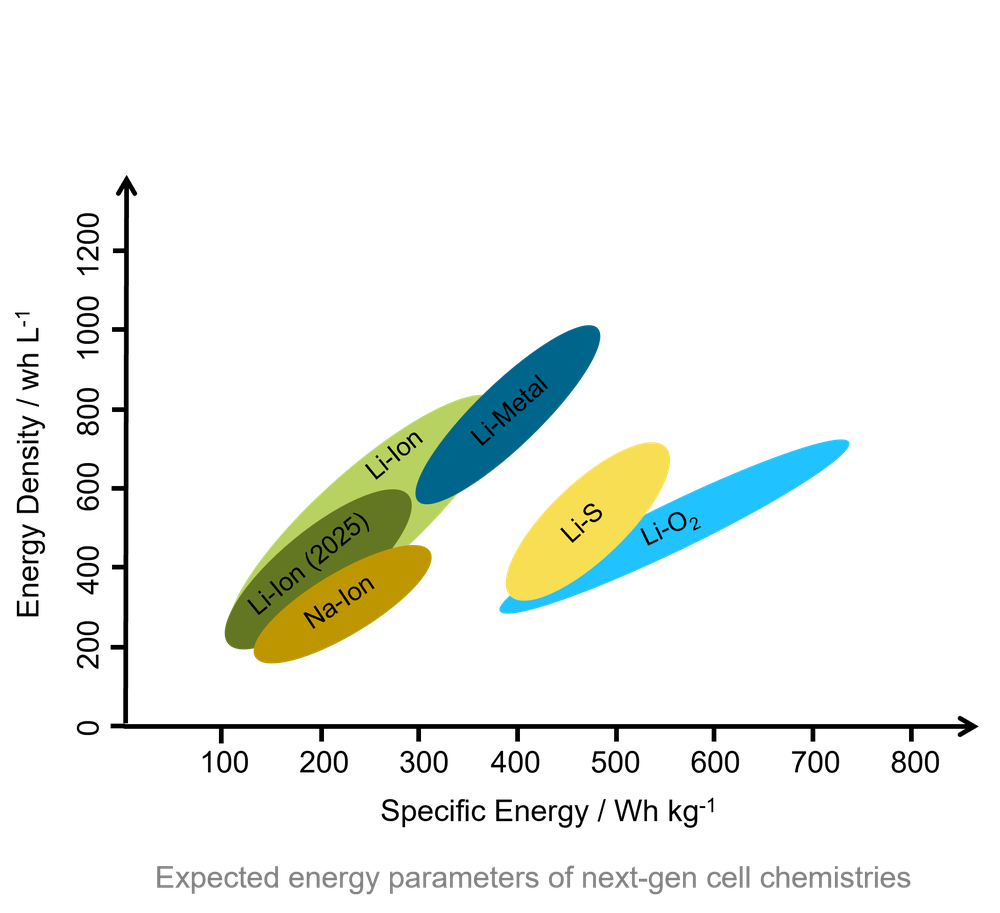
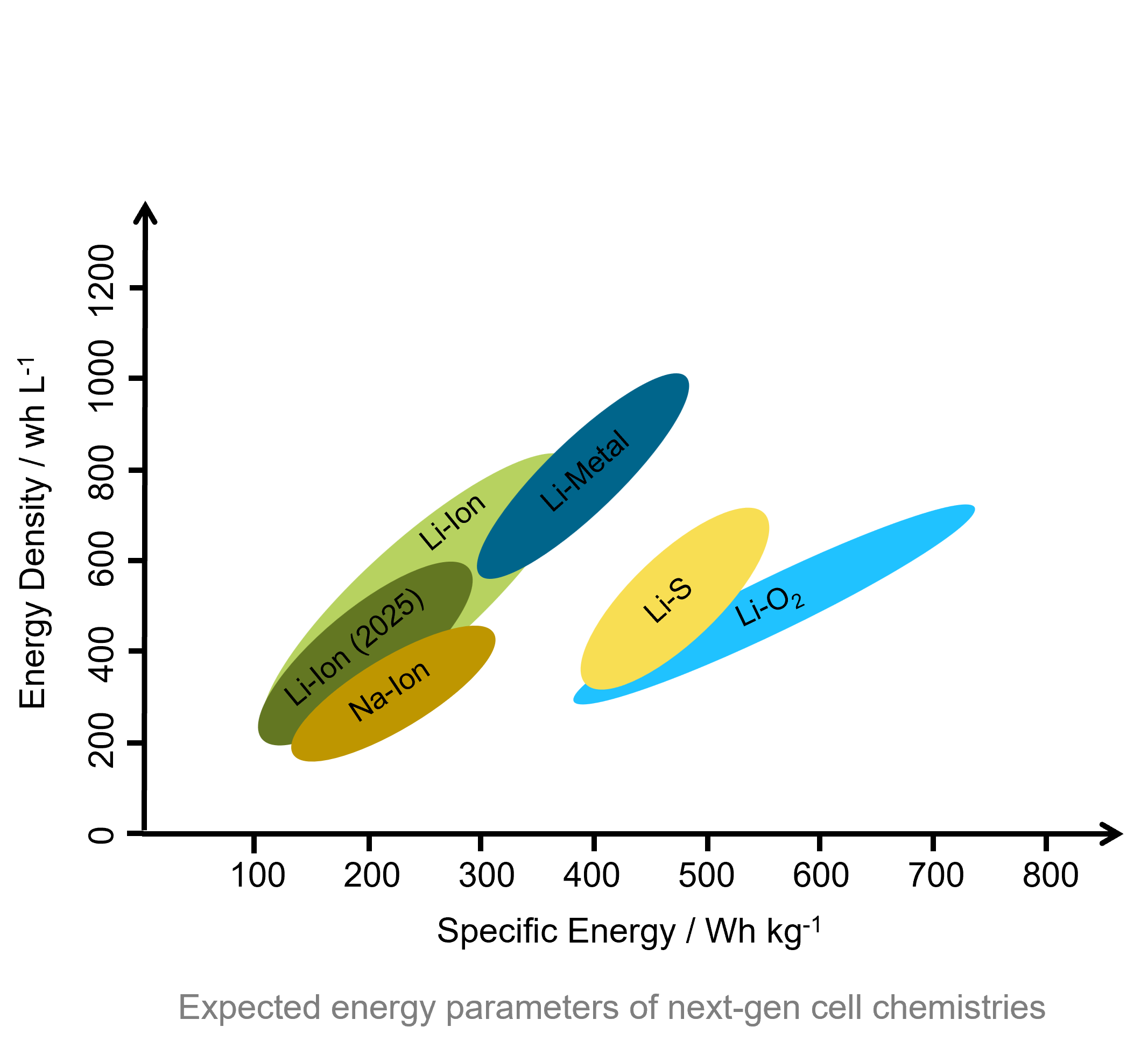
The future of battery cells - Overview of possible developments of different battery chemistries with the expected energy densities for each type
Edited [3] T. Placke, R. Kloepsch, S. Dühnen, and M. Winter, ‘Lithium ion, lithium metal, and alternative rechargeable battery technologies: the odyssey for high energy density’, J Solid State Electrochem, vol. 21, no. 7, pp. 1939–1964, Jul. 2017, doi: https://link.springer.com/article/10.1007/s10008-017-3610-7
The work in the PULSE project is a preparatory step towards modular battery systems that enable the use of new types of post-lithium cells in space applications. Intelligent software and advanced status determination methods are to be used to realise autonomous and safe battery systems for satellites in the future.
PULSE at a glance
Project
PULSE – Post-Lithium Ultra Capacity Spacecraft Energy System