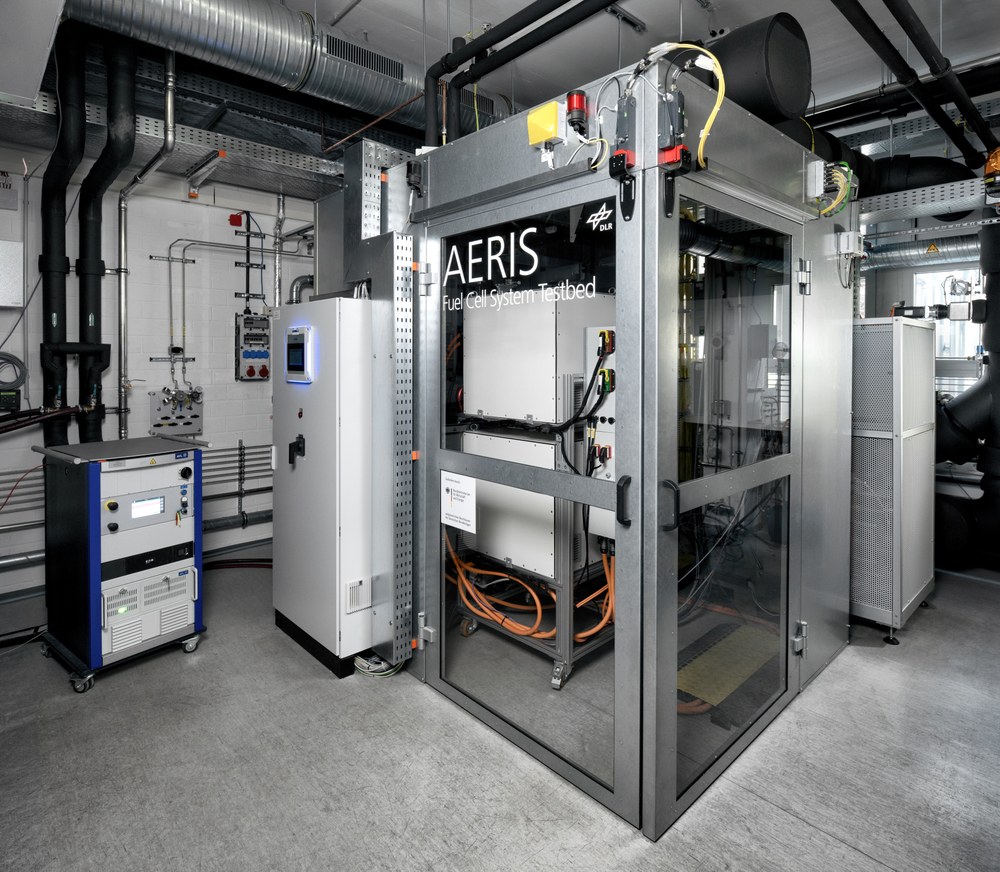
The AERIS altitude simulation test bench at the DLR Institute of Engineering Thermodynamics in Stuttgart enables the investigation of fuel cell systems with an output of up to 275 kW under aviation-relevant altitude conditions. Altitudes of up to 27,000 ft (8,230 m) can be simulated.
Fuel Cell System Test Bench
Test rig for operating fuel cell systems with an output of up to 275 kW under high-altitude conditions.
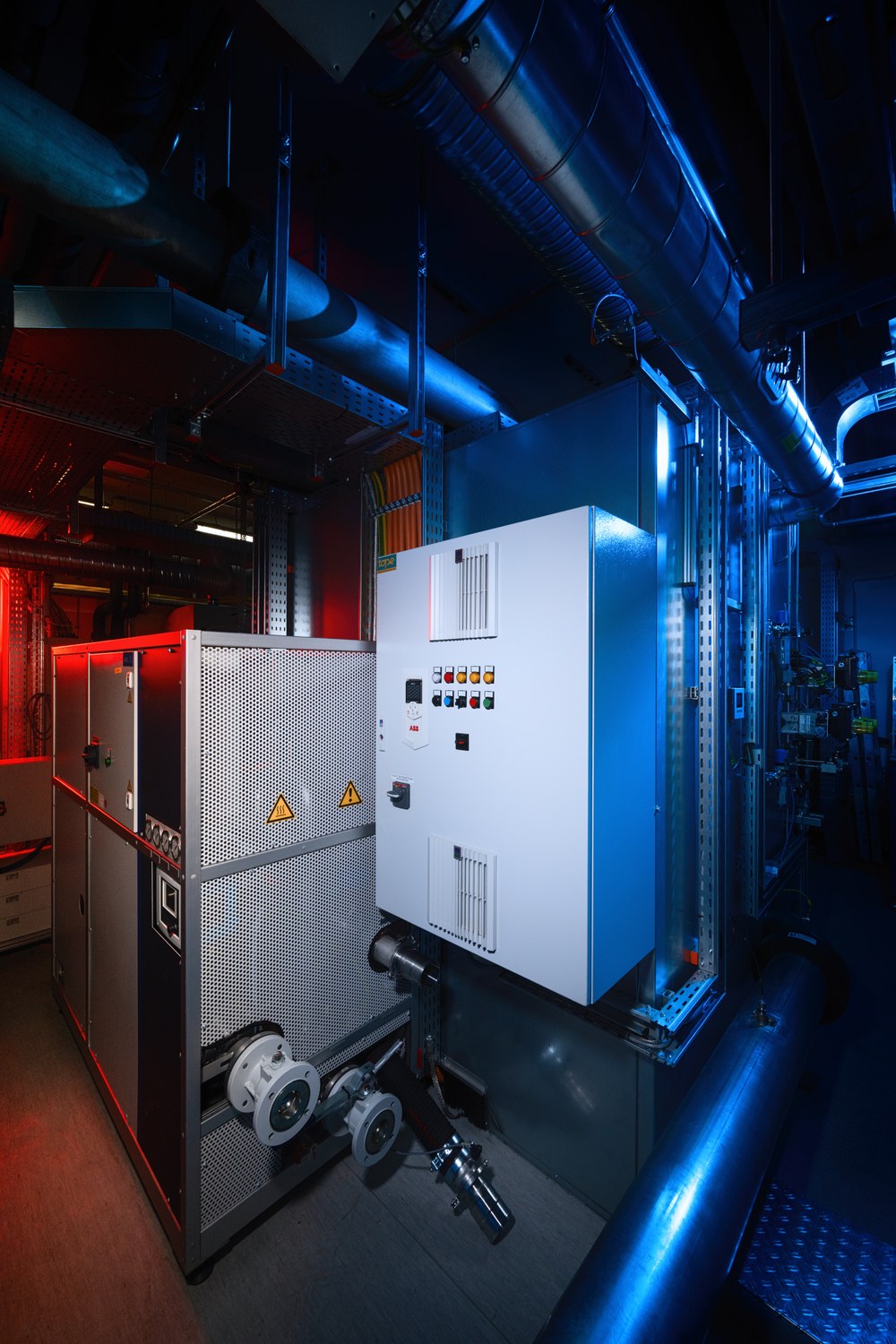
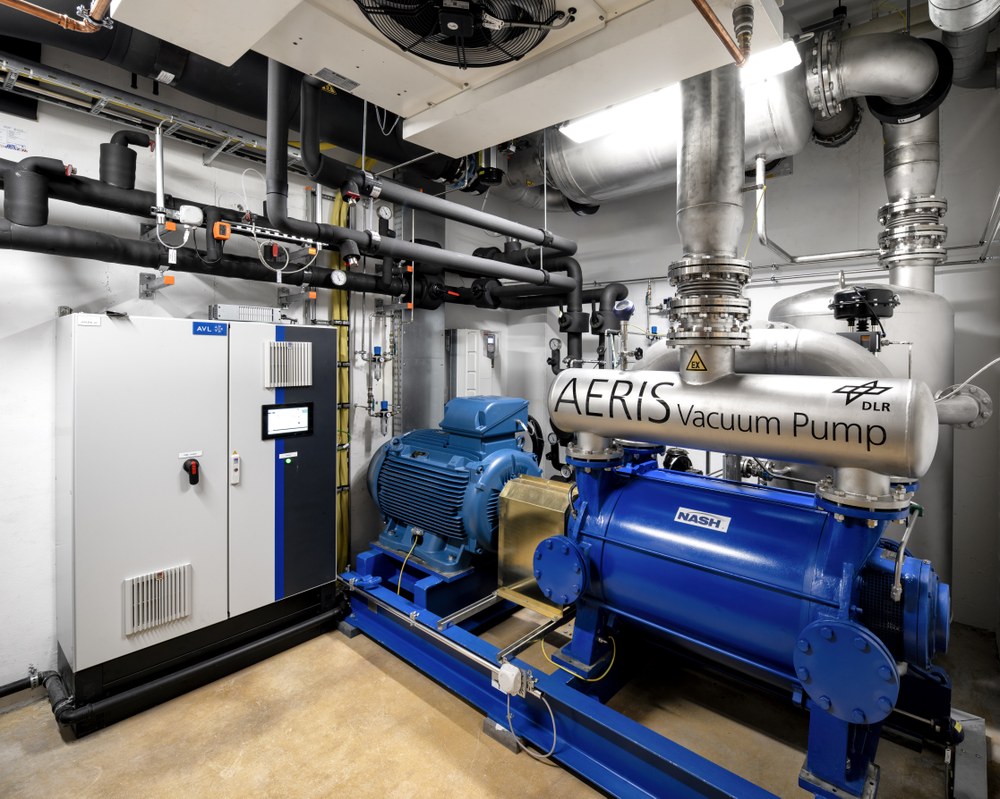
Fuel-cell-based propulsion systems offer great potential for decarbonizing the regional aviation sector. However, operating fuel cells (FC) at high altitude poses considerable technological and control-engineering challenges due to the demanding ambient conditions. The AERIS altitude simulation test bench enables the analysis of fuel cell systems under aviation-relevant conditions (low pressure and low temperature) at a relevant power class of up to 275 kW. The intake air and exhaust of the FC system are extracted via a vacuum pump, while the intake air is simultaneously dehumidified and cooled by a special conditioning system. This allows altitude conditions of up to 27,000 ft (8,230 m) to be simulated, advancing the development and optimization of FC-based propulsion systems for aviation. The AERIS altitude simulation test bench offers the opportunity both to answer current scientific questions and to support industry in developing aviation-grade FC systems.
Operating mode
Technical data:
Fuel cell systems with up to 275 kW output
Altitude simulation up to 27,000 ft (8,230 m)
Intake and exhaust air conditioning of the fuel cell: negative pressure down to 340 mbar(a), temperature down to -40 °C
Realistic simulation of flight profiles through highly dynamic operation