
Atomic Force Microscopy - Surface Analysis for Fuel Cells and Electrolysis
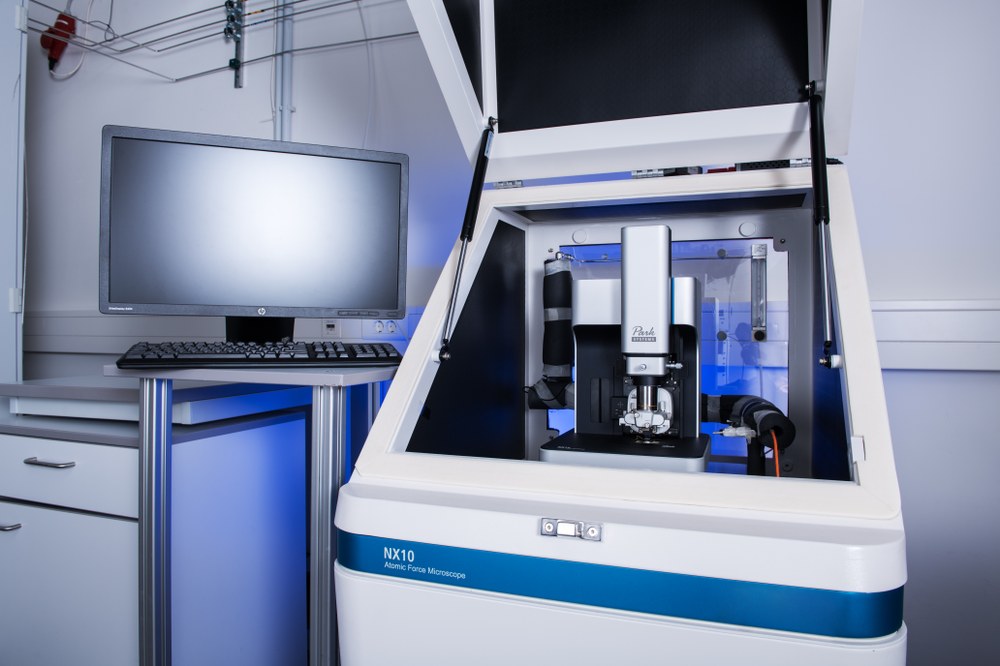
The atomic force microscopy research facility at the DLR Institute of Engineering Thermodynamics in Oldenburg enables nanoscale surface analysis of components for fuel cell and electrolysis applications. The visualization of surface structures and properties of components such as catalysts, membranes or bipolar plates provides important insights for materials optimisation and degradation analysis.


Research tasks
Atomic force microscopy (AFM) enables the investigation of surface structures and properties with a resolution ranging fromthe lower micrometer (µm) range down to nanometers (nm) . The measuring probe (the cantilever) scans the sample surface and, in addition to the topography of the sample, can record other properties through interaction between the measuring probe and the sample. These include, for example, electrical (conductivity, electrostatics, surface potential) and nanomechanical properties. Various properties can be determined simultaneously using different measurement modes and specialised cantilevers. The research facility thus enables the investigation of catalysts and catalyst layers, membranes and bipolar plates for energy applications. With certain restrictions, gas diffusion layers with or without a microporous layer can also be analysed. For example, atomic force microscopy is used to visualise the components of a catalyst layer so that the structure and composition of the layer can be improved. In addition, the morphology of catalyst particles is analysed. The knowledge gained is used for the optimisation of materials and components as well as for the analysis of ageing and degradation phenomena.

In situ and operando measurements in development
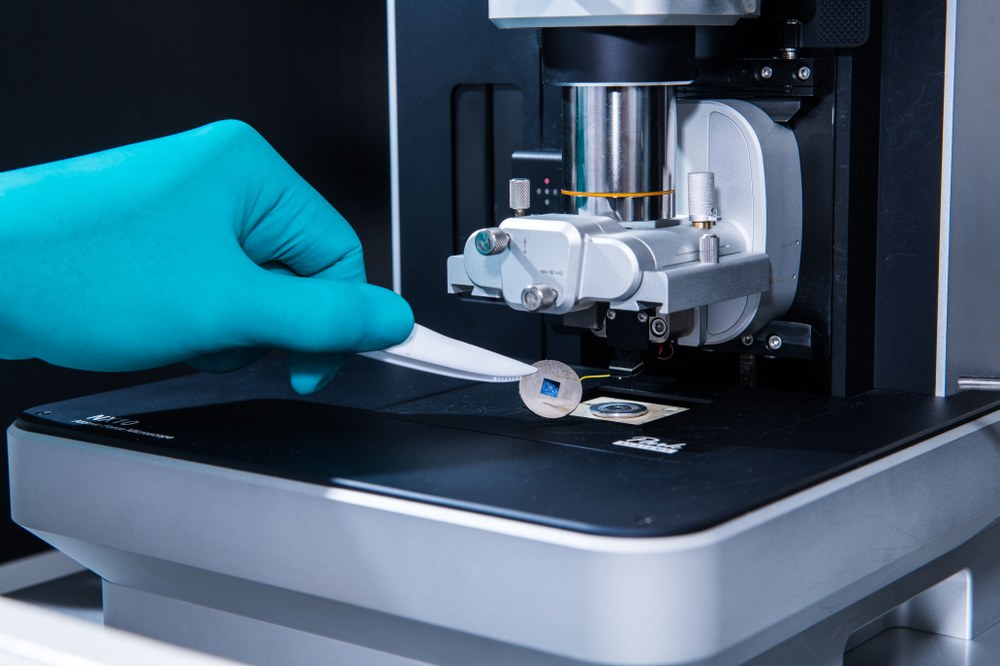
Various measuring cells, some of which were developed in-house, are available for analysing samples under application conditions. It is possible to measure under controlled environmental conditions such as in humidified gases or in electrolytes with different concentrations at defined temperatures. By replicating the real application conditions of fuel cells or electrolysers, in situ materials investigations are possible. The coupling of AFM measurements with electrochemical analyses is is in preparation and is intended to be available soon.