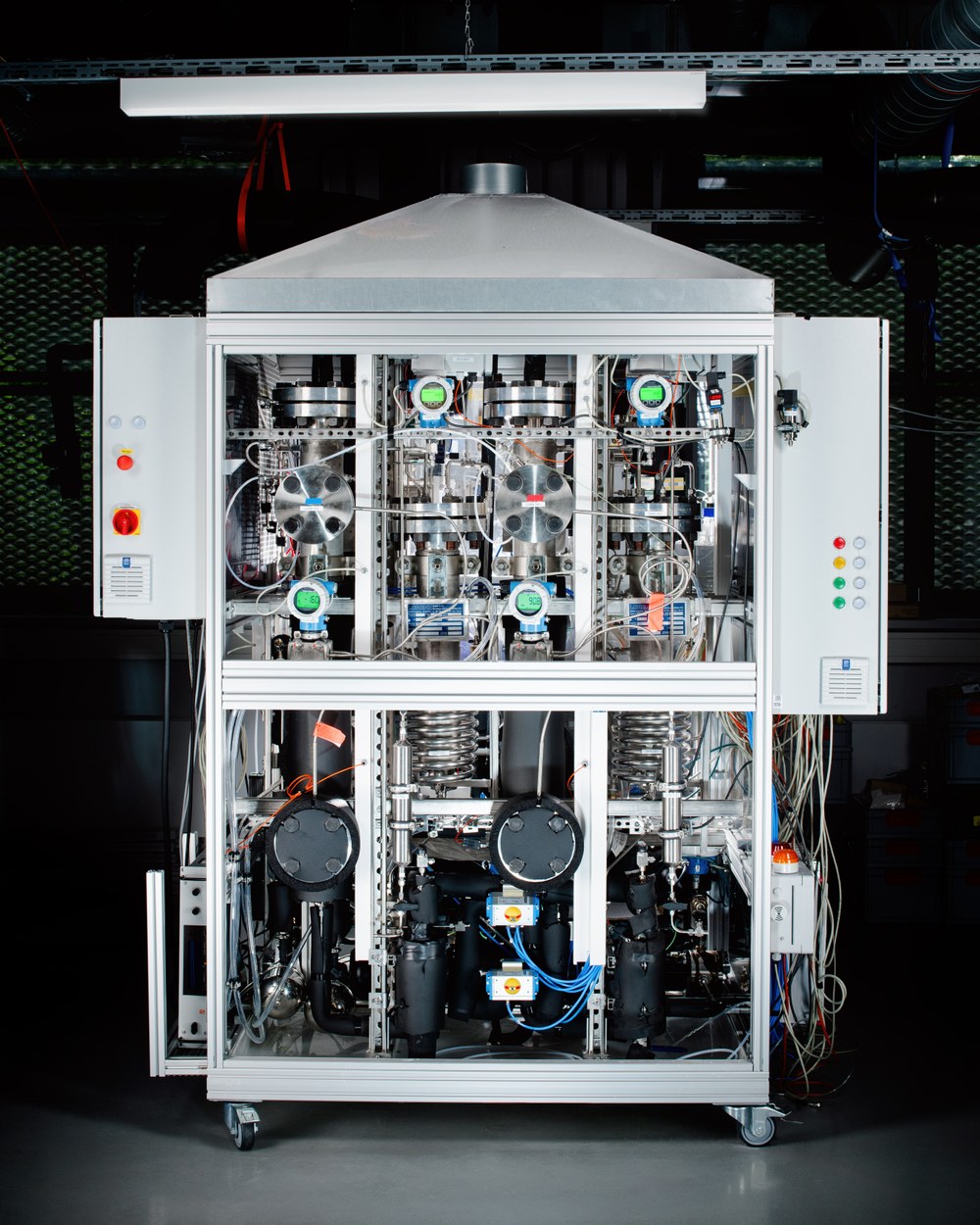
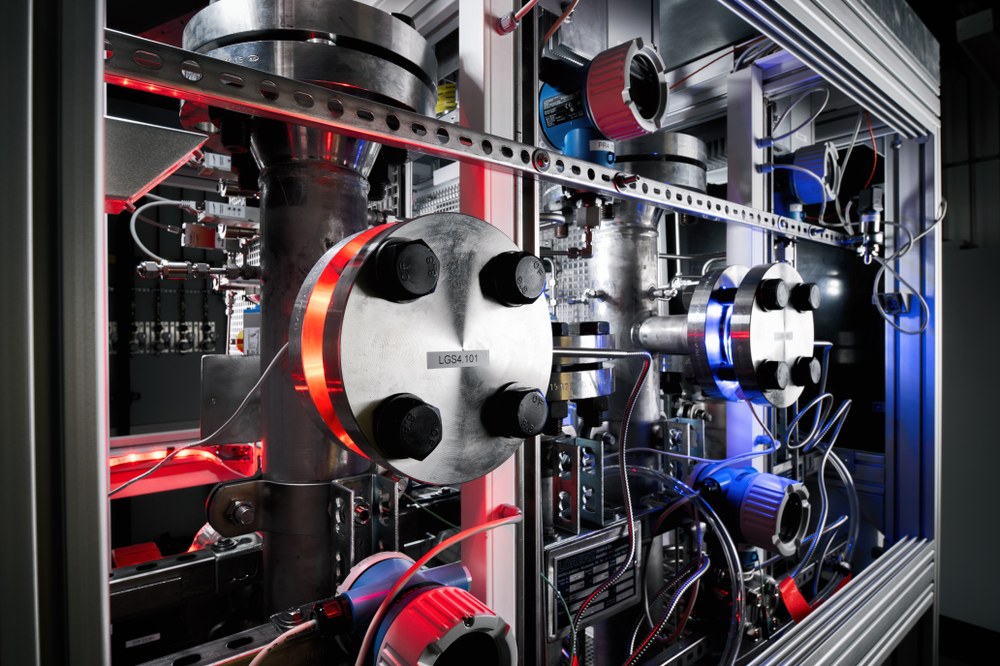
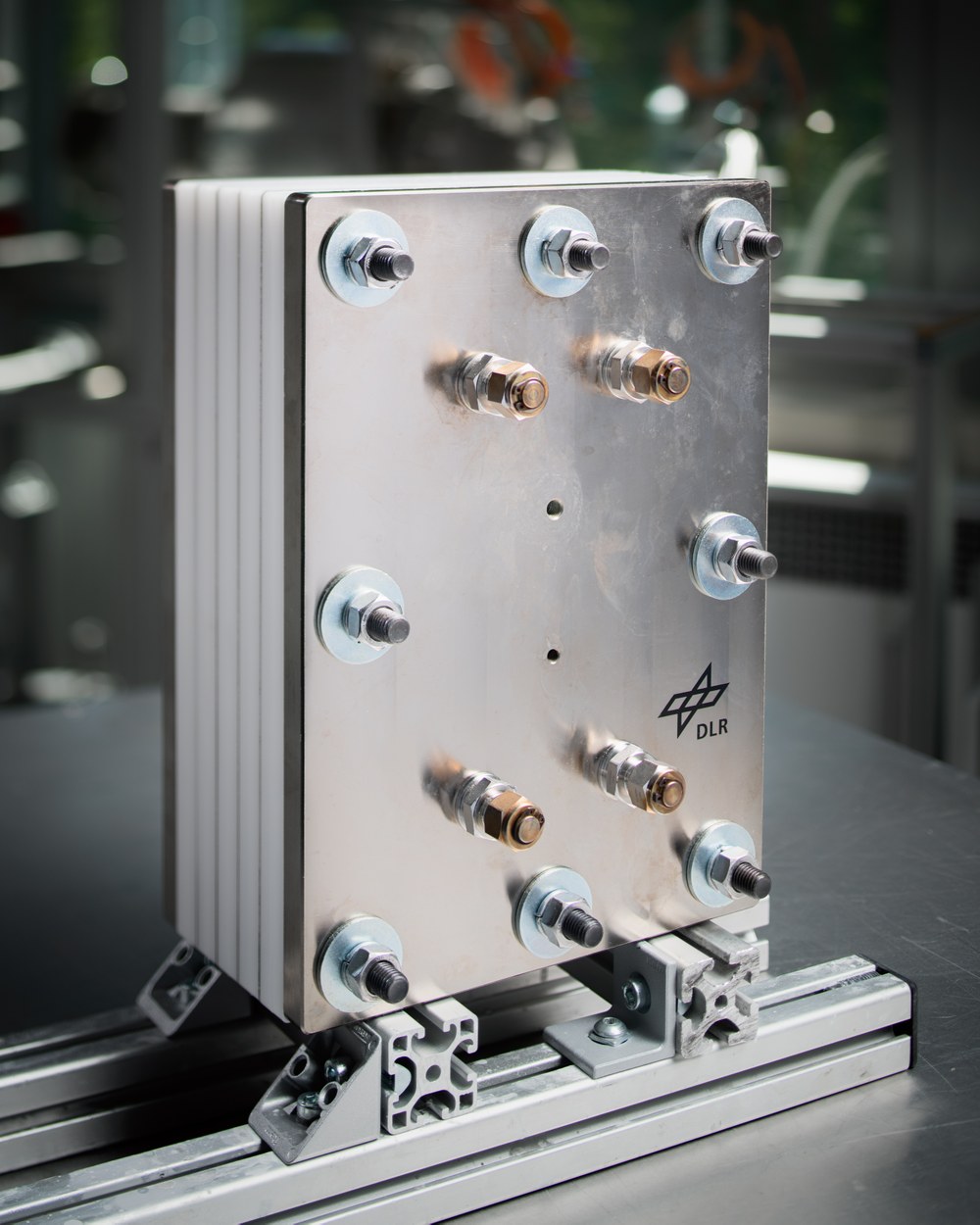
The ‘HERA’ electrolysis test rig is used to test and characterise experimental stacks for alkaline water electrolysis (AWE) and alkaline membrane electrolysis (AEM) under high pressure. The facility was developed and built at DLR Stuttgart by the “Low-Temperature Electrolysis Systems” (NTE) working group, and enables experimental investigations under particularly high operating pressures of more than 50 bar.
HERA electrolysis test rig
High-pressure electrolysis test rig for evaluating electrolysis stacks for alkaline water electrolysis and alkaline membrane electrolysis.
Characterisation and operation of high-pressure electrolysis stacks in short- and long-term tests
Dynamic operation of electrolysers and minimisation of gas impurities
Impedance measurements, power characterisation and degradation tests with electrolysis stacks
Experimental parameterisation and validation of models and simulations
The development of the test environment was supported by the BMWE project of the same name, ‘HERA’, and other projects.
Operating mode
Tests can be carried out with separate and mixed electrolyte circuits
Precise measurement of electrolyte density, temperature and flow rates enables short- and long-term characterisation of electrolysis stacks up to a power output of approx. 10 kW.
Measurement technology and media supply
The electrolysis test bench is equipped with an ultrapure water supply to minimise the impact of impurities in the feed water on stack degradation. Highly concentrated potassium hydroxide (KOH) is typically used as the electrolyte.
The power electronics are combined with an electrochemical impedance spectroscopy (EIS) system. Impedance measurements can thus be carried out in parallel at stack and cell level with up to 16 channels, enabling precise characterisation of stack properties during operation. Electronic pressure regulators maintain the operating pressure at a few millibars even at high values, thereby balancing the liquid levels in the gas separators whilst keeping the operating pressure constant. Coriolis mass flow meters are used to measure the electrolyte flow rate and concentration. The product gas passes through a gas scrubber and is subsequently dehumidified by cooling. Gas quality is measured at the outlet using gas sensors based on the principles of thermal conductivity and paramagnetic properties.
Gas separator and gas scrubber for hydrogen and oxygen, designed for operating pressures up to 100 bar
Characterisation methods such as electrochemical impedance spectroscopy (EIS) are intended to provide a detailed insight into the performance by identifying and quantifying cell and stack impedances. Thermal and paramagnetic gas sensors measure the concentration of foreign gases at the electrolyser outlet (O₂ concentration in H₂, and vice versa).