
The TRIPLE exploration system
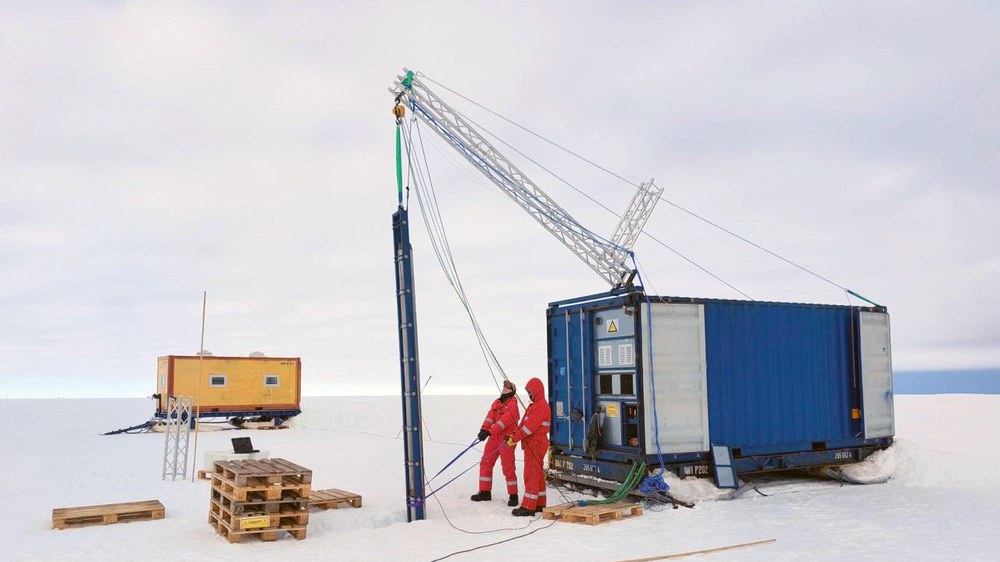

The TRIPLE exploration system (Technologies for Rapid Ice Penetration and subglacial Lake Exploration) aims to help answer these questions. The system consists of three different units that must work together seamlessly when deployed in the icy depths: a melting probe, a mini-submersible and an automated biological laboratory. Currently, 13 development teams from across Germany are collaborating to develop and build the entire system.
Triple-IceCraft melts its way into the Ekström Ice Shelf in Antarctica
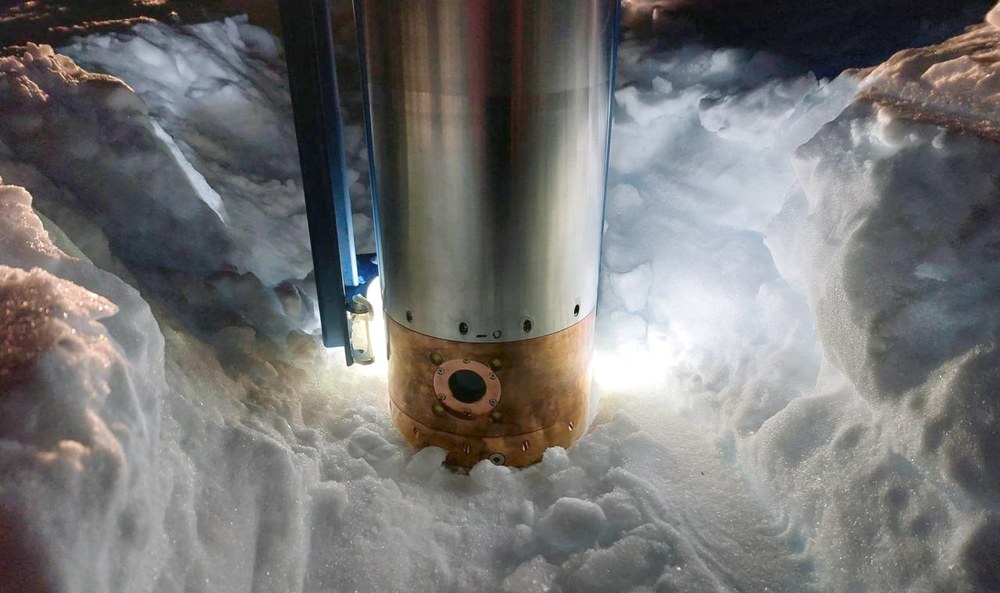
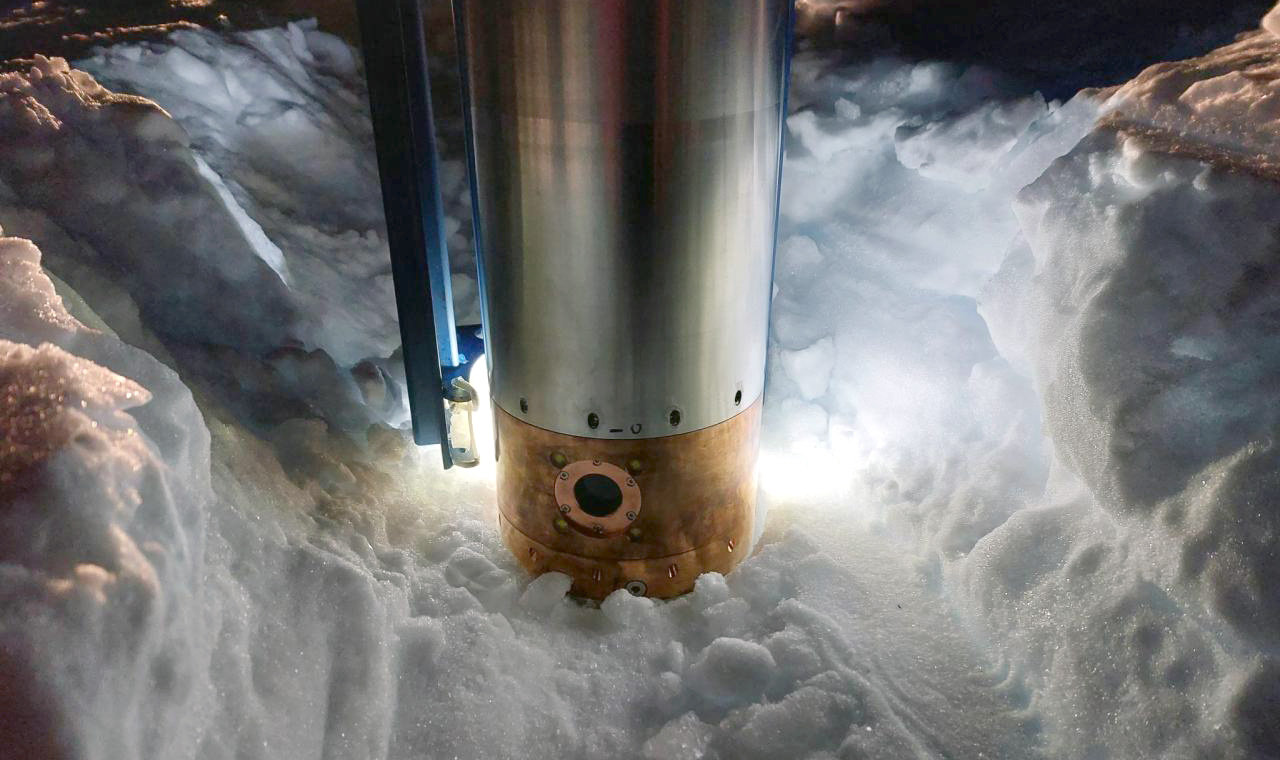
With TRIPLE-IceCraft, GSI GmbH of Aachen and RWTH Aachen University have developed a melting probe capable of penetrating through a layer of ice more than 100 metres in thickness. The probe is around four metres long and has a diameter of approximately 20 centimetres. TRIPLE-IceCraft moves through the ice at a speed of several metres per hour, all the while remaining connected to the surface via a power cable integrated into the probe.
The probe has a melting head at each end, as well as surface heaters for the side walls. Its functions are monitored by sensors that measure parameters such as pressure, speed and temperature, and are controlled by a service system. The melting channel created by the probe refreezes behind it. This effect is entirely intentional, to prevent contamination of the water beneath the ice resulting from exposure to the surface.
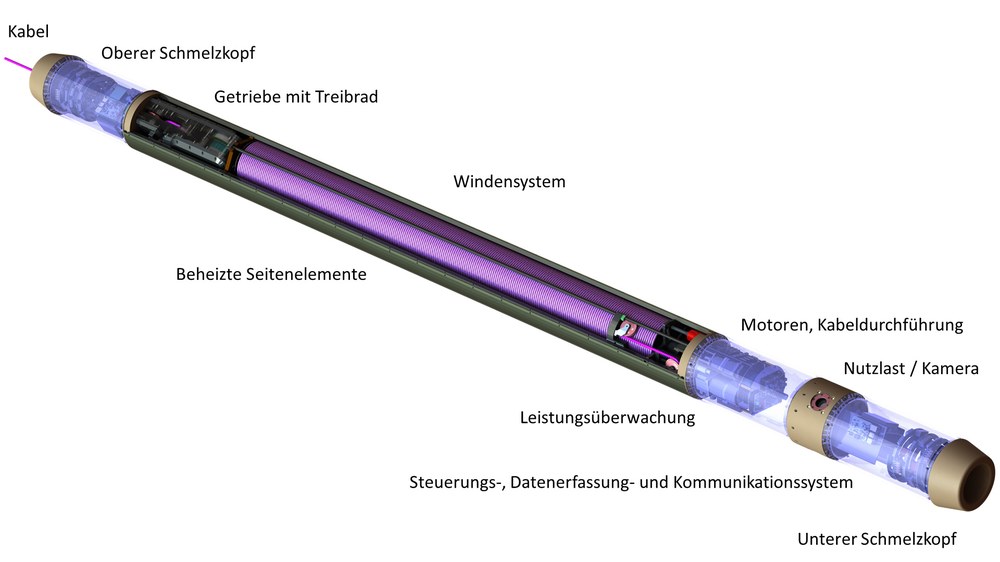
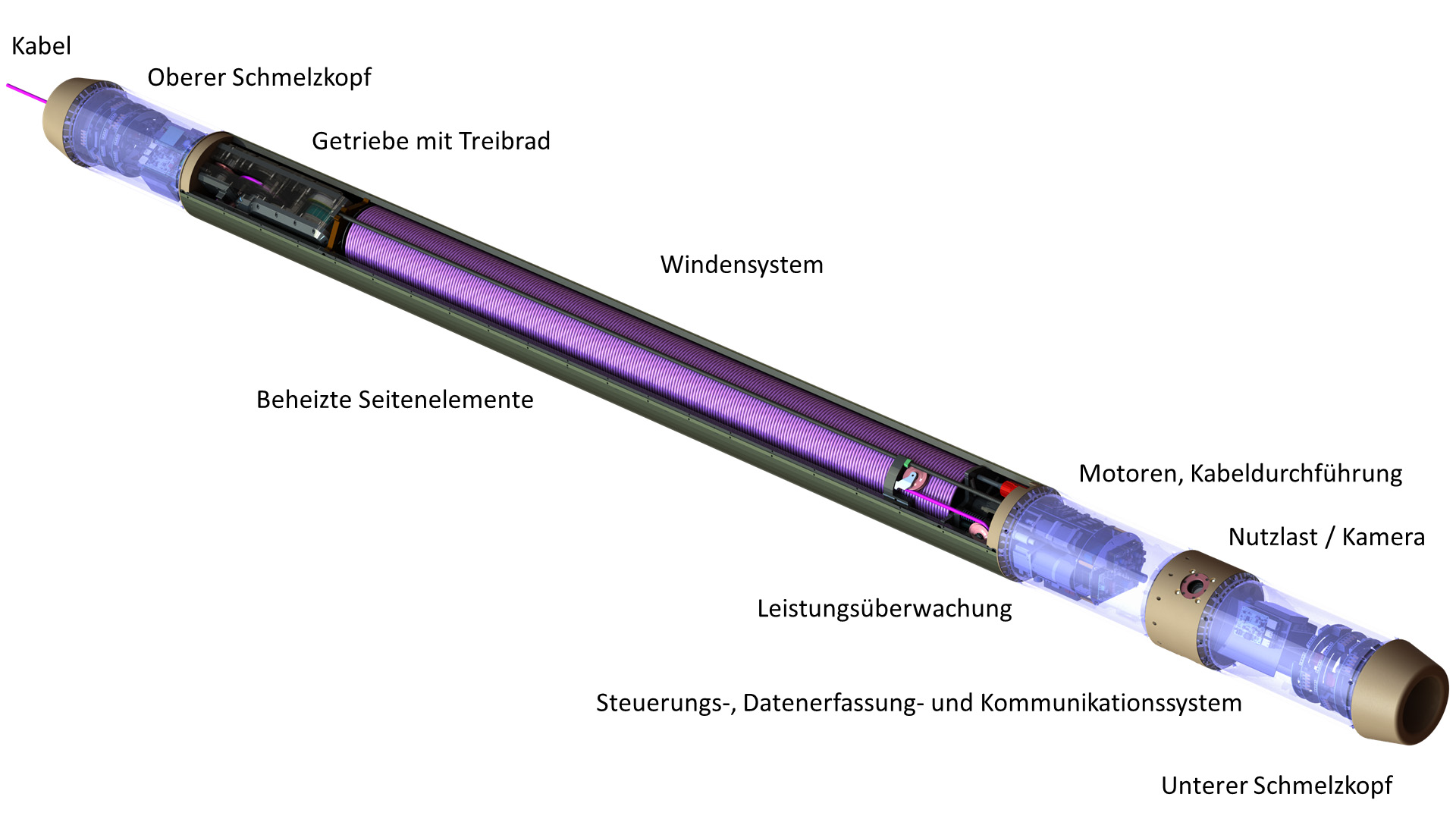
To ensure the probe remains mobile despite the supply cable being frozen into the ice, it must be integrated into the probe. During the melting process, it unwinds slowly from a cable reel. When reversing, the probe pulls itself back up along the cable.
In February 2023 TRIPLE-IceCraft was tested in Antarctica by a team of researchers and engineers. There, the probe melted its way 25 metres deep through the Ekström Ice Shelf at the Alfred Wegener Institute’s (AWI) Neumayer Station III. Its payload consisted of a camera and an acoustic navigation system.
A diving robot and a miniature biology laboratory
The first full-scale field test on the Antarctic ice shelf is planned for 2026. The TRIPLE-IceCraft probe will then penetrate the ice into the ocean below, carrying a miniature underwater vehicle, the nanoAUV (Autonomous Underwater Vehicle), as well as the LRS (Launch and Recovery System) on board. The LRS will release the nanoAUV into the water column using a robotic arm with a soft robotic gripper and ‘retrieve’ it again once it has completed its mission.
Given the small size of the the nanoAUV, it is necessary to develop specialised sensor, control and propulsion technologies that can fit within a very small space. A dedicated navigation system, coupled with artificial intelligence, is intended to enable the vehicle to identify locations of interest for sampling and navigate to them completely autonomously. The recovery system must also be developed specifically for the diving robot. The melting probe anchored to the underside of the ice acts as a base station in the lake where the nanoAUV can return to after sampling, transmit the collected data and recharge its batteries.
The data is then sent from the base station to the surface, where it can be analysed immediately. Once the exploration system has been recovered, the samples taken by the nanoAUV are analysed in a miniature laboratory, the AstroBioLab. Among other things, the fluorescence of microorganisms, as well as the turbidity and dissolved oxygen content of the water, are measured. All analyses are carried out directly on site, thereby eliminating the risk of contamination.
Exploring unknown worlds with TRIPLE-IceCraft II
The next phase of the TRIPLE exploration system is scheduled for 2029: an optimised ice-drilling probe is expected to melt its way through an ice sheet several kilometres thick in the Dome C region of Antarctica. Its target is an underlying lake that has been isolated from the outside world for around a million years. In addition to the nanoAUV and LRS, the probe will also carry the AstroBioLab as part of its payload, enabling samples to be analysed directly in the lake and beneath the ice surface.
The search for life in space
The Earth is not the only place where oceans and lakes are covered by ice sheets. Missions such as Cassini/Huygens and Hubble have shown that vast bodies of water also lie beneath the icy surfaces of distant celestial bodies, such as Saturn’s moon Enceladus or Jupiter’s moon Europa. According to our current understanding, water is a prerequisite for the emergence of life; therefore, these regions are of particular interest in the search for extraterrestrial organisms. The long-term goal of the TRIPLE exploration system is to make the technologies and components developed in the project available for future space missions.
Interdisciplinary research collaboration across Germany
The TRIPLE project is based on an initiative by the German Space Agency at DLR and is funded by the Federal Ministry for Economic Affairs and Climate Action (BMWK). The individual components of the exploration system are being developed and built by 13 universities, research institutes and industrial partner companies from across Germany. GSI GmbH from Aachen is responsible for constructing the TRIPLE IceCraft II probe. The on-board computer technology is being manufactured by DSI Aerospace Technologie GmbH in Bremen. Other project participants include the Berlin-based companies EvoLogics GmbH (nanoAUV, LRS) and GloMic GmbH (radar technology for the probe’s melting head), as well as TriOS Mess- und Datentechnik GmbH in Rastede (AstroBioLab).