
The Ever-Active Kīlauea
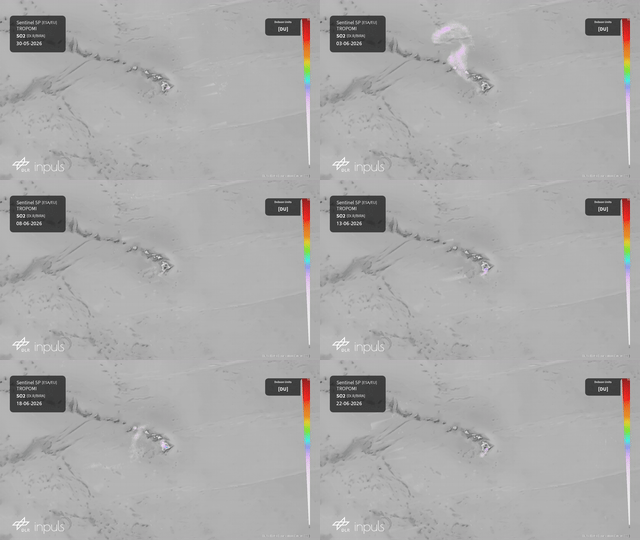
Since 23 December 2024, the Kīlauea volcano in Hawaii has been almost continuously active in a one- to three-week rhythm. With its 49th episode, this eruptive phase has reached a near-record count in June 2026; the next episode is expected for 25–27 June. Processed operationally at the EOC, the measurements from the European Sentinel-5 Precursor (S5P) satellite have documented the volcanic sulfur dioxide emissions (SO₂) continuously ever since.
Hawaii Ausbruch Kilauea
Your consent to the storage of data ('cookies') is required for the playback of this video on Quickchannel.com. You can view and change your current data storage settings at any time under privacy.
Kīlauea, located on Big Island (Hawaiʻi), is among the most active volcanoes in the world. On 23 December 2024, an exceptionally long series of episodic eruptions began in the Halemaʻumaʻu crater, which lies within the volcano's summit caldera. It is characterized by powerful lava fountains that at times rise several hundred meters high. The highest fountain recorded reached a height of 540 Meter during the 43rd episode (source: USGS).
By the end of 2025, around 190 Mio. m³ of lava had been erupted according to USGS. These episodic outbursts occur every one to three weeks and eject large amounts of ash, smoke, and gases into the atmosphere, among other material. In the data from the TROPOMI sensor on S5P, visualized as part of the DLR project "INPULS+" the individual eruptions are regularly and clearly recognizable. The UVN spectrometer has a spatial resolution of 3.5 × 5.5 kilometers and measures, on a daily and global basis, not only SO₂ but also other atmospheric trace gases such as ozone and nitrogen dioxide.
SO₂ is a naturally occurring trace gas in Earth's atmosphere. The largest source of atmospheric SO₂, however, is the combustion of fossil fuels in power plants and other industrial facilities. In addition, volcanoes inject SO₂ into the lower troposphere (passive degassing) and as high as the stratosphere (explosive eruptions).
The corrosive gas threatens not only the environment and the population near volcanoes, but also endangers air traffic: if it enters the aircraft cabin, it can affect those on board, while volcanic ash can damage the engines. Detecting SO₂ in good time helps to minimize these hazards and reveals where dangerous gas and ash concentrations are to be expected.
Links:
Contact
Dr. Diego Loyola