First images from Sentinel-4 on air quality over Europe
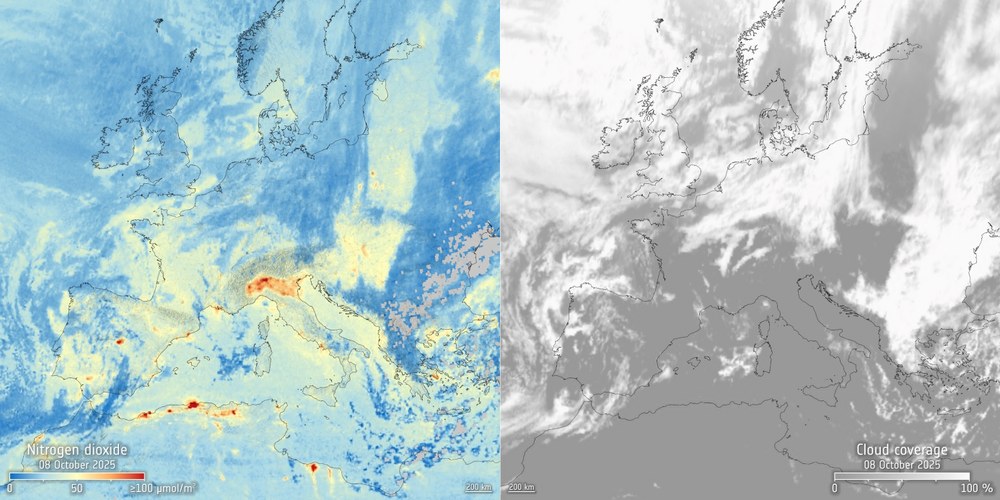

The concentration of nitrogen dioxide in the troposphere clearly shows large polluted areas in Europe.
This is especially the case over Spain, Italy's Po Delta, and along the Mediterranean coast, (left image) regions known for their high levels of industrial activity and traffic emissions. Other typically polluted regions are, however, not visible in these images due to the cloud cover that interferes with the satellite view (right image). With ongoing observations Sentinel-4 will be able to supply a more complete and detailed picture of air quality over the entire continent.
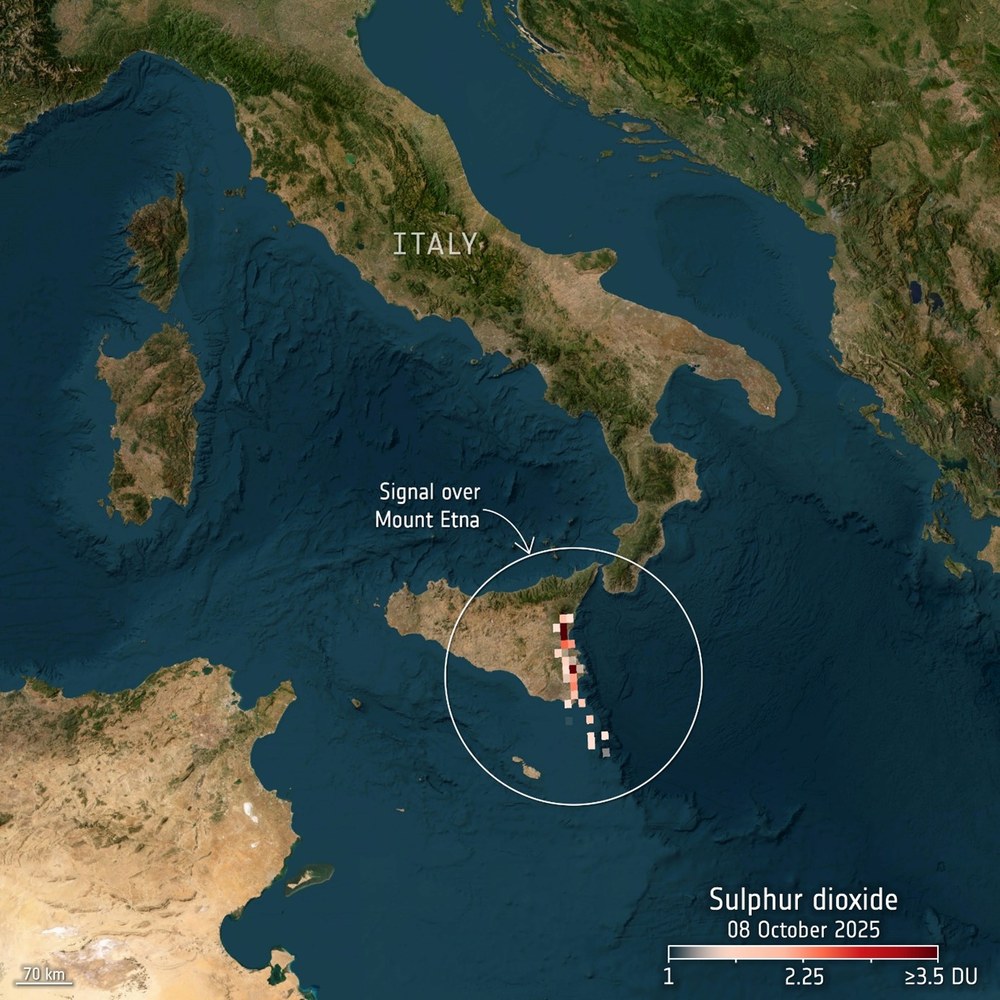
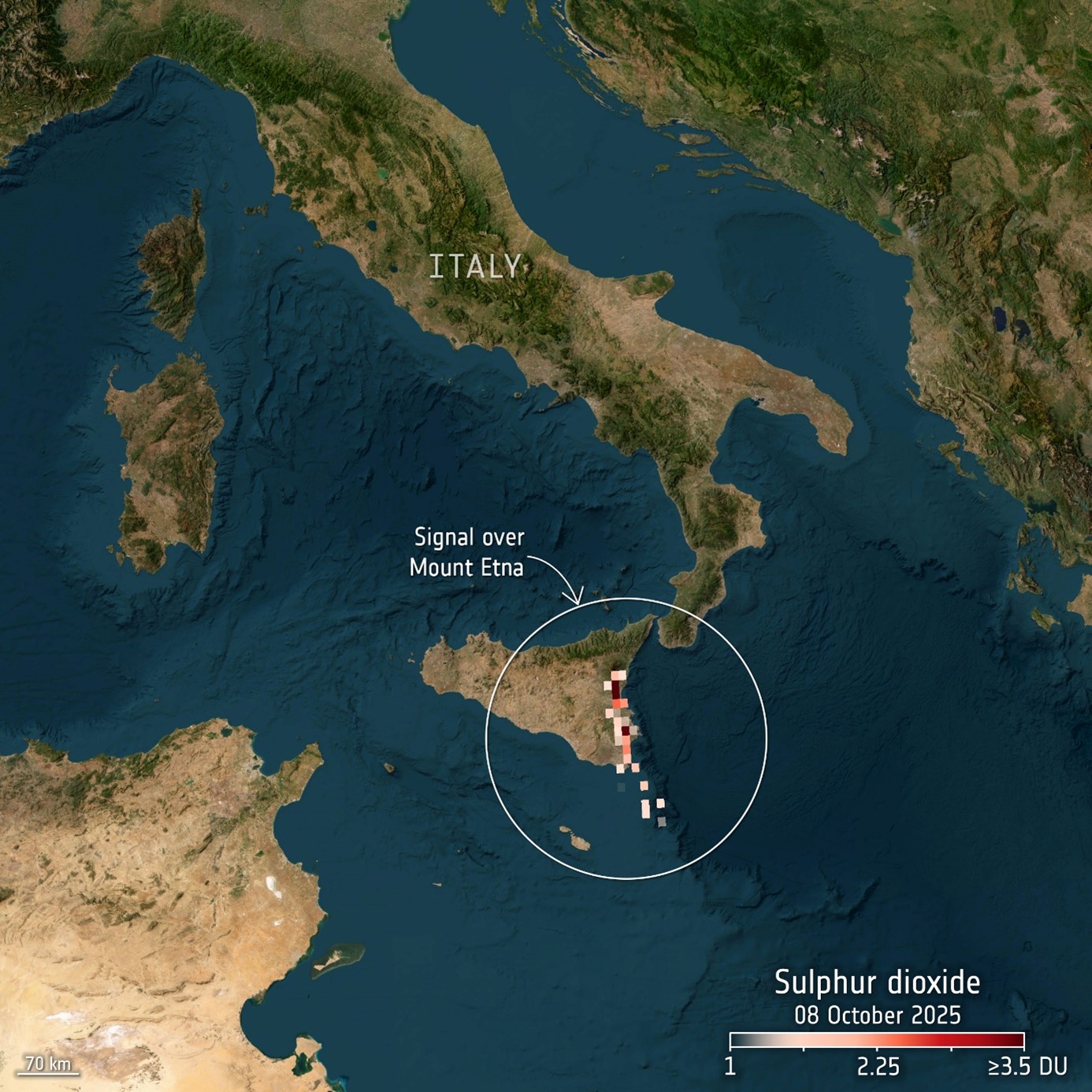
A plume of sulfur dioxide is currently being emitted from Mount Etna in Italy and drifting southeast over the Mediterranean Sea.
This volcanic activity releases gases that can have a negative effect on air quality and atmospheric conditions in the surrounding regions. Sentinel-4 will provide valuable near-real-time data to monitor these kinds of emissions and assess their environmental effects.
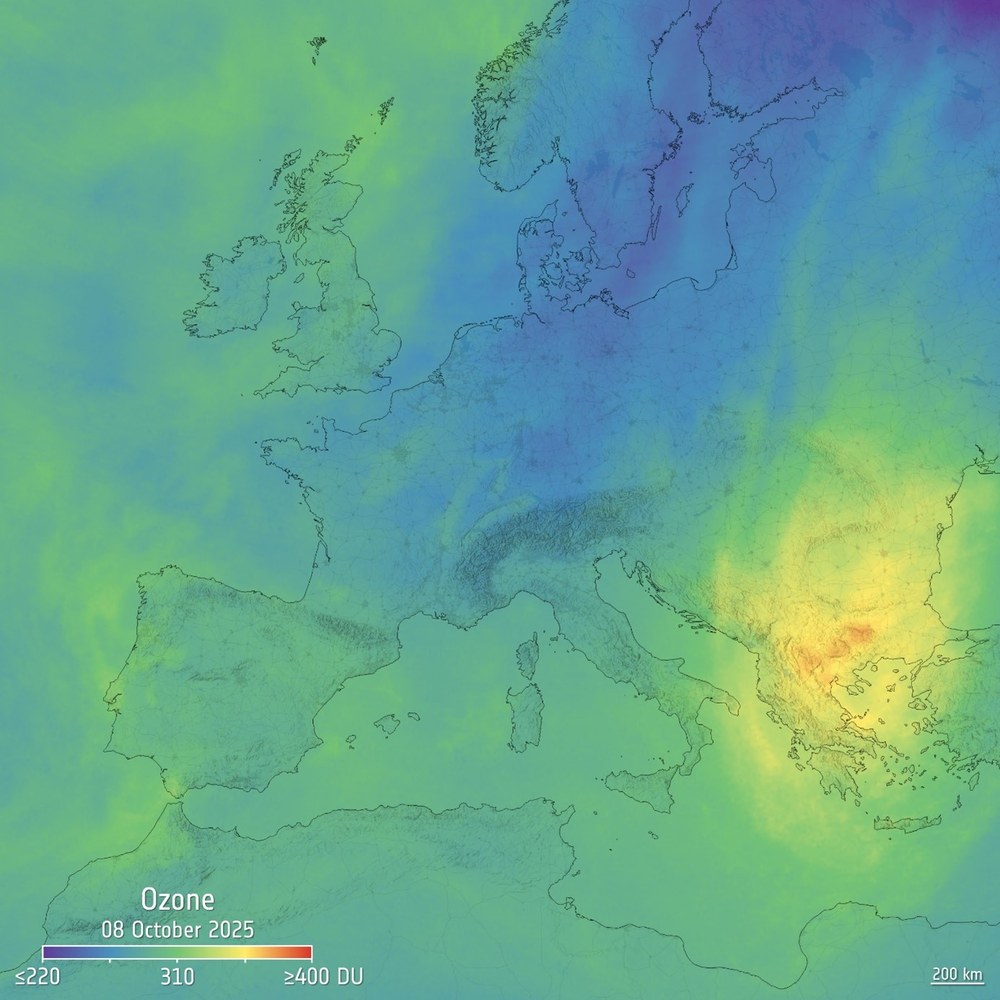

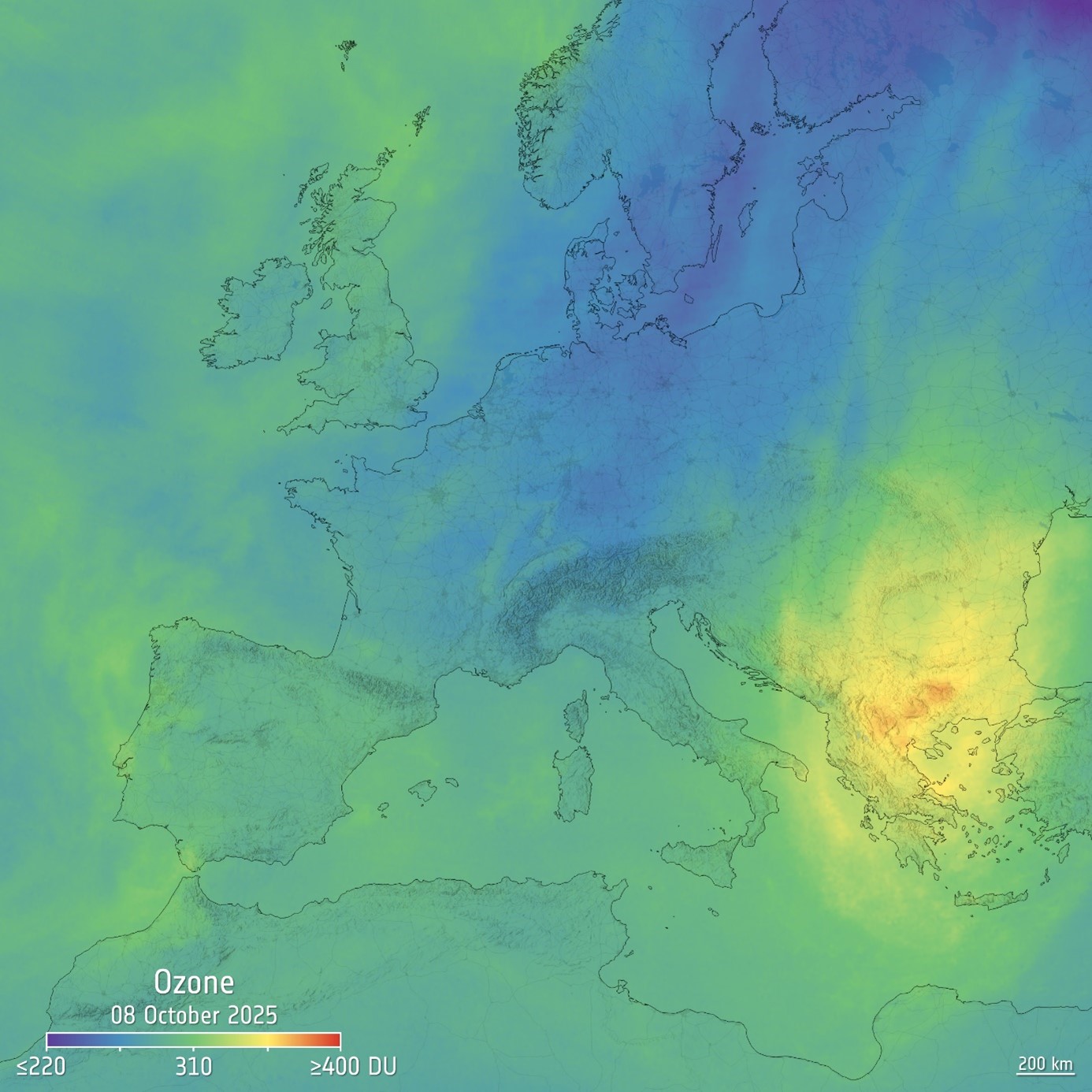
Higher total column ozone levels are observed over the Balkans, Bulgaria, and Greece, while lower levels exist across Germany, Denmark, and the Scandinavian countries.
These variations reflect shifting atmospheric conditions that can influence UV radiation exposure and air quality in different parts of Europe. Sentinel-4 will provide valuable insights into the diurnal variation and regional differences in ozone levels, helping to improve environmental assessments and public health awareness.