
NGT Concepts, Structures and Interiors
The NGT Concepts, Structures and Interiors (NGT CSI) project aims to improve the attractiveness of passenger and freight rail transport as part of the overall transport system. It considers the needs of both operators and users and aims to meet the requirements of the different stakeholders involved in rail vehicle development.
The project develops and demonstrates new technologies, methods and processes for the design and development of railway vehicles. Work started in the predecessor projects RoSto and ProCo and established in the European EU-RAIL context is continued and further developed. The main topics are climatization and ventilation, vehicle concepts and structures, and modular interiors.
Modular interiors
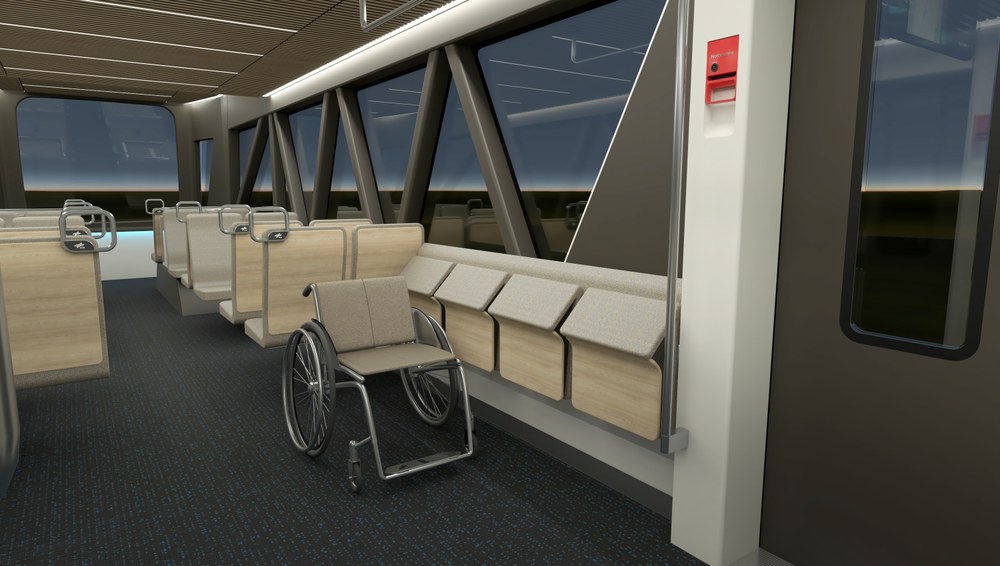


Passenger needs are an important factor in modern mobility concepts. The interior design of rail vehicles contributes to passenger comfort and safety.
This sub-project develops and demonstrates modular interior concepts for passenger compartments and interior modules. The concepts can be adapted to different requirements and user groups.
AI-based methods for predicting airflow, including Physics-Informed Neural Networks (PINNs), are developed to support the design and evaluation of energy-efficient HVAC systems. These methods enable the assessment of different interior layouts and help develop ventilation and air-conditioning concepts that remain effective during pandemics and other crisis situations.
The DLR NGT TAXI concept serves as a reference application. The methods and results can also be applied to other vehicle geometries. The modular interior concepts are demonstrated using a cabin mock-up in Göttingen and in a user study assessing thermal comfort.
Further information:
Air quality and risk of infection


This sub-project focuses on improving air quality in passenger compartments and reducing infection risks associated with microbial contamination and airborne particle dispersion.
Experimental and numerical methods are developed to assess microbial contamination and ventilation performance. This work also includes adapting assessment methods to new standards and integrating digital evaluation tools.
Optimised ventilation concepts, including solutions for which patent applications have been filed, are adapted to different rail vehicle geometries and implemented in the Modular Rail Transport Mock-Up and the DIRK test facility. The concepts are assessed both for the overall passenger compartment and for individual areas. Work on air quality in DIRK continues within the ERJU FP4 project Rail4Earth.
Another focus is condensation in rail vehicles. Condensation can reduce passenger comfort and promote microbial growth, including mould, on damp surfaces.
Further work examines the microbial communities present in rail vehicles, tests antimicrobial surface coatings and analyses where exhaled particles are deposited to identify potential transmission hotspots.
The SARS-CoV-2 infection risk model developed at the Gandalf Graduate School is being extended to include additional pathogen parameters and uncertainty analysis. It is used to evaluate ventilation concepts and mitigation measures in DIRK and the NGT TAXI.
Further information:
Crash and structure
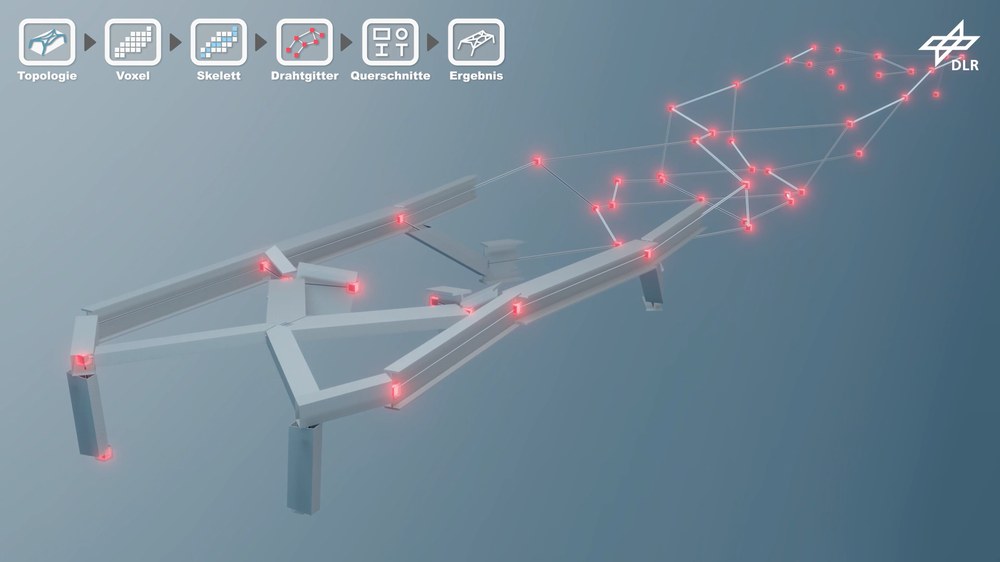
This sub-project aims to automate and accelerate the development of rail vehicle structures while improving sustainability. The main objective is to protect passengers and freight against crash and impact loads using high-performance materials and innovative manufacturing processes with a focus on sustainability.
Digital tools are developed to reduce manual design work. Topology optimisation results are automatically converted into structural designs. A design assistant integrates expert knowledge into software tools to support material selection and simulation.
The project also evaluates new materials for rail vehicles. Sustainable fibre-reinforced composites and innovative manufacturing processes are investigated to reduce production times and resource consumption while improving cost-effectiveness. The work includes structural design and assessment, environmental assessments, quality-assured manufacturing processes and repair concepts.
The results are demonstrated using the NGT TAXI concept. The work includes the design of the car body, the development of energy-absorbing crash structures and the manufacture of a front-end structure from natural fibre-reinforced composites. This demonstrates how digital development tools, sustainable materials and new manufacturing processes can be applied to rail vehicle structures.
Further information:
Participating institutes and organisations: