
Mobility for all: NeMo.bil connects rural regions to the future
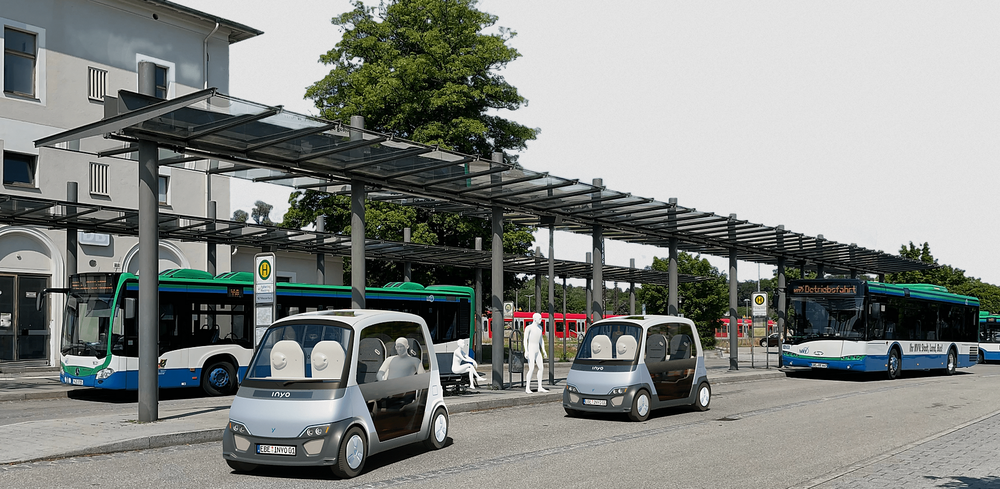

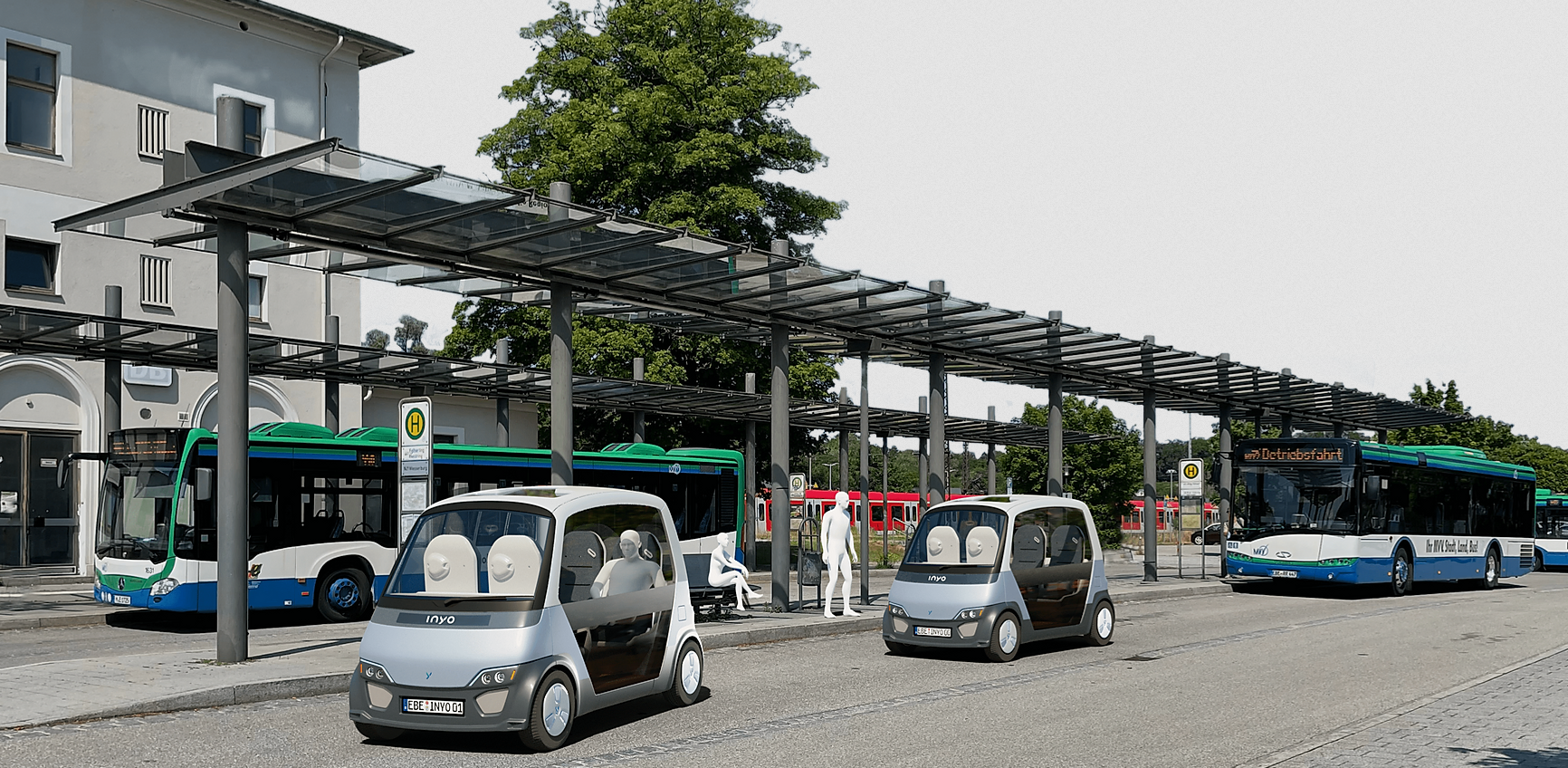
- The NeMo.bil project, which was funded by the Federal Ministry for Economic Affairs and Energy to the tune of around 18 million euros, has been successfully completed.
- Under the leadership of Neue Mobilität Paderborn e.V., and in collaboration with the DLR Institute for AI Safety and Security, an innovative, demand-responsive mobility system for passenger and freight transport has been developed and built as a prototype.
- The system combines small autonomous vehicles for the first and last mile with a larger towing vehicle for longer convoy journeys, making it particularly well-suited to rural areas.
- The DLR Institute for AI Safety and Security was responsible for integrating digital solutions into overarching data and service ecosystems, including trusted data rooms and privacy-enhancing technologies.
Innovative vehicle concept for rural areas
The NeMo.bil project has come to a successful conclusion. Led by the Neue Mobilität Paderborn association and involving the DLR Institute for AI Safety and Security, the project developed and prototyped a novel mobility system for on-demand passenger and freight transport. At the closing event, which took place at the Zukunftsquartier in Paderborn, high-ranking representatives from the federal government and the relevant ministry met with the project partners.
The NeMo.bil project took an innovative approach involving two types of coordinated vehicle: Swarms of smaller autonomous NeMo.Cabs serve the first and last mile. For longer journeys, these vehicles form a convoy pulled by a larger vehicle, the NeMo.Pro. This system is particularly well suited to providing resource-efficient, personalised public transport, especially in rural areas.
Lightweight vehicles for the first and last mile
These vehicles are an important foundation for future swarm mobility concepts. The focus is now on further developing and industrialising the systems. The resulting prototypes will be deployed, tested and gradually optimised in follow-up projects. The NeMo.Pro towing vehicle offers a wide range of possibilities beyond the original concept, such as acting as a mobile charging station for various applications. The developed coupling system will not only enable automated vehicle convoy formation in future, but also open up new possibilities for the automated charging of autonomous vehicles.
At the closing event, guests were able to experience the full range of project results. Stakeholders from politics, business, science, and public administration gained insights into the developed vehicles, digital applications, and technical systems. Driving demonstrations and discussions highlighted how the individual components of the mobility concept interact and their potential for future mobility.
Contribution of the Institute: Trustworthy data spaces
In this interdisciplinary project involving 20 partners, the DLR Institute for AI Safety and Security ensured the interoperability of digital solutions within overarching data and service ecosystems in the mobility sector. The Institute’s tasks included designing and creating trusted data spaces and interconnecting them, with a focus on data quality and provenance, as well as free software components and open standards. To ensure a high level of data security and privacy, privacy-enhancing technologies and modern encryption approaches were also employed, drawing on expertise from the Catena-X and Gaia-X 4 Future Mobility flagship projects.
Many components developed in accordance with open-source principles are available to specialist and developer communities, thereby contributing to progress in connected and autonomous mobility.
Further information about the project can be found here: https://www.dlr.de/en/ki/research-transfer/projects/nemo.bil