Hybrid models by integrating physics and AI for safety-critical applications

PISA

Figure: Schematic representation of a reservoir based on recurrent neural networks (RNNs)
The connection matrix (red) is normally created randomly. The special feature of this architecture is that only the linear output layer (green) is trained.

Hybrid models by integrating physics and AI for safety-critical applications

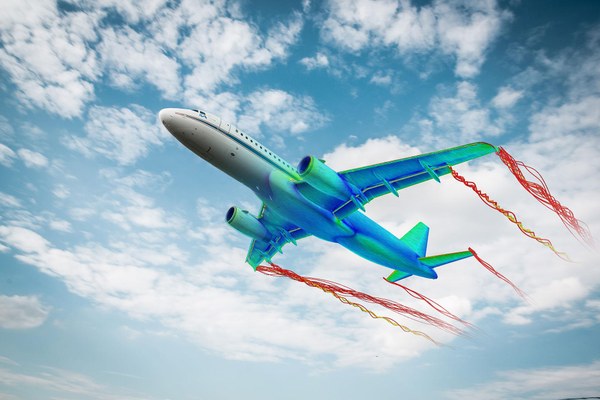
Many applications in engineering and science rely on modelling complex systems, for example in aerospace and automotive engineering. This can be done using either data-driven machine learning methods or physical modelling. Both approaches have advantages and disadvantages. The PISA (Physics InSpired AI) project is concerned with the implementation of new approaches that integrate fundamental physical principles and AI models.

Data-driven modelling uses experimental or simulated experience of the system being modelled, and can be continuously extended. The disadvantage of such an AI model is that it can be biased by incomplete or noisy data. In addition, the models are usually black boxes, i.e. difficult to interpret, and the derivation of the physical relationships and phenomena inferred in the model is limited. As a result, this approach is not currently used for safety-critical applications.

Physical models describe the system using equations that represent known physical phenomena. Unlike data-driven modelling, this method is therefore based directly on knowledge of how the system works. For this reason, these models are considered trustworthy. However, the disadvantage of physical modelling is the computationally intensive nature of solving the equations.

PISA combines both computational approaches to develop interpretable but efficient methods. As part of the development of Physics Aware AI, the design of the AI model is based on fundamental physical principles, such as the conservation of energy. Model fusion deals with the improvement of simplified physical models through machine learning. In both cases, the accuracy of the physics-based simulation model is combined with the computational speed of the data-driven AI model.

Contribution of the Institute for AI Safety and Security

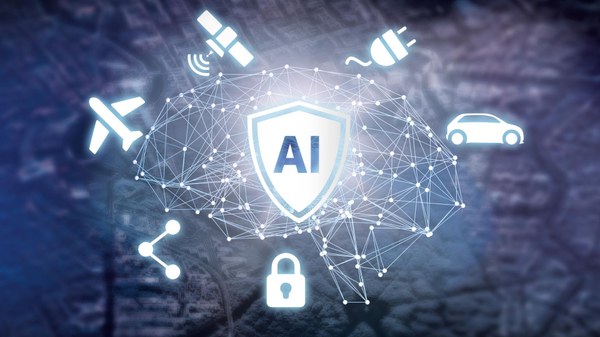
In PISA, the Institute for AI Safety and Security is working, among other things, on testing the methods and estimating uncertainty and prediction error, which is essential for use in safety-critical applications. Ultimately, the computational approaches investigated lead to a combination of classical control engineering and AI in order to exploit the advantages of both worlds.

Parts of our project results are included in the SCAN software package, which is available as open source. Here, the methods have been implemented as a neuromorphic, physics-inspired approach, especially in the context of reservoir computing.

Participating DLR institutes and facilities

Contact

Dr. Hans-Martin Rieser

Head of Department
German Aerospace Center (DLR)
Institute for AI Safety and Security
Execution Environments & Innovative Computing Methods
Wilhelm-Runge-Straße 10, 89081 Ulm
Germany

Karoline Bischof

Consultant Public Relations
German Aerospace Center (DLR)
Institute for AI Safety and Security
Business Development and Strategy
Rathausallee 12, 53757 Sankt Augustin
Germany