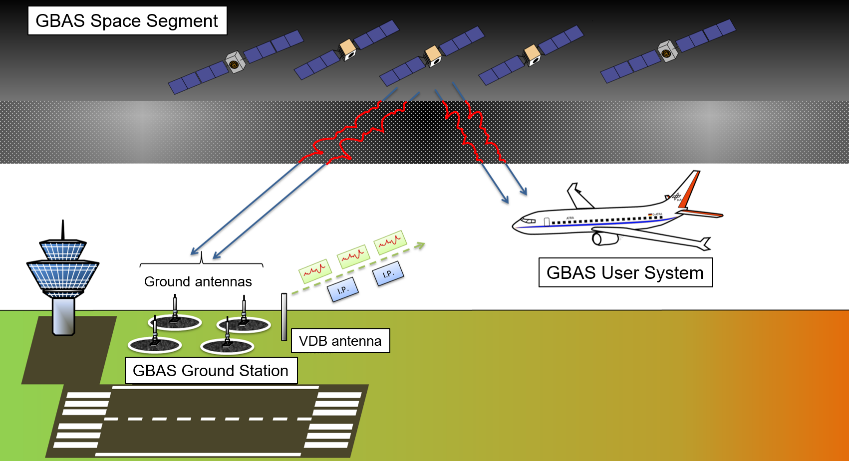
Ground Based Augmentation Systems (GBAS) are enablers for safe and efficient air traffic around airports. One of our main goals at DLR is to contribute to the next generation of the system — based on dual-frequency and multi-constellation signals — through our own research and by supporting the standardization process in the relevant working groups (ICAO, RTCA, EUROCAE).
Multipath models for new signals and constellations
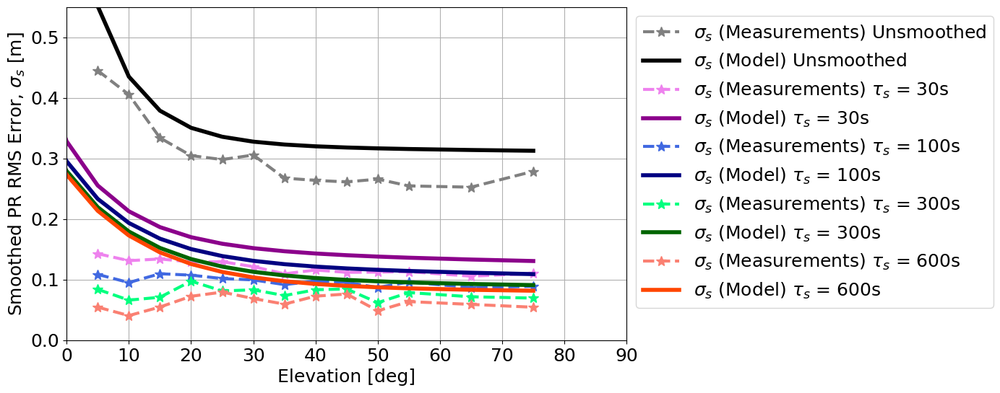
We develop new ground and airborne multipath models that cover the signals and constellations now in use (GPS L1, GPS L5, Galileo E1 and Galileo E5a), and that account for satellite signals used during the transient phase of the smoothing filters. The models are built from Gauss-Markov components.
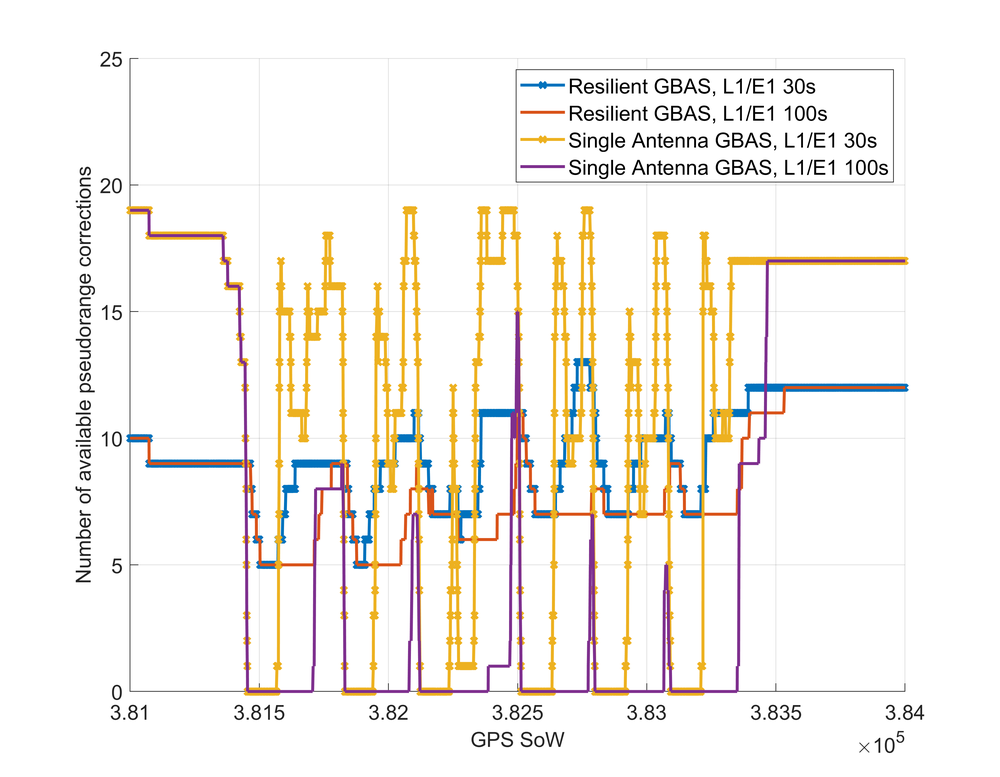
We investigate replacing the multipath limiting antennas (MLAs) used on the ground and the conventional antennas used on board with controlled radiation pattern antennas (CRPAs), and the receivers with array receivers. This strengthens resilience against interference — but it also means that every error model and every integrity monitor has to be revalidated and adapted.
Monitoring and mitigating the anomalous ionosphere
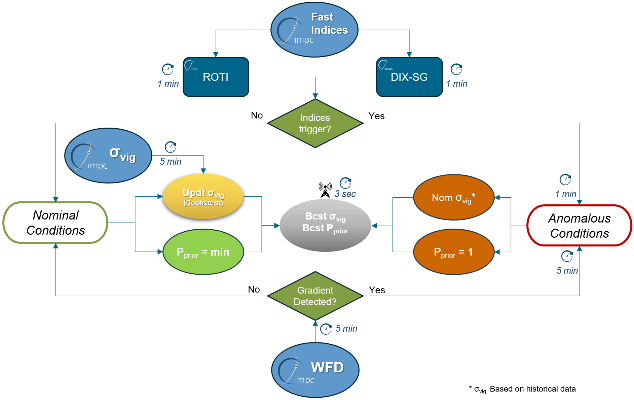
A third line of research addresses anomalous ionospheric conditions. It covers both the design of monitors to detect them and the use of space weather information within GBAS, to improve availability in regions with high ionospheric activity.