
Wednesday


The ESA OpSTAR Mission: An in-Orbit Demonstrator of Optical Links Enabling Highly Accurate Synchronization and Ranging for Next-Gen GNSS Architectures
Gabriele Giorgi1, Juraj Poliak1, Alessandro Accorinti1, Tobias Schmidt1, Jan Speidel2, Niklas Tarkian2, Daniel Blonski3, David Ibanez3, Jose Angel Avila Rodriguez3, 1 German Aerospace Center (DLR), 2 OHB, 3 European Space Agency
Session B1: Applications Using Communication Technologies, Opportunistic Signals, or Collaborative Positioning, Wednesday, September 16, 08:35 a.m.
Presenter: Tobias Schmidt
- ESA FutureNAV initiative.
- Consortium from 14 EU countries, more than 30 industrial entities involved.
- Mission shall target in-orbit demonstration of system-wide picosecond-level time synchronization, (sub)centimeter-level ranging, and overall system operability of optical PNT and associated autonomous long-term operations.
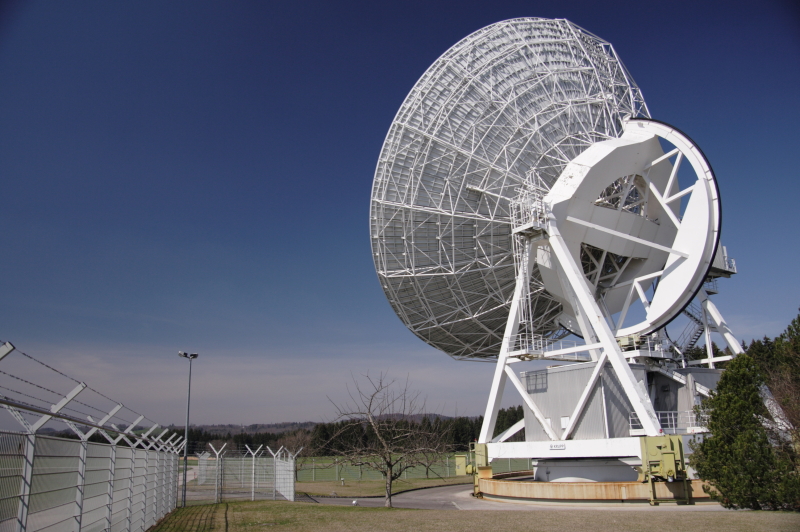
First Independent Assessment of Xona’s Pulsar Signal Quality, Positioning Performance and Compatibility
Steffen Thoelert1, Florian C. Beck1,2, 1 German Aerospace Center (DLR), 2 RWTH Aachen University
G1: LEO-Based PNT and Integrated Communication and Navigation (Signal Design) 1 , Wednesday, September 16, 10:40 a.m.
Presenter: Steffen Thoelert
- Signal in Space measurements and analysis of Xona’s Pulsar-0 satellite.
- Signal quality analysis from spectral purity up to range bias analysis based on transfer function estimates.
- Compatibility assessment according the present big four GNSS and future Galileo 2nd Generation signals.
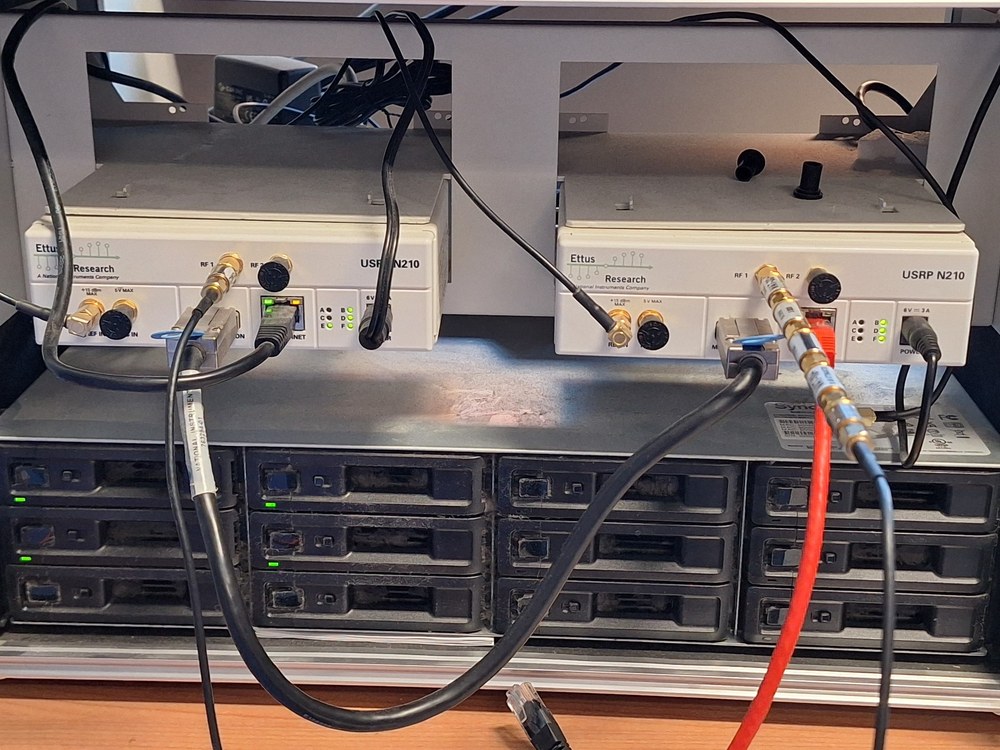
Hardware-in-the-Loop Evaluation of Tracking Performance for Distortion-Optimized Multilevel Coded Spreading Signals
Florian C. Beck1,2, Alex Minetto3, Iman E. Mehr4, Andrea Nardin3, Steffen Thölert1,2, Fabio Dovis3, and Michael Meurer1,2,1 German Aerospace Center (DLR), 2 RWTH Aachen University, 3 Politecnico di Torino, 4 Fondazione LINKS
Session F1: Next-Generation GNSS: Signals, Architectures, and Receiver, Wednesday, September 16, 11:26 a.m.
Presenter: Florian C. Beck
- Conducted Hardware-in-the-Loop recordings of previously optimized multilevel coded spreading signal candidates
- Evaluation of tracking performance expressed by code tracking jitter of a configurable software receiver
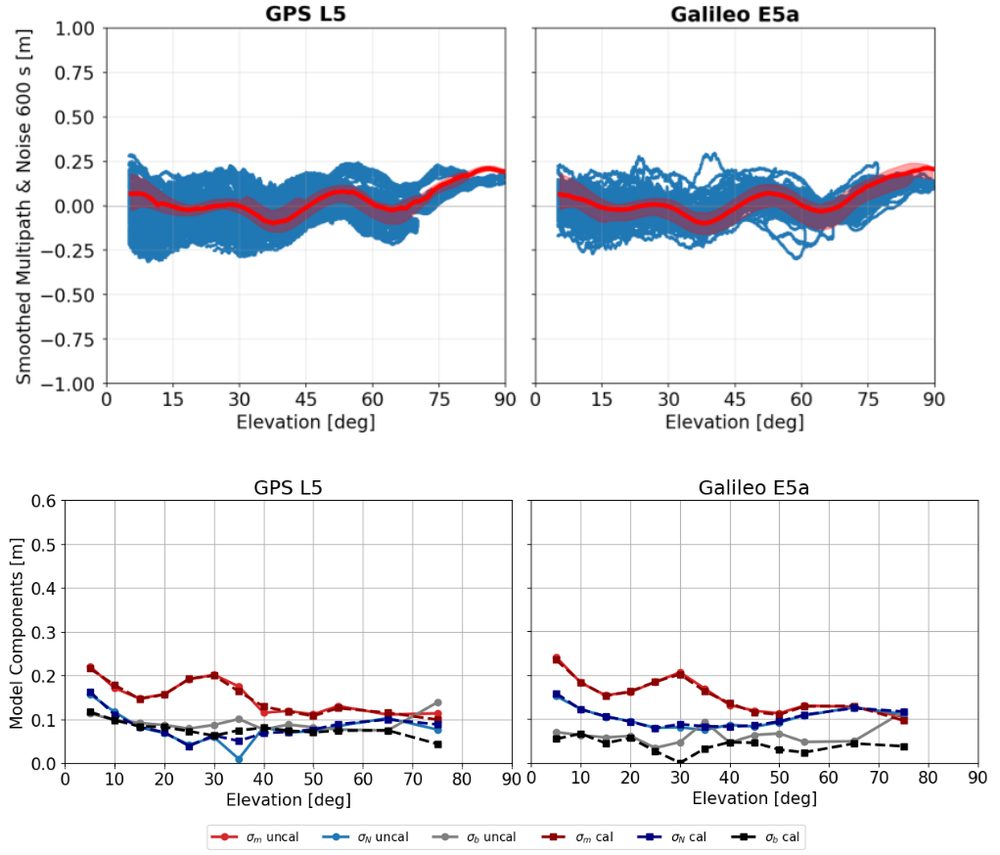
Assessment of Multipath Limiting Antenna Calibration Effects on DFMC GBAS Performance
Maria Caamano1, Simon P. Hehenberger1, Stefano Caizzone1, Daniel Gerbeth1, Michael Nietlispach2, Michael Felux2, Gary A. McGraw3, 1 German Aerospace Center (DLR), 2 Zurich University of Applied Sciences (ZHAW), 3 Genova Technologies/DLR Consultant
Session D2a: GNSS Integrity in Aviation: ARAIM, GBAS, SBAS and Their New Advancements , Wednesday, September 16, 2:12 p.m.
Presenter: Maria Caamano
- Derivation of Multipath Limiting Antennas (MLAs) calibration files.
- Evaluation of noise and multipath estimates with and without antenna calibration.
- Impact on GBAS integrity parameters through the derivation of noise and multipath ground models based on Gauss-Markov models.
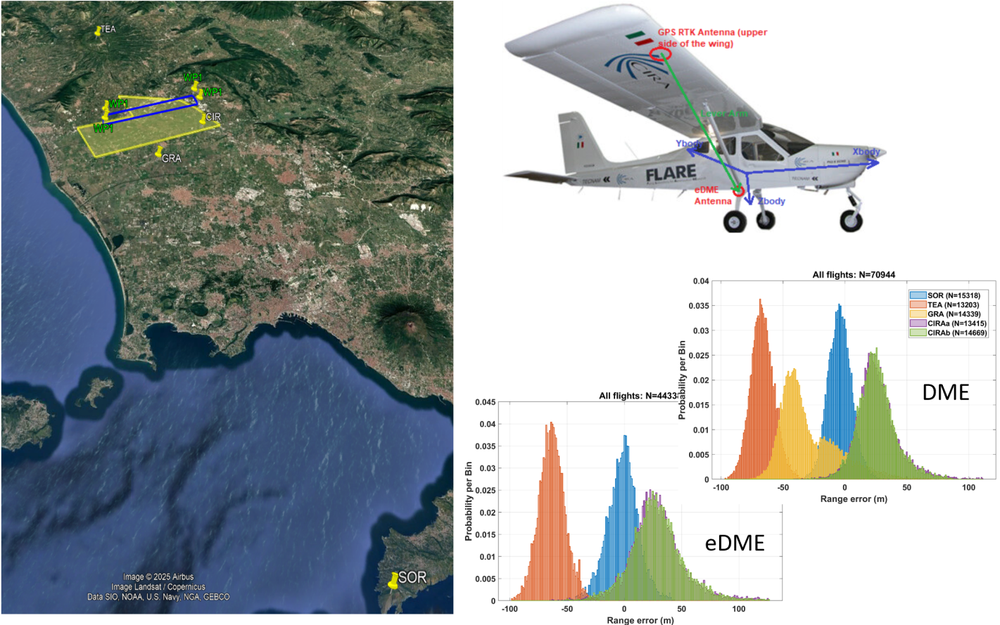
Enhanced DME Flight-Test Performance Assessment and Ranging Error Modeling
Gianluca Zampieri (DLR & RWTH Aachen University), Paolo Lunardi, Luca Saini (Thales), Daniele Biella (Consultant), Giovanni Cuciniello, Luca Garbarino (CIRA), Brandon Michael Weaver (DLR), Michael Meurer (DLR & RWTH Aachen University), Gary McGraw (Consultant).
Session B2: Aviation, Aeronautics, and Uncrewed Aerial Applications , Wednesday, September 16, 2:58 p.m.
Presenter: Gianluca Zampieri
- Data analysis of the MIAR project’s eDME flight test.
- Characterization and modelling of the DME/eDME ranging errors.
- The methodology is evaluated and tested using the flight campaign dataset.