Robot-Assisted Inspection and Repair

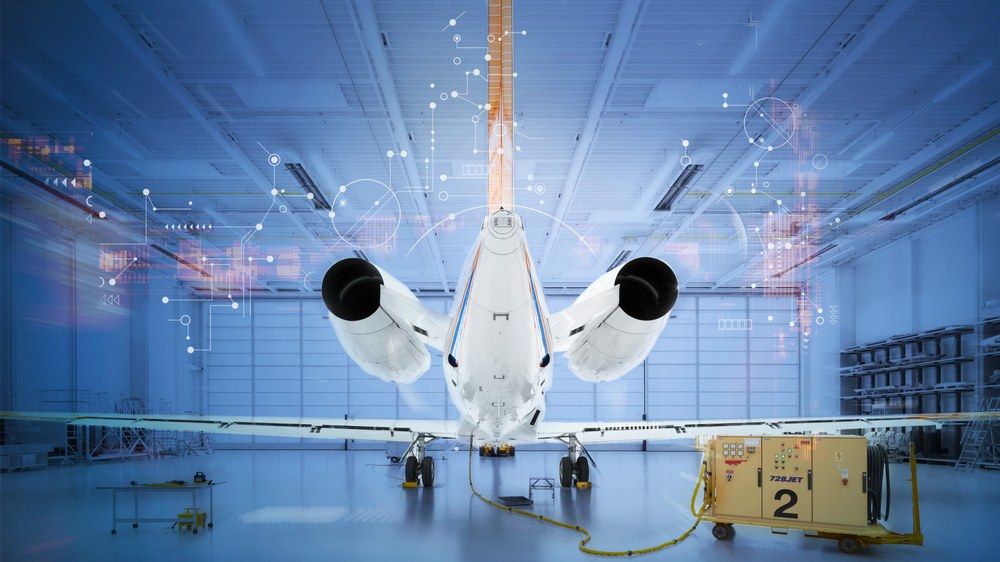
Ein DLR-Flugzeug im Hangar. Überlagerungen deuten Diagramme an.
Robot-Assisted Repair
Credit:

DLR/Manuel Irritier

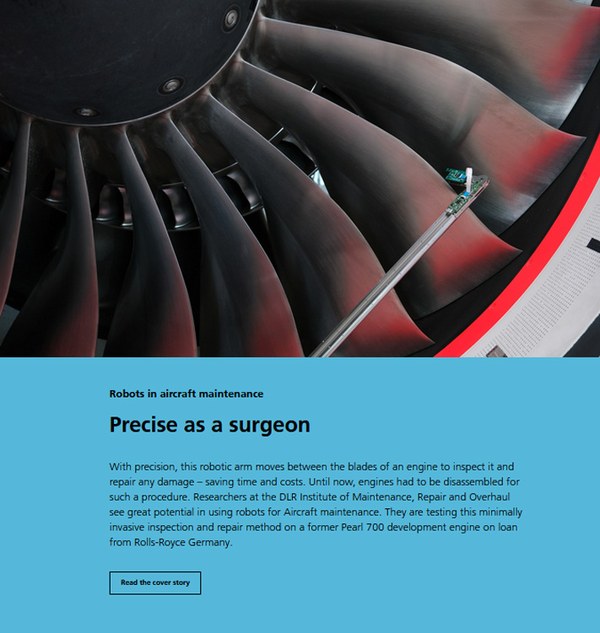
The research area "Robot-Assisted Inspection and Repair" is embedded in the department "Maintenance and Repair Technologies", where it focuses on how robots can be integrated in MRO processes. We transfer recent advancements from the general field of robotics into the MRO sector and solve the special challenges that arise in the application domain. We work interdisciplinary and develop both hard- and software. 

A special focus is set on robotics for confined spaces as typical MRO tasks are performed in places that are difficult to access, e.g. the inside of an airplane engine. The ability to safely navigate in these environments is crucial to allow performing tasks without creating the need for disassembly of the equipment.

Furthermore, the quality and trustworthiness of data that is gathered by a robot during an inspection is crucial. To achieve this, the robot needs to perform measurements at precise locations in relation to the equipment under test. It must also react on external disturbances to the measurement, e.g. reflections on camera images, by autonomously correcting the placement of the sensor.

Key Topics

Robot Development for Confined Space Maintenance

  • Development of modular robot components that optimize reachability in individual use cases
  • Algorithms that allow safe & precise motions in challenging environments
  • Operation in different modes like teleoperation, automation and autonomy

Robotic Inspection and Repair Processes

  • Accurate localization and registration of sensor measurements at places that are difficult to reach for humans
  • Integration of task planning for automated inspection and repair sequences
  • Process transparency through continuous monitoring of the robot’s state and sensor data

Automated Acquisition and Processing of NDT Data

  • Gathering of reliable and high-quality data to allow non-destructive testing (NDT) diagnosis
  • Visualization of live data to operators in intuitive and comprehensible formats to facilitate effective teleoperation
  • Data exchange with digital twins including the location of defects in standard and open data formats