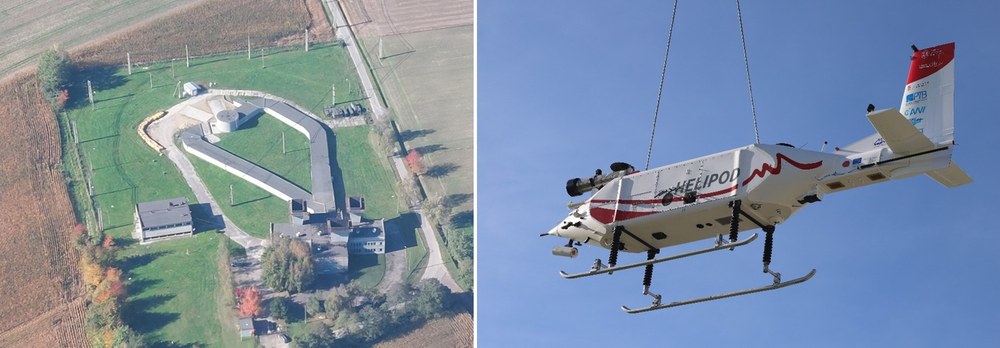
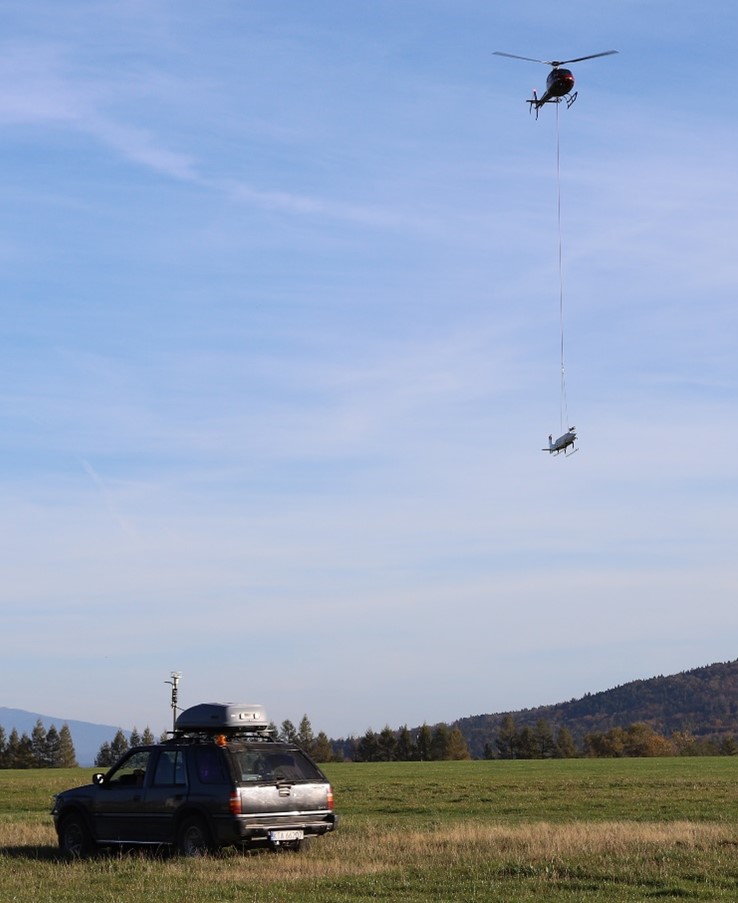
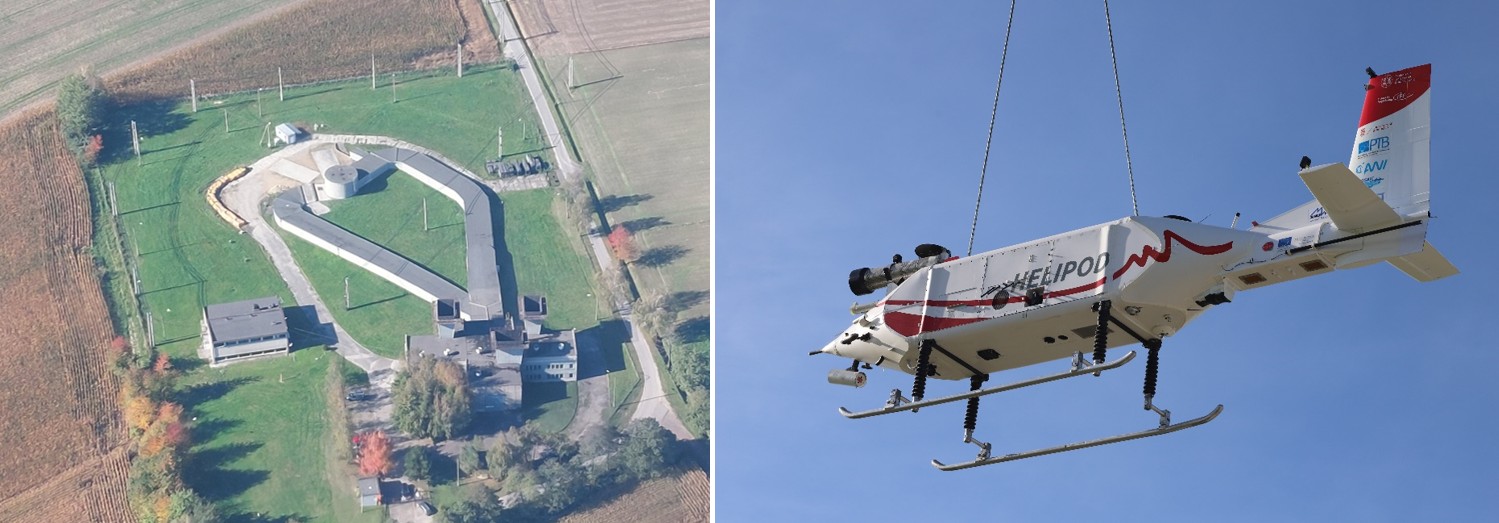
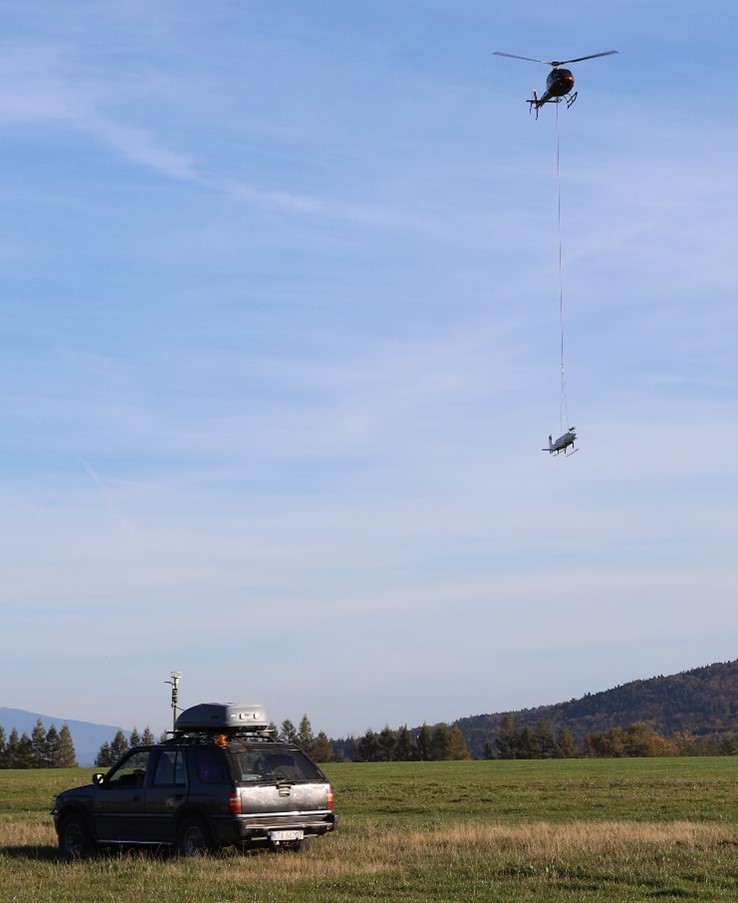
Recent results from scientists at the DLR Institute of Atmospheric Physics (DLR-IPA) were published in the journal Atmospheric Measurement Techniques and recognised as a highlight paper (Förster et al., 2025). The publication describes the results of a measurement campaign in which extensive methane emission measurements were carried out in the Upper Silesian Coal Basin (USCB) in Poland, in collaboration with the Institute of Flight Guidance (IFF) of the Technical University of Braunschweig (TUBS). The USCB is considered one of the most important European hotspots for methane emissions from mining, as well as being a central production area for metallurgical coal. It is important to independently validate emission estimates using atmospheric measurements, as emission data is often based on statistical production data and is frequently inaccurate.
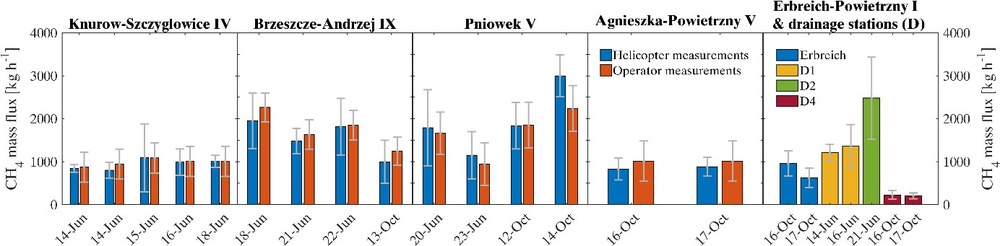
The study found emission rates for individual ventilation shafts between 1000 and 3000 kg per hour. Rates for drainage stations, which were measured independently for the first time, were between 200 and 2500 kg per hour. For comparison, methane emissions from individual facilities in the oil and gas sector or from landfills are one to two orders of magnitude smaller. The high variability of emissions emphasises the importance of frequent measurements and the need for reliable continuous monitoring. This enabled the emission rates calculated from the safety sensors to be validated directly against independent atmospheric HELiPOD measurements. The results demonstrate very good agreement, with relative deviations ranging from 0% to 25%, and show that the ground-based approach can provide robust estimates of methane fluxes from ventilation shafts, provided the safety sensors are correctly positioned and calibrated.
A controlled release experiment further demonstrated the ability to detect emissions at rates as low as 20 kg per hour. This highlights the wide range of applications of this helicopter-based method for quantifying methane emissions at facility scale, from relatively weak sources such as biogas plants, landfills and livestock, to stronger industrial sources, including those in the coal, oil and gas sectors.
Reference: Förster, E., Huntrieser, H., Lichtenstern, M., Pätzold, F., Bretschneider, L., Schlerf, A., Bollmann, S., Lampert, A., Nęcki, J., Jagoda, P., Swolkień, J., Pasternak, D., Field, R. A., and Roiger, A.: A helicopter-based mass balance approach for quantifying methane emissions from industrial activities, applied for coal mine ventilation shafts in Poland, Atmos. Meas. Tech., 18, 7153–7176, https://doi.org/10.5194/amt-18-7153-2025, 2025.
Contact
Dr. Anke Roiger
Head of Department
Institute of Atmospheric Physics
Atmospheric Trace Species
Münchener Straße 20, 82234 Oberpfaffenhofen-Wessling
Dr Eric Förster
Institut of Atmospheric Physics
Atmospheric Trace Species
Münchner Straße 20, 82234 Oberpfaffenhofen-Wessling