
Navibox – Smart Retrofit Solution for Autonomous Maritime Units
The Navibox is a modular, intelligent automation and integration platform for retrofitting small to medium-sized vessels. It enables established maritime vessels to be equipped with modern capabilities for remote operation, assistance, and autonomous systems without having to resort to costly new construction.
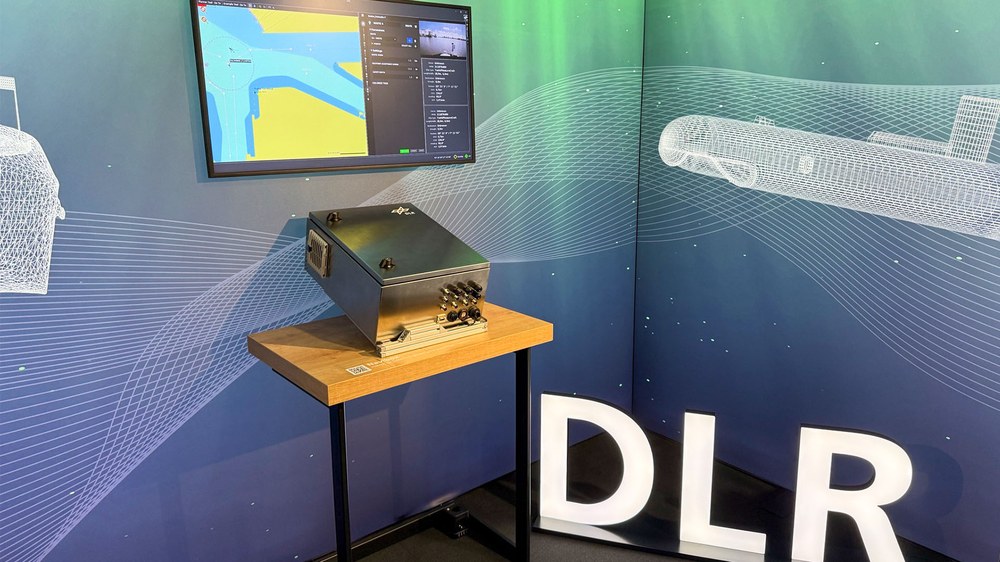

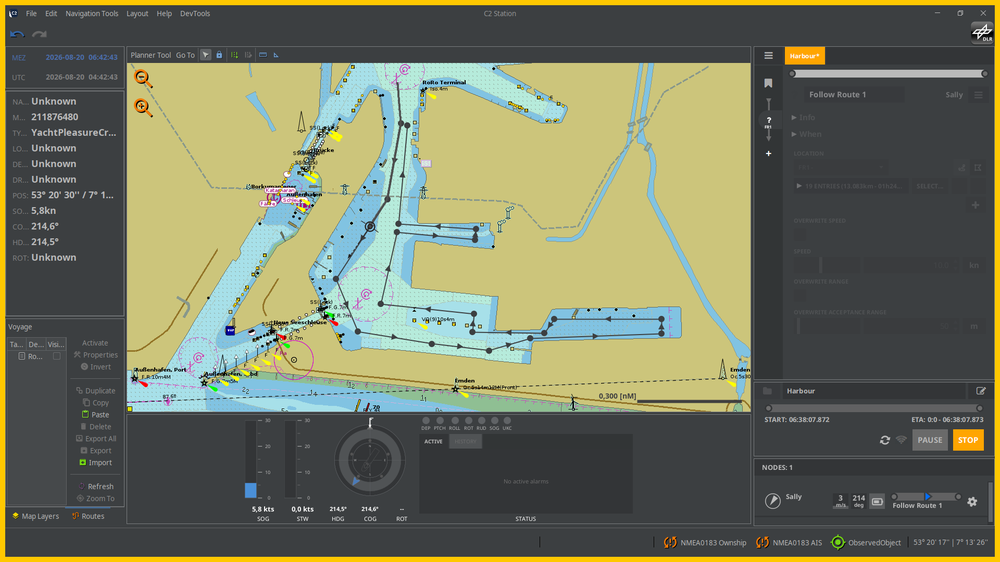
A key feature of the Navibox is automated navigation along a planned route, which can be flexibly adjusted during operation. As the foundation for an intelligent collision-avoidance system, the Navibox processes environmental data from various sensor sources and fuses it into a precise environmental model.
Another key area of technological focus is algorithms for the coordination of multiple unmanned units. The Navibox enables them to work together in a coordinated manner through automated task allocation and formation control. This allows complex missions to be carried out more efficiently and with fewer personnel.
Thanks to its modular architecture, various sensors, navigation systems, actuators, and external services can be connected via standardized, interoperable interfaces. The Navibox can thus be integrated into existing onboard and C2 infrastructures and provides a direct connection to central C2 (Command & Control) stations. This enables the centralized, remote monitoring and control of multiple units.
The Navibox is designed for maritime companies, port operators, and institutions that want to enhance their fleets with innovative autonomous solutions and operate them more efficiently and flexibly.
Benefits:
- Cost efficiency through retrofitting and interoperability
- Centralized fleet control: Monitoring and coordination of multiple units from a single C2 station
- Enhanced safety: Minimization of risks to personnel through the use of unmanned units
- Increased efficiency through cooperative tasking and automated task allocation
- Modular integration of various sensors, systems, and actuators
- Sustainability through the reuse of existing ships rather than new construction
Possible areas of application:
- Automation of Work Boats in Ports
- Monitoring of Critical Infrastructure
- SAR Operations
- Coordinated Deployment of Multiple Unmanned Units
- Other Maritime Automation and Research Applications