DLR patents process for using passenger experience to improve public transport
- A DLR patent enables the automatic use of passenger experiences to improve public transport.
- Passenger feedback enables problems to be resolved almost in real time.
- Focal points: Local public transport, human factors, digitalisation
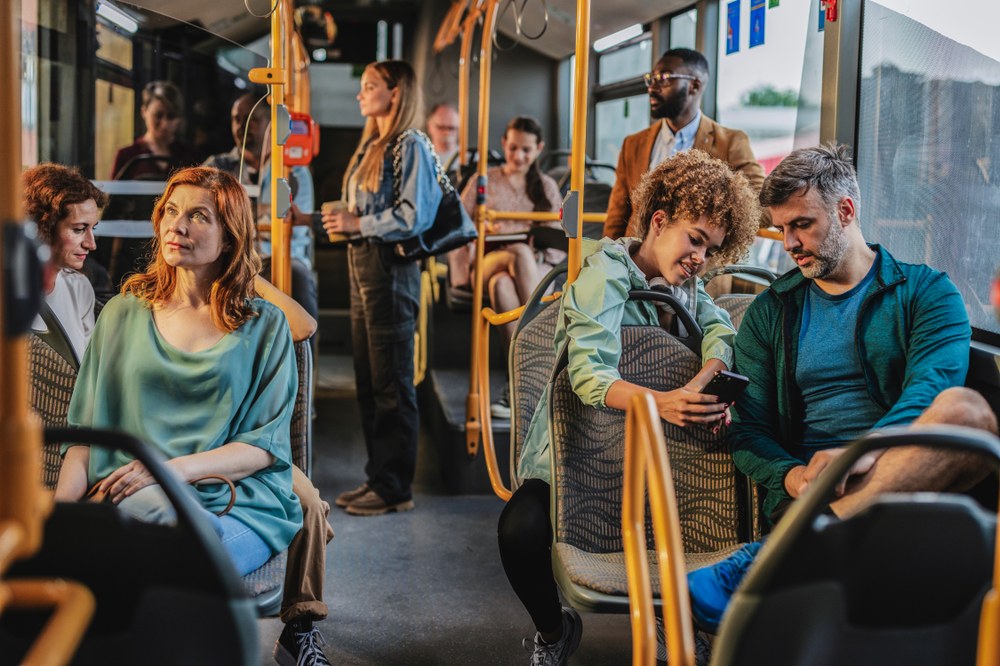
A missed connection, sudden braking or poor air quality in the vehicle: moments like these shape the travel experience – but until now, they have had little direct impact on operations. That is set to change in the future.
The German Aerospace Center (DLR) has patented a process that automatically records passenger experiences and uses them to immediately improve services. The patent, entitled "Method for influencing passenger transport" (Ref. DE102024113229), aims to enable a new form of interaction between transport operators and passengers.
Until now, improvements in public transport have been based primarily on selective passenger surveys. These provide valuable information, but are limited in terms of time and space. The new method closes this gap: sensor data from smartphones or smart watches can be used to anonymously record passengers' reactions during the journey. This provides information about comfort, stress or dissatisfaction.
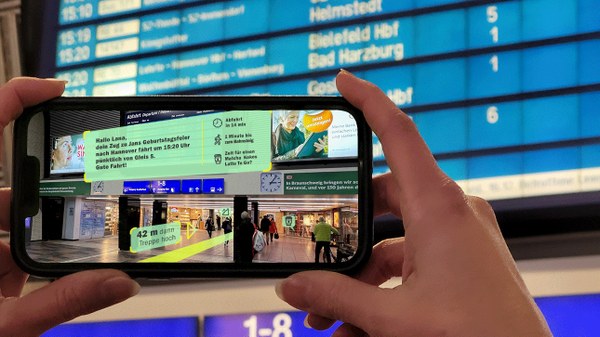
This information could be made available to the operator in near real time. The operator would then have the opportunity to intervene directly and improve the service – for example, by driving more smoothly, providing better connection information or optimising climate control. Even if problems cannot always be resolved immediately, at least the passengers on subsequent journeys will benefit, for example from automatically adjusted fresh air supply.
The process is already being used in the DLR project MoDa. There, it is part of the "TravelExperienceAPI" service concept, which systematically integrates the subjective travel experience into operations. The aim is to create a public transport system that is continuously geared to the needs of passengers – data-based, anonymous and with direct added value for travellers.