RESCUE • Reliable fuel cell power supply during natural disasters
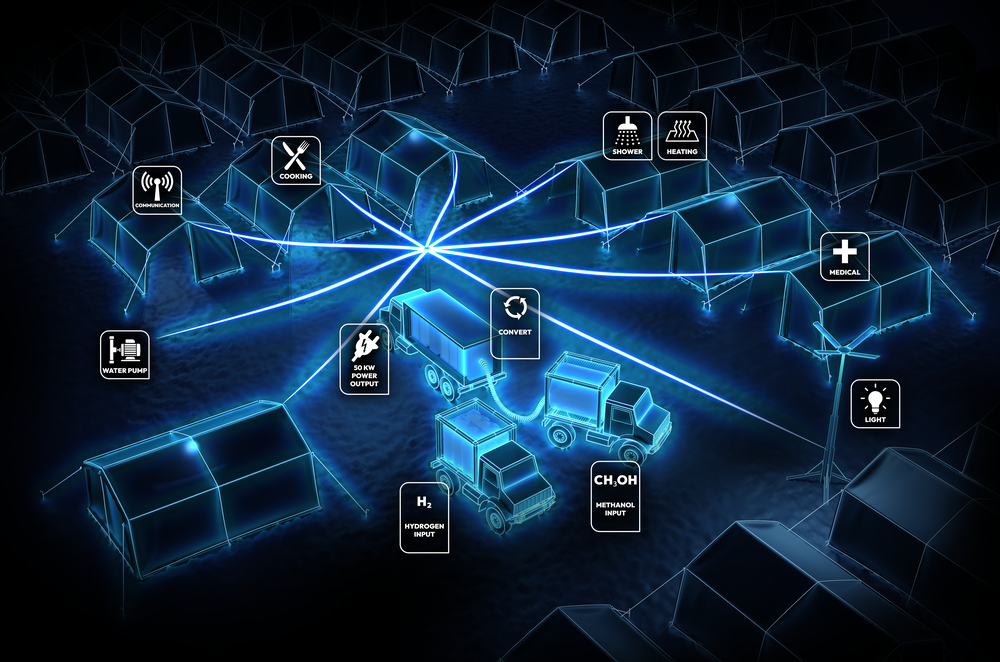
The RESCUE project is developing a modular fuel cell system designed to provide a reliable energy supply to critical infrastructure in the event of natural disasters
RESCUE • Reliable fuel cell power supply during natural disasters
The RESCUE-System
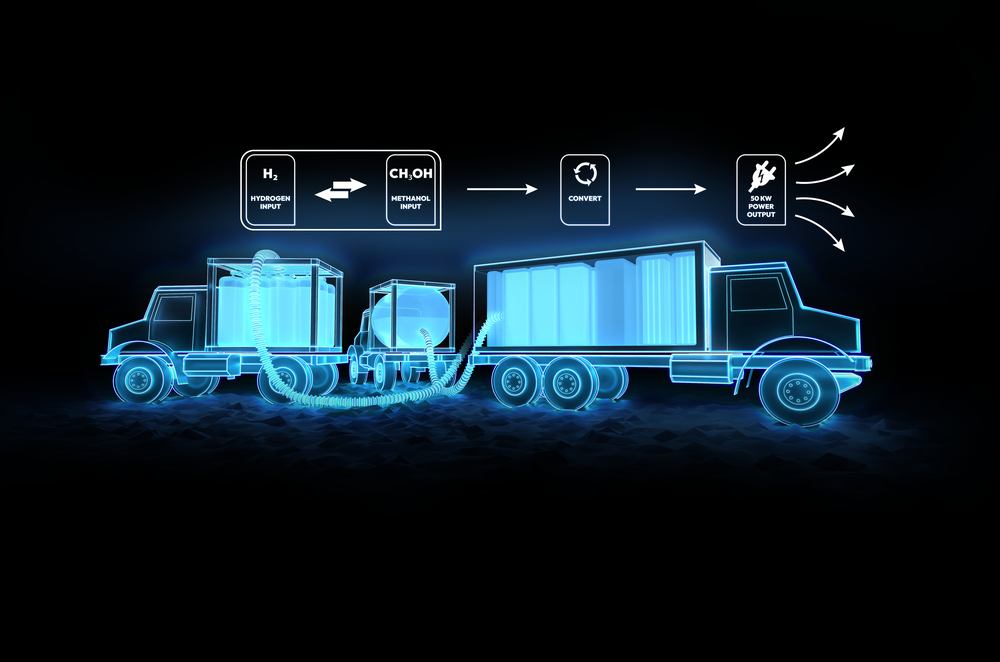
A container-based high-temperature PEM fuel cell system with a reliable output of 50 kW and dual-fuel capability for operation with methanol or hydrogen.
The fuel cell system can run on either 100 per cent hydrogen or 100 per cent methanol. Thanks to its flexible operation using either hydrogen or methanol, the system is designed to ensure a resilient energy supply even under demanding conditions. The system delivers a continuous electrical output of 50 kW and achieves a peak output of up to 100 kW – remaining reliable and powerful even under demanding conditions.
High Temperature-PEM-Technology
At the heart of the system is high-temperature polymer electrolyte membrane (HT-PEM) technology, which operates at around 160 °C. The higher operating temperature simplifies water management, facilitates heat dissipation and enables the direct use of reformate gases – making the system more efficient and resilient.
Integrated fuel cell module
The aim of the project is to develop a fully integrated fuel cell module with fuel tanks that can be filled with either hydrogen or methanol. Safety requirements and transport certification requirements will be taken into account throughout the entire development process.
Testing under real-world conditions
To validate the system’s performance, the RESCUE system will undergo a demonstration phase under real-world operating conditions, including grid integration and defined load profiles. To this end, at least 2,000 hours of on-site testing are planned at a civil defence organisation; following this, the project team will carry out a comprehensive assessment of the system’s performance.
Project objective: Autonomous power supply during natural disasters
The RESCUE project is developing and demonstrating a robust, modular and flexible fuel cell system to provide a reliable and autonomous power supply for critical infrastructure during natural disasters and other emergencies.
Our responsibilities within the RESCUE project
The DLR Institute of Engineering Thermodynamics coordinates the RESCUE project – acting as the main point of contact for the Clean Hydrogen JU, the European Commission and the consortium, it draws up the project reports, manages the contractual framework and monitors deliverables, milestones and cash flows.
The long-term durability of HT PEM fuel cell components (MEA and bipolar plates) is tested in individual cells under defined test conditions using various gas mixtures, in order to demonstrate this technology’s tolerance to a wide range of gas contaminants and, consequently, its flexibility with regard to various energy sources. In addition, following operation at the DLR, comprehensive chemical, physical and imaging analyses of selected components are carried out to gain an in-depth understanding of their stability.
In addition, the institute is responsible for public relations, produces scientific publications and documents dissemination and exploitation activities. Furthermore, the scientific workshop ‘HiPEM-TECH2026’ was organised by our in close collaboration with the RESCUE project.
Project
RESCUE (Reliable and Efficient Dual Fuel System for Civil Protection During Natural Disasters Using HT-PEM Technology)
Duration
1.1.2025 - 31.12.2028
Project participants
DLR Institute of Engineering Thermodynamics
DLR Institute of Networked Energy Systems
ADVENT Technologies S.A.
The Centre for Research and Technology Hellas (CERTH)
The RESCUE project, grant number 101192169. The project is supported by the Clean Hydrogen Partnership and its members. Co-funded by the European Union.