Columbus is a multi-purpose laboratory for multidisciplinary research under space conditions in materials science, life sciences and fundamental physics, as well as for the testing of new technologies. In addition to housing research facilities, the laboratory is made available to industrial users for their research and development work. The module is the main research workplace of the European astronauts.
Europe's laboratory module for the ISS Launch: 7 February 2008
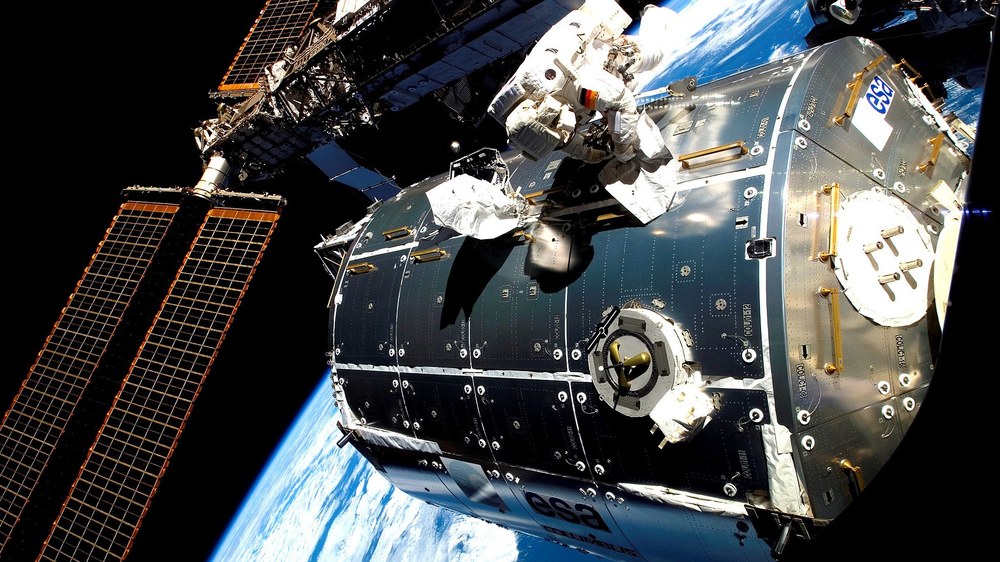
Outside the pressurised laboratory, external platforms provide capabilities for conducting fully-exposed experiments and Earth observation. The Columbus operational service is managed by the European Columbus Control Centre, which is based at DLR's German Space Operations Center in Oberpfaffenhofen, near Munich. In early February 2008, the Columbus module was transported to the ISS by the US Space Shuttle Atlantis, where it was installed on Node 2 (Harmony) with the help of a robotic arm and with the assistance of German ESA astronaut Hans Schlegel.
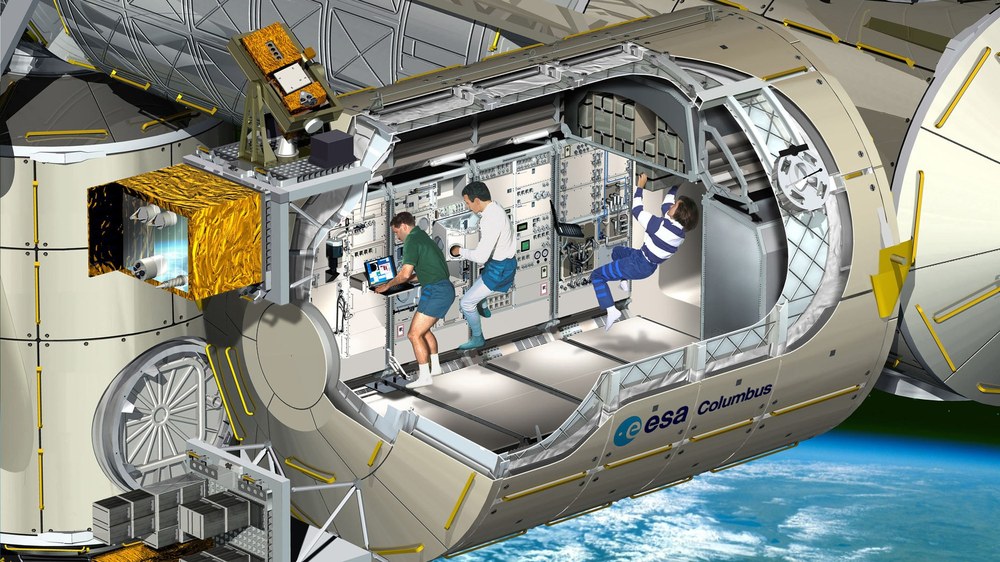
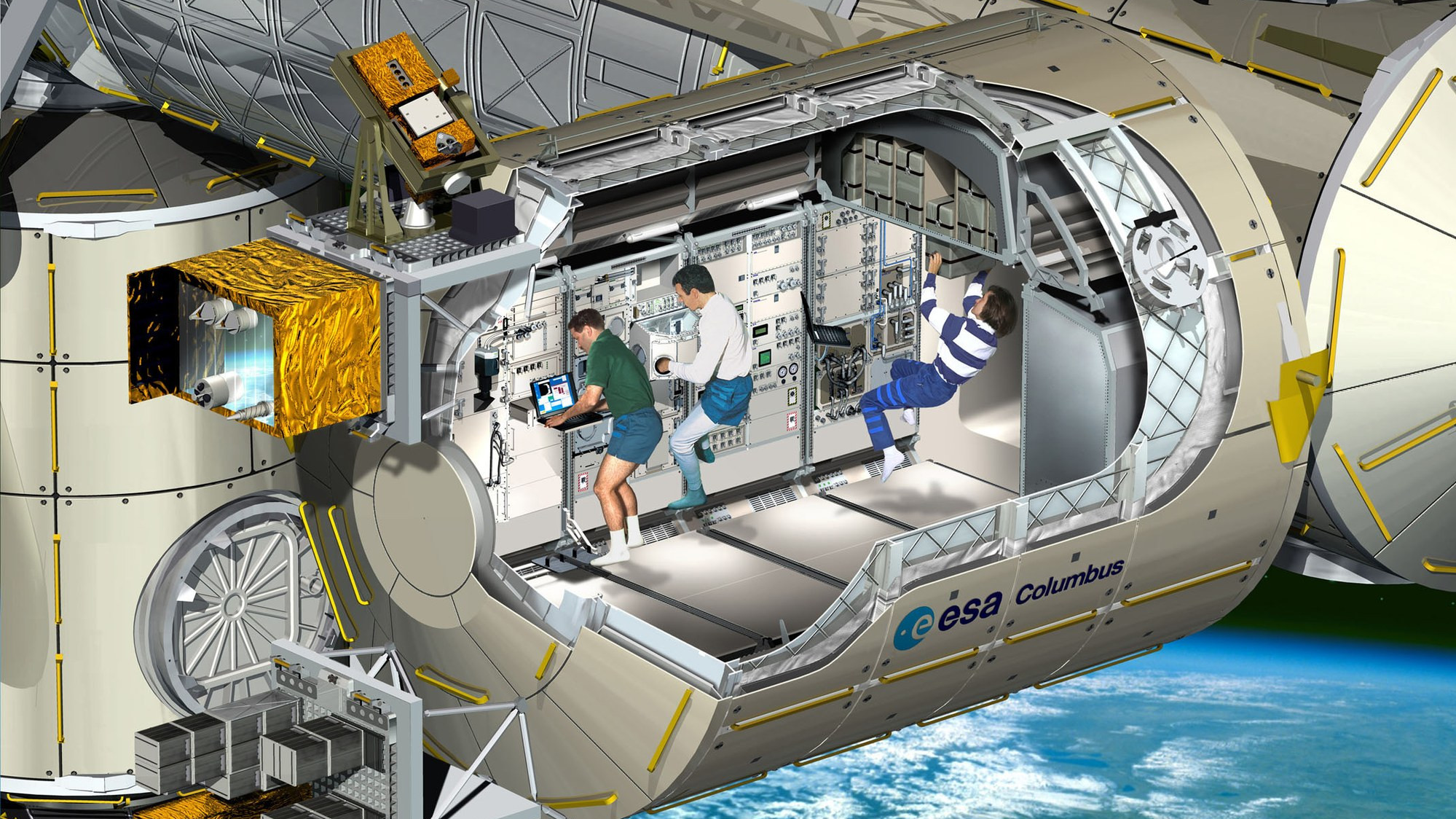
With a length of 6.9 metres and a diameter of 4.5 metres, the module provides space for five system racks and ten scientific payloads covering a range of different disciplines. The laboratory systems are designed to last for at least 15 years. The following scientific equipment is currently installed:
European Drawer Rack (EDR): Materials research with the Electro Magnetic Levitator (EML) and the astrophysics experiment MagVector
Biolab: Study of microorganisms, cells, plants and small invertebrates
European Physiology Modul (EPM): Human physiology, including the German-French CARDIOLAB for cardiovascular research
Installation of the plasma physics experiment PK-4
Fluid Science Lab (FSL): Fluid physics, partly materials research (investigation of the dynamics of liquid media)
Muscle Atrophy Research & Exercise System (MARES): Human physiology to study the effects of space flight on the astronauts' bones and muscles
*EXPRESS Rack 3: Accommodates various small-scale experiments, as well as the European Modular Cultivation System (EMCS), an incubator and centrifuge for biological experiments
*Human Research Facility 1 (HRF-1): Human physiology to study the effects of prolonged flights in space on humans
*Human Research Favility 2 (HRF-2): Human physiology to study the effects of prolonged flights in space on humans
The four external experiment racks each have a payload volume of 1.5 cubic metres. Current external payloads on Columbus are:
SOLAR: Sensors for monitoring solar activity
*ISS-RapidScat: Instrument for measuring wind direction and strength over oceans
*High Definition Earth Viewing (HDEV): Four HD video cameras for Earth observation and technology testing will be used by the German Columbus Eye project for educational purposes.
(* = facility operated by NASA.)
Interior view of the Columbus module
Graphic representation of the Columbus laboratory docked to the ISS.
Strong involvement of German companies in the development of the space laboratory
As ESA's prime contractor for the Columbus space segment, EADS Bremen (now Airbus Defence & Space) led a consortium of 41 companies from 14 countries responsible for the development, manufacturing and testing. Overall, German companies were involved in around 40 percent of the development.