German Space Operations Center

More than five decades of experience with space missions
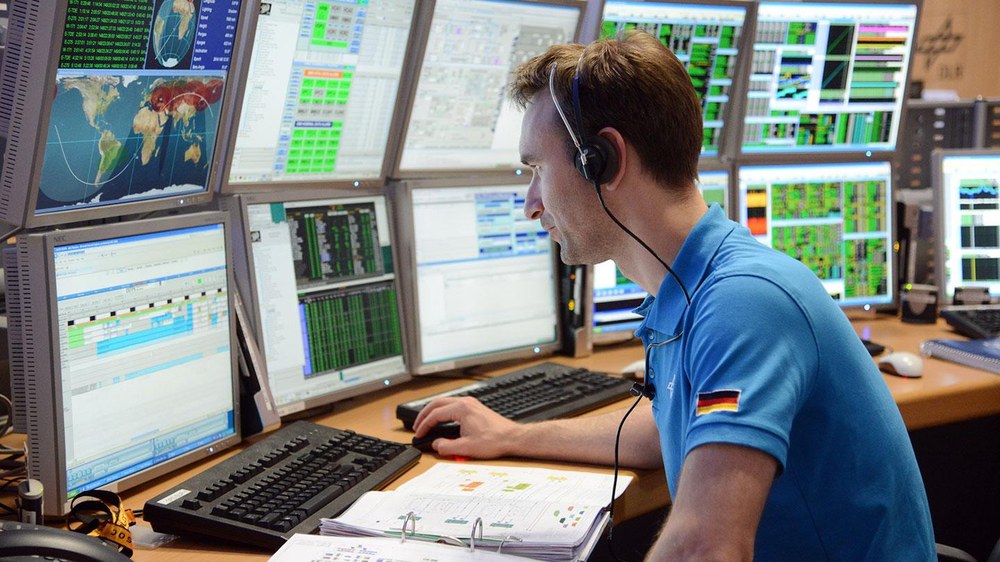
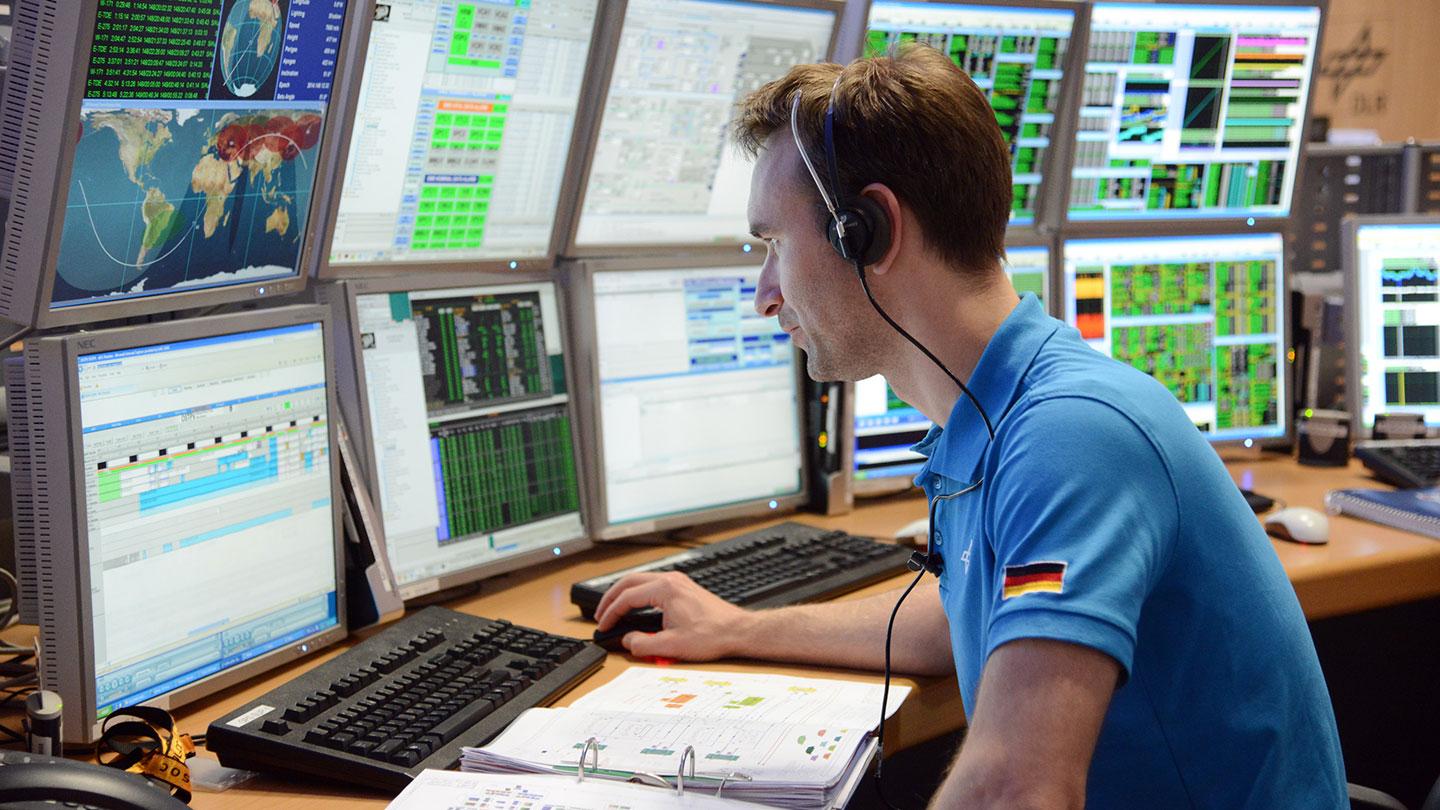
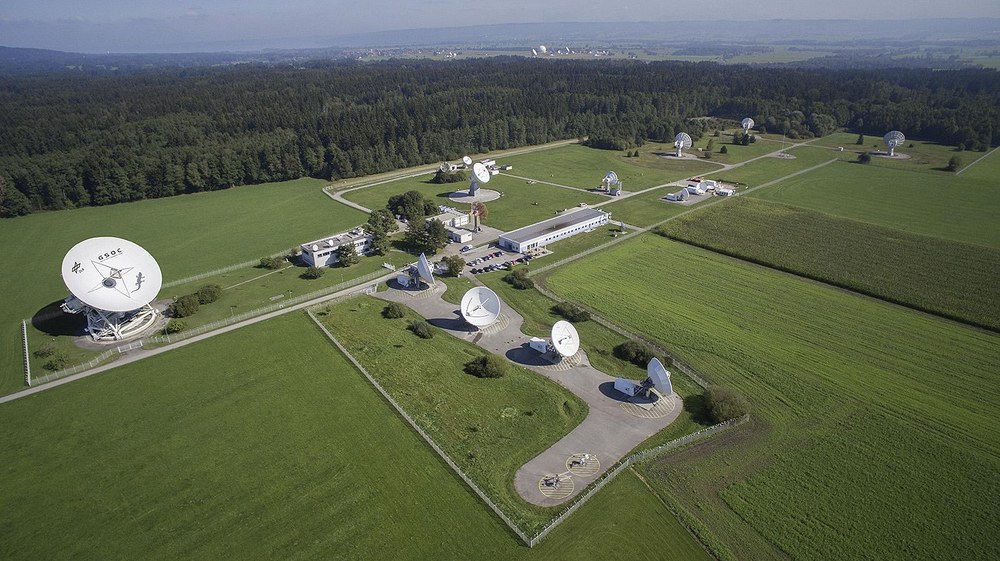
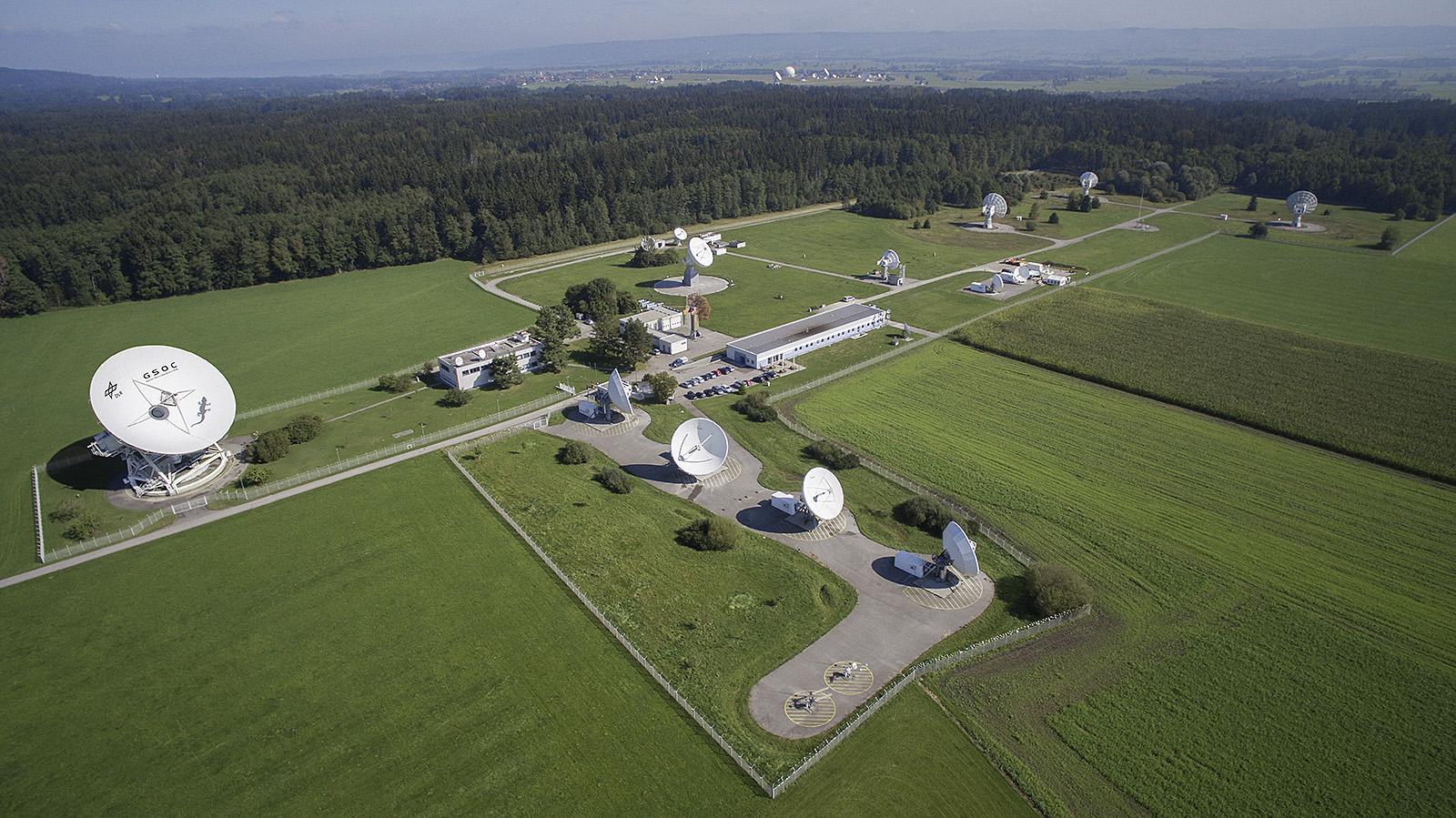
The German Space Operations Center (GSOC) of the DLR Space Operations and Astronaut Training institution in Oberpfaffenhofen, near Munich, has long-standing experience in spacecraft operations. Since 1969, GSOC has been responsible for operating satellites and supporting crewed missions, and has played a key role in numerous national and international space missions.
Earth observation missions have been part of GSOC's activities for many years. The expertise gained in this area has been built in part through the now-completed CHAMP, BIRD and GRACE (Gravity Recovery And Climate Experiment) missions. Today, GSOC controls and monitors, among others, the German radar satellites TerraSAR-X (launched in 2007) and TanDEM-X (launched in 2010), which fly in close formation, as well as the EnMAP hyperspectral satellite, launched in 2022. In addition, mission operations are currently being prepared for SeRANIS (Seamless Radio Access Networks for Internet of Space) and GRACE-C (GRACE-Continuity).
GSOC is also committed to the safe and reliable operation of space-based systems and develops innovative ground segment technologies to make space missions even more robust and efficient.
The DLR Space Operations and Astronaut Training institution also includes the Ground Station Weilheim (Zentralstation des Deutschen Bodensystems; ZDBS) in Weilheim, the Mobile Rocket Base (MORABA) for launching sounding rockets, and the Microgravity User Support Center (MUSC) in Cologne. The institution is also involved in the operation of the European Astronaut Centre (EAC) and the LUNA Analog Facility, a joint project between DLR and the European Space Agency (ESA).
The Human Exploration Control Center (HECC) is currently being established as part of GSOC at the DLR site in Oberpfaffenhofen. It will serve as the central European control centre for all crewed and robotic missions to the Moon and Mars, building on decades of GSOC expertise.
Tasks of the German Space Operations Center
Based at DLR's Oberpfaffenhofen site, GSOC has been a central element of Germany's space activities for more than five decades, preparing and carrying out national and international space missions. Across its diverse missions, it is responsible for:
- controlling and monitoring spacecraft, their subsystems and onboard experiments,
- communication between spacecraft, ground stations and control centres,
- tracking and calculating flight and orbital paths, and, related to this,
- planning and executing flight and orbital trajectory corrections,
- receiving, processing, distributing and evaluating data,
- mission planning, including the planning of operational sequences on board and on the ground,
- coordinating the design, construction and maintenance of ground control segments,
- and providing highly available and secure infrastructure at the space operations centre.
The German Space Operations Center sees its responsibility to act in accordance with the objectives of the German space programme. In doing so, it fulfills international commitments – including participation in ESA projects and the operation of the Columbus space laboratory on the International Space Station ISS. It also collaborates on projects such as the GRACE satellite project with NASA, as well as carrying out projects in the field of commercial systems, such as TV-SAT, DFS and EUTELSAT. In this way, commercial, scientific and crewed missions are carried out in parallel at the German Space Operations Center. GSOC also provides scientific and technical services for missions operated by external organisations. As a result, the various projects all benefit from the comprehensive capabilities and structures of this mature and tried-and-tested multi-mission operations.
Efficient and flexible – multi-mission operations and the matrix principle
The organisation of the German Space Operations Center and its project management are based on experience gained from previous spaceflight projects and follow the matrix principle. Projects are assigned to dedicated project groups composed of, and supported by, representatives from the relevant technical departments. This division of responsibilities ensures a high level of available expertise and flexibility, and enables clear allocation of resources in line with project requirements. This means that for each new project, a project manager is appointed, supported by project engineers from the relevant technical departments. This project team is then responsible for all the work required to prepare and carry out the planned mission.
The multi-mission concept not only ensures that sufficient capacity is available for the efficient preparation and execution of missions; it also allows numerous resources to be shared with other projects, which is reflected in increased operational reliability and reduced costs.
Experience and expertise in numerous scientific space missions since 1968
The German Space Operations Center's experience and expertise have been continuously built up and further developed since 1968 through the preparation and execution of a wide variety of missions.
GSOC's first mission began on 8 November 1969 with the launch of the AZUR satellite, which flew through Earth's radiation belts. The mission was followed by the two aeronomy satellites AEROS A and B (1970 to 1974). Continuity in the field of near-Earth missions was achieved through the successful Active Magnetospheric Particle Explorer (AMPTE) mission (1984 to 1986). From 1990 to 1999, the ROSAT X-ray satellite was operated using the DLR ground station in Weilheim and the NASA ground station in Wallops. The Earth observation satellites BIRD, CHAMP, GRACE 1 and GRACE 2 were also operated in an efficient multi-mission programme. The TerraSAR-X mission, with its high-resolution radar satellite, was launched on 15 June 2007 and has been flying in formation with its TanDEM-X twin satellite since 21 June 2010. The EnMAP hyperspectral Earth observation satellite was launched on 1 April 2022 and has also been controlled and monitored from Oberpfaffenhofen ever since.
In the field of interplanetary spaceflight, the German Space Operations Center was responsible for the HELIOS A and B missions to the Sun (launched in 1974 and 1976 respectively). The probes came within 0.28 astronomical units of the Sun – one astronomical unit (AU) is the average distance between Earth and the centre of the Sun, approximately 150 million kilometres. These successful missions led to support for ESA's GIOTTO mission, which made use of GSOC's 30-metre S-band antenna in Weilheim. During NASA's GALILEO mission to Jupiter, the control centre in Oberpfaffenhofen monitored the Retro Propulsion Module (RPM).
Experience supporting crewed missions since 1983
Human spaceflight has developed into another significant area of activity for the German Space Operations Center, with more than three decades [RJ4.1]of expertise already under its belt. In this field, it has taken a leading position in Europe through its preparation for the operation of the Columbus research module on the International Space Station (ISS). During the first Spacelab mission, FSLP (1983), the control centre in Oberpfaffenhofen was linked as a user centre to the Houston Control Center. In 1985, during the first German Spacelab mission, D1, it served as the Payload Operations Control Center (POCC). This successfully demonstrated the capabilities and functions of a control centre specifically for European science. In terms of scientific operations, the German Spacelab D1 mission was carried out entirely by the German Space Operations Center, making it the first control centre in the western hemisphere, outside the United States, to be directly involved in crewed space missions.
For the German Spacelab D2 mission in April 1993, a new building with modern facilities was designed and built in Oberpfaffenhofen. It was also used for crewed ESA missions such as EUROMIR. Another milestone in crewed space missions at GSOC was the Shuttle Radar Topography Mission (SRTM) in 2000 with German ESA astronaut Gerhard Thiele. Thiele was followed by German ESA astronauts Alexander Gerst on the Blue Dot (2014) and Horizons (2018) missions, and Matthias Maurer with the Cosmic Kiss mission (2021–2022).
Owing to its experience in human spaceflight, which is unique in Europe, ESA selected the German Space Operations Center to operate the Columbus research module, Europe's most significant contribution to the ISS.
The strict and demanding requirements of human spaceflight have, over many years, led GSOC to implement numerous new and innovative concepts and measures, which have collectively increased system availability and operational safety – benefits that also extend to other projects.