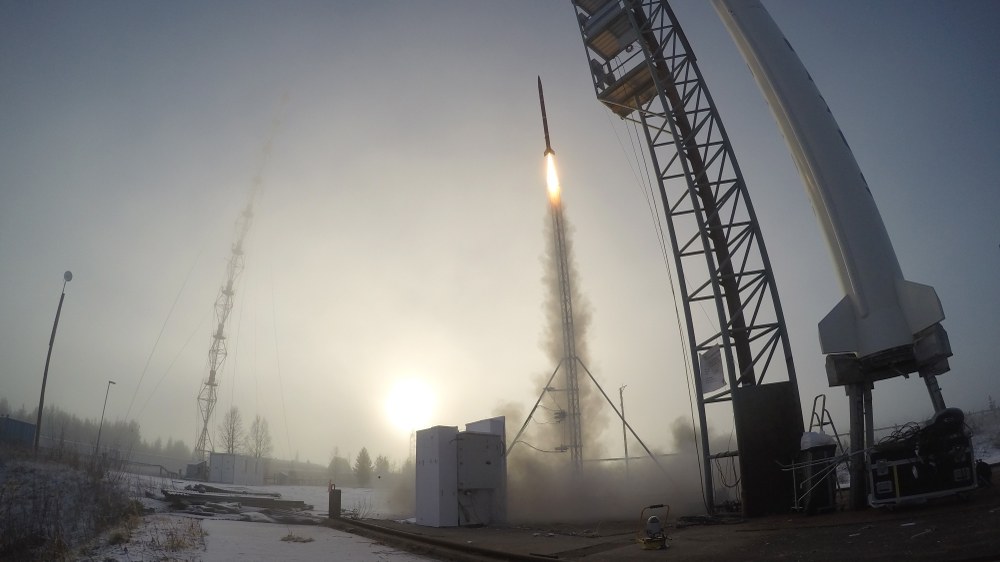
The STERN (Studentische Experimental-Raketen) programme offers aerospace engineering students at German universities the unique opportunity to design and build their own rocket, including the propulsion system, and launch it from the Esrange Space Centre near Kiruna in northern Sweden.
The students are given three years to complete their project. Due to the complex nature of the project, this can only be achieved in teams. A telemetry unit serves as the payload, transmitting all important flight parameters such as acceleration, speed and altitude to Earth during the flight, enabling the students to analyse the flight data afterwards. The student teams can use commercial solid rocket motors in the highest performance class as well as their own designs in the field of liquid drives, hot water (steam) or hybrid drives.
Planning and building your own rocket, including the propulsion system, and launching it from Esrange Space Centre near Kiruna in northern Sweden – the STERN (Student Experimental Rockets) programme offers aerospace engineering students at German universities this special opportunity. The students are given three years to complete their project.
The student rocket programme / STERN
Your consent to the storage of data ('cookies') is required for the playback of this video on Youtube.com. You can view and change your current data storage settings at any time under privacy.
The student rocket programme / STERN
Planning and building your own rocket, including the propulsion system, and launching it from Esrange Space Centre near Kiruna in northern Sweden – the STERN (Student Experimental Rockets) programme offers aerospace engineering students at German universities this special opportunity. The students are given three years to complete their project.
An important part of the student projects, and particularly in the development of the propulsion system, involves design and various engine tests. These tests can also be carried out in cooperation with the DLR test centre in Lampoldshausen, the site of the Ariane 5 rocket engine tests, and the test centre at the DLR site in Trauen. In addition, the students' work focuses primarily on the overall rocket system.
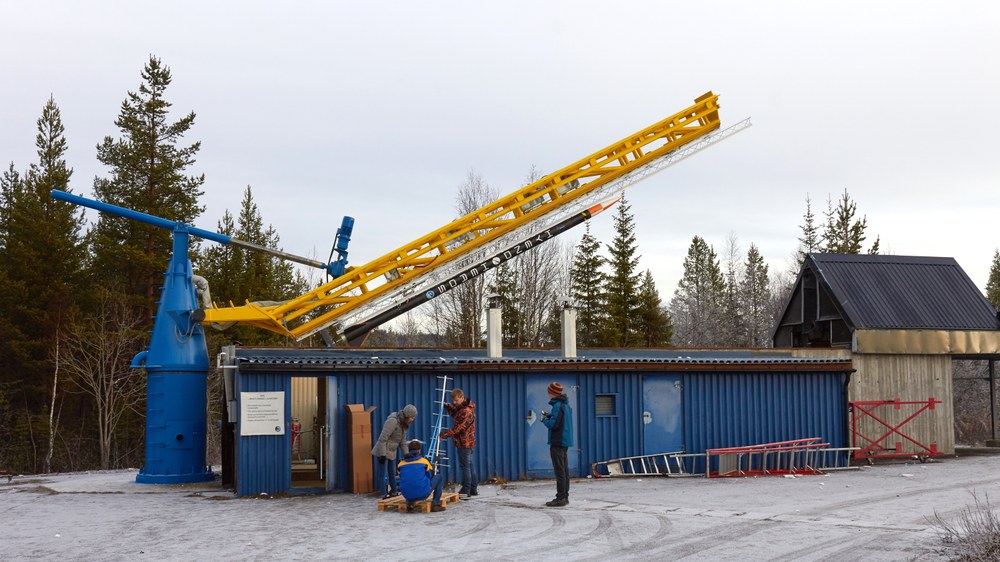
HEROS rocket on the launch pad
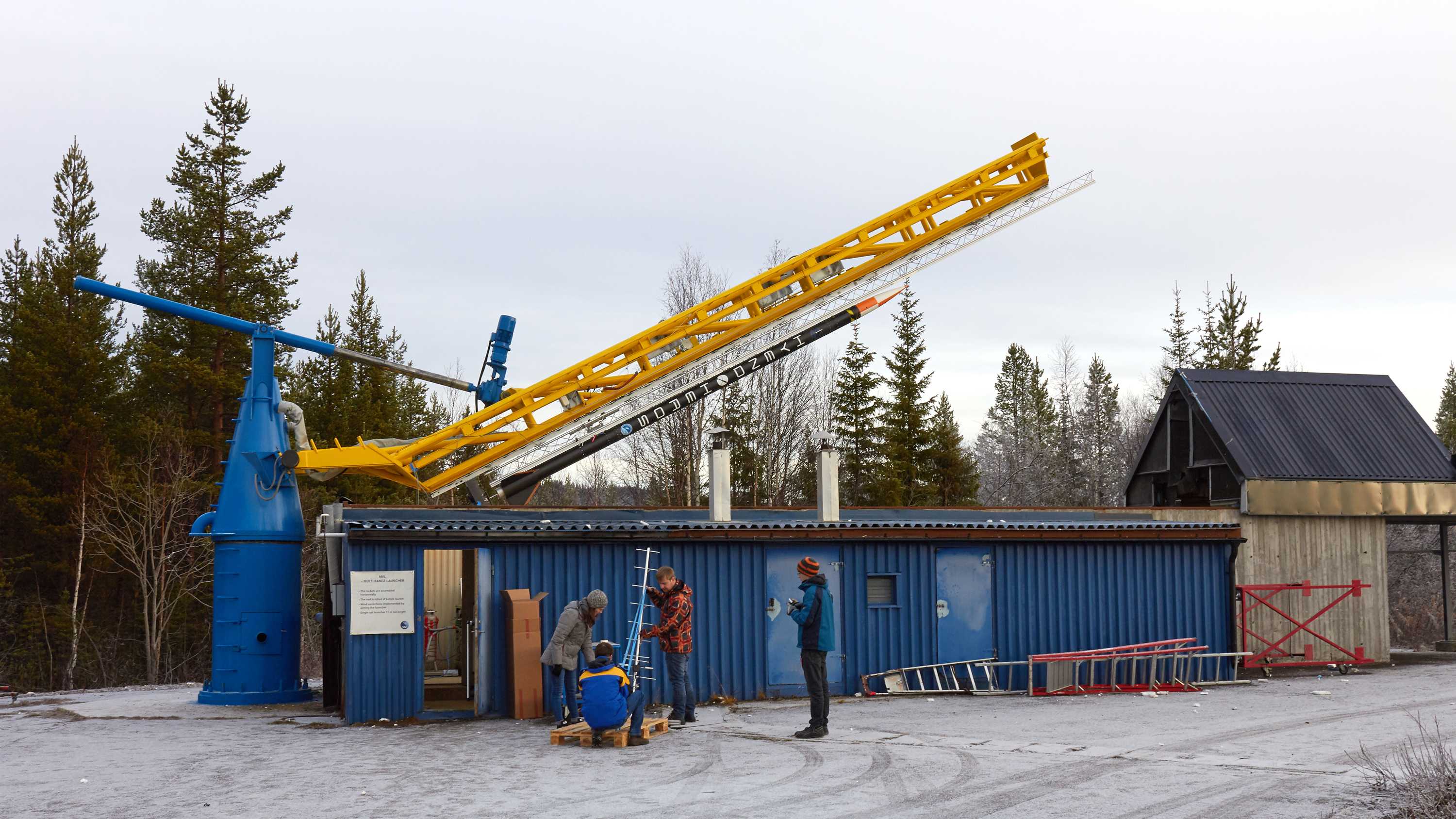
The first flight campaign of the STERN programme, which took place from 19 to 30 October 2015 at the Esrange Space Center in northern Sweden, brought together teams from the TU Braunschweig, the University of Stuttgart and the TU Berlin. Pictured here is the fully assembled HEROS rocket of the Stuttgart HyEnD team on the launch pad.
Among other things, the plan is to conduct wind tunnel tests with the rocket body to determine the flow profile around it and compare it with computational fluid dynamics models.
Further tasks to be tackled include the design of pressure vessels (tanks, engine casings), the construction of the nozzle and the strength calculation (finite element method) of individual rocket elements. The same strict safety rules that apply to the regular high-altitude research rockets that are regularly launched at the Esrange Space Center in Kiruna also apply to the student rockets.
The work is part of the course, considering various aspects of rocketry and simultaneously serving as a performance record for the students. Within the project, the future graduates must meet milestones that are fixed in terms of time and content and take part in ‘reviews’ in which they are required to present and justify their design to a critical audience. The students thus go through a process that mirrors the one in a real project in the field of space technology or in the development of a new launcher system.