
Single Sector Combustor
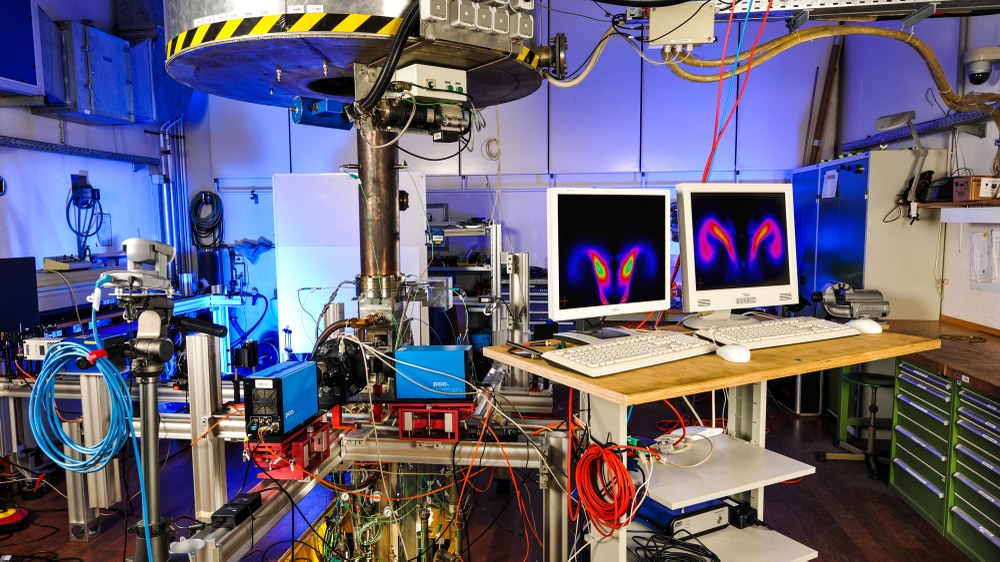

The single sector combustor is a test rig with visual access from three sides, designed to investigate burner concepts for future aircraft engines. The facility focuses on analysing the area immediately around the burner, with the particular aim of researching the atomisation, mixture formation and flame stability of different fuels under realistic conditions.
The test combustion chamber is designed for use with a variety of gaseous and liquid fuels. These include conventional fuels such as kerosene, as well as sustainable fuels such as hydrogen or Sustainable Aviation Fuels (SAF). Furthermore, the EDS allows for precise and independent adjustment of the parameters air pressure, inlet temperature and mass flows, enabling the test rig to simulate realistic thermodynamic conditions found in modern aircraft engines and gas turbines.
By using the laser-optical measurement techniques developed at the Institute, flow fields, temperature distributions, reaction zones and soot-formation processes can be recorded non-invasively and in high resolution during the tests and subsequently analysed. The test rig is optically accessible from three sides and can be optimised on request for analyses of the combustion chamber walls. The measurement section containing the burner is mounted on a three-axis traverse table, which allows it to be moved in all three spatial axes. This ensures a robust, static configuration for the laser diagnostics, enabling the precise investigation of the various areas of the reaction zone. This straightforward and static configuration is a particular advantage, especially for the testing and development of new, often combinatorial, measurement techniques, and offers a unique selling point in terms of the approximation of realistic conditions.
Since individual combustion chamber components are manufactured using the SLM (Selective Laser Melting) process, various application-specific burner designs can be tested quickly on the test rig. The experimental combustion chamber therefore serves as a crucial bridge for both industry and research between fundamental laboratory experiments and subsequent trials on large-scale facilities such as the high-Pressure Combustor Test Facility (HBK 1). This combination creates ideal conditions for further developing both sustainable burner and combustion chamber technologies and laser-optical measurement techniques at the EDS.
Characteristics of the test bed
- Primary zone of the measuring section across its full width, visually accessible from three sides
- Measurement section movable by means of a three-axis traverse table
- Interchangeable wall panels with individual cooling
- Precise distribution of air mass flows using critical nozzles
Research topics
- Development and testing of laser-optical measurement technology under realistic combustion chamber conditions
- Testing of SLM burners and combustion chamber components
- Investigation of the reactive flow in aircraft engine and gas turbine burners under realistic operating conditions in regard to:
- Flow field and reaction zones
- Liquid fuel atomisation
- Mixing of fuel (spray and steam) and air
- Flame stabilisation / lean-burn extinction
- Effects of combustion instabilities on the primary zone
- Pollutant formation
- Soot formation
- Burner-wall interaction
Measurement Technology
- Particle Image Velocimetry (PIV)
- Laser-induced Fluorescence (LIF on the OH radical and on aromatic fuel components)
- Laser-induced incandescence (LII on soot particles)
- Doppler Global Velocimetry (DGV)
- Laser Doppler Anemometry (LDA)
- Phase Doppler Anemometry (PDA)
- Chemiluminescence (OH*, CO2*)
- Mie scattering
- Dynamic pressure sensors (thermoacoustic vibrations)
- Exhaust gas analysis using samples taken via heated probes
Technical Data
Static Pressure | up to 13 bar |
Preheating temperature of the compressed air | up to 850 K |
Air mass flow | up to 1 kg/s preheated air up to 2 kg/s cooling air |
Liquid fuels | Natural gas (up to 30 g/s), Hydrogen (up to 12 g/s) |
Gaseous fuels | Kerosene (up to 35 g/s), Speciality fuels (up to 35 g/s) |