Heat exchangers are key components for increasing energy efficiency and enable residual heat to be utilised directly, for example, in high-temperature heat pumps and in turboshaft engines. Furthermore, lightweight and efficient heat exchangers are essential for the thermal management of fuel cells in electrified aviation. In addition to increasing energy efficiency, optimised heat exchangers enable the use of new technologies in the first place and make a significant contribution to reducing CO2- emissions.
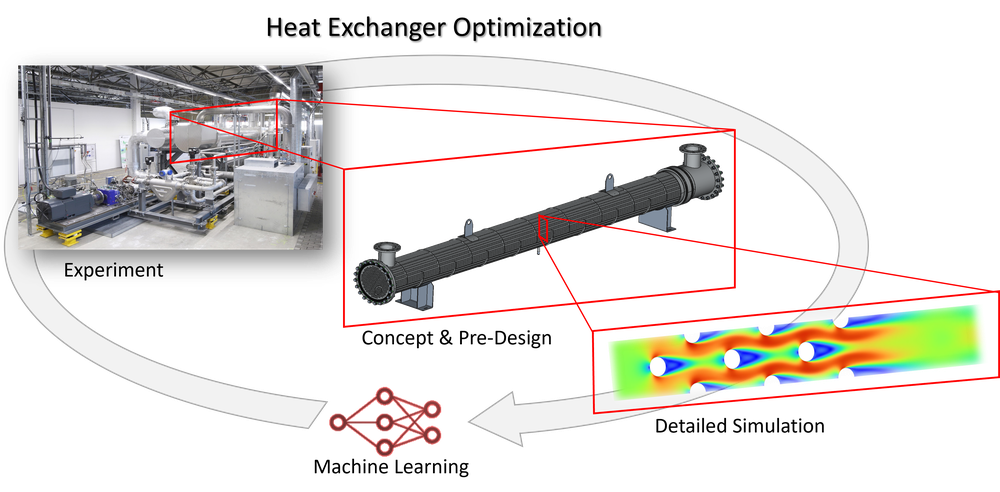
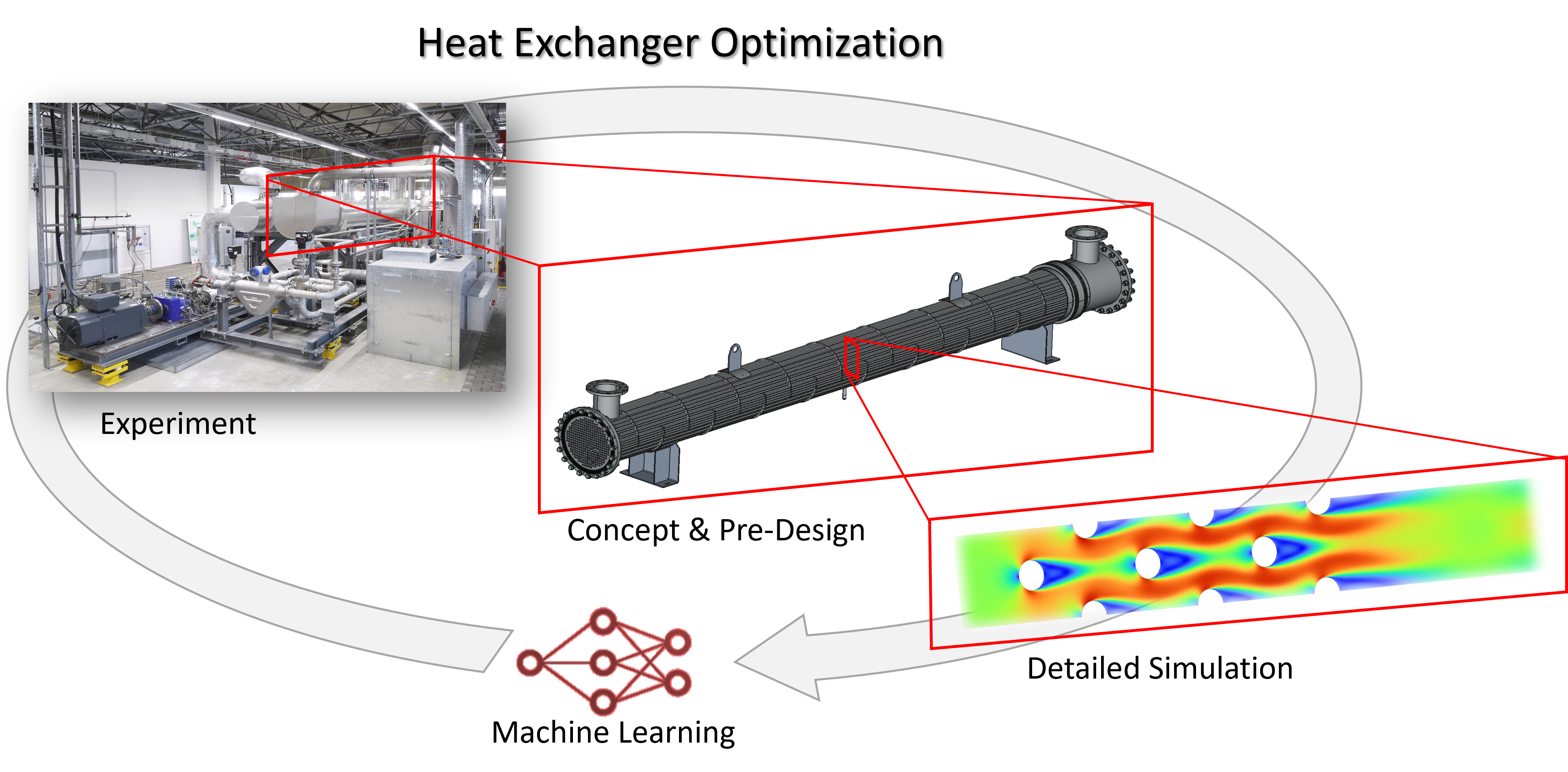
This project therefore aims to implement validated design tools for the relevant heat exchanger types, which can then be used for the various optimisation tasks. When selecting a calculation method, a compromise must always be made between calculation time and accuracy. For the design of the overall system consisting of several components, fast pre-design tools are developed which can map the basic properties of heat exchangers and enable the system structure to be optimised. In addition, high-fidelity analyses are also implemented, which can evaluate flow processes in detail in order to make the results of the preliminary design more precise. The results of the high-fidelity analyses are integrated into the pre-design tools and multi-fidelity optimisation processes are implemented to ensure the most consistent transition possible between these design phases. Finally, the developed calculation methods are validated using existing heat exchangers in order to determine their accuracy and estimate their range of validity.
Optimization of Heat Exchangers for High-Temperature Heat Pumps
Due to the integration of detailed CFD simulation into the preliminary design methods using machine learning and their experimental validation using our high-temperature heat pump pilot plants, we create efficient methods for optimising heat exchangers, specifically for our requirements