Innovation and Transfer
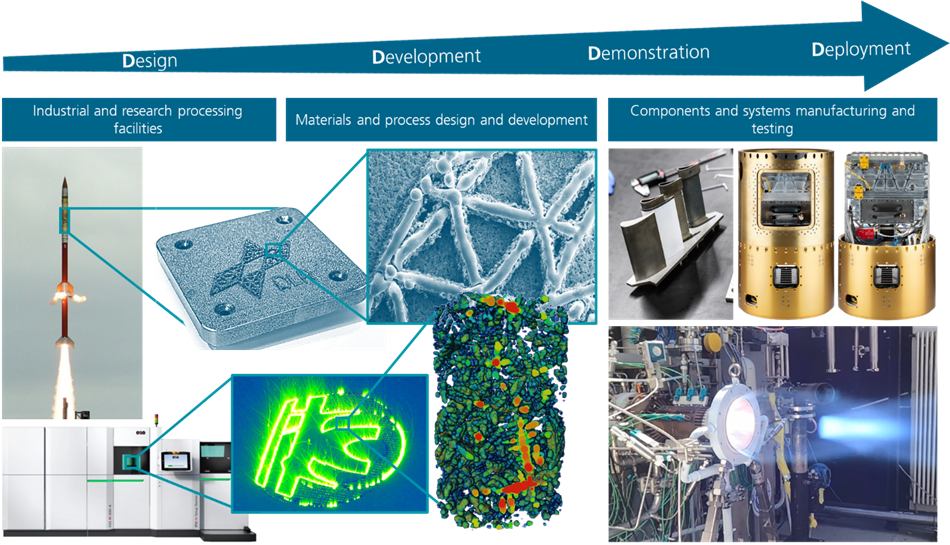
The five cross-cutting, strategic research areas of the institute are designed to accelerate the transfer of research results into industry, particularly in the mid-range technology readiness levels (TRL 3 to 6), enhanced by digitally integrated approaches.
The increasing computational power of modern systems—including quantum computing—and the use of state-of-the-art simulation and experimental techniques now allow the exploration of large materials spaces to identify the best candidates for the foreseen applications.
In addition, the institute aims to open its own materials science and engineering research platform within the DLR MAPHEUS sounding rocket program as an accessible “proof-of-concept” platform, particularly for small and medium-sized enterprises (SMEs). These combined strategies are intended to significantly shorten research and development cycles during the early TRL phases (TRL 2 to TRL 4).
For higher TRLs (TRL ≥ 4), the institute’s sub-scale capabilities—including compoenents manufacturing and testing—combined with AI-driven analysis and robotic systems, further accelerate the maturation of new applications. This not only speeds up the development process but also enhances the effectiveness of transferring results into industrial practice.
Moreover, the institute’s focus on increasing TRLs and enabling the introduction of new products and components supports the creation of a culture of technology transfer. This culture is aimed at fostering spin-offs and bridging the gap between research and market adoption.