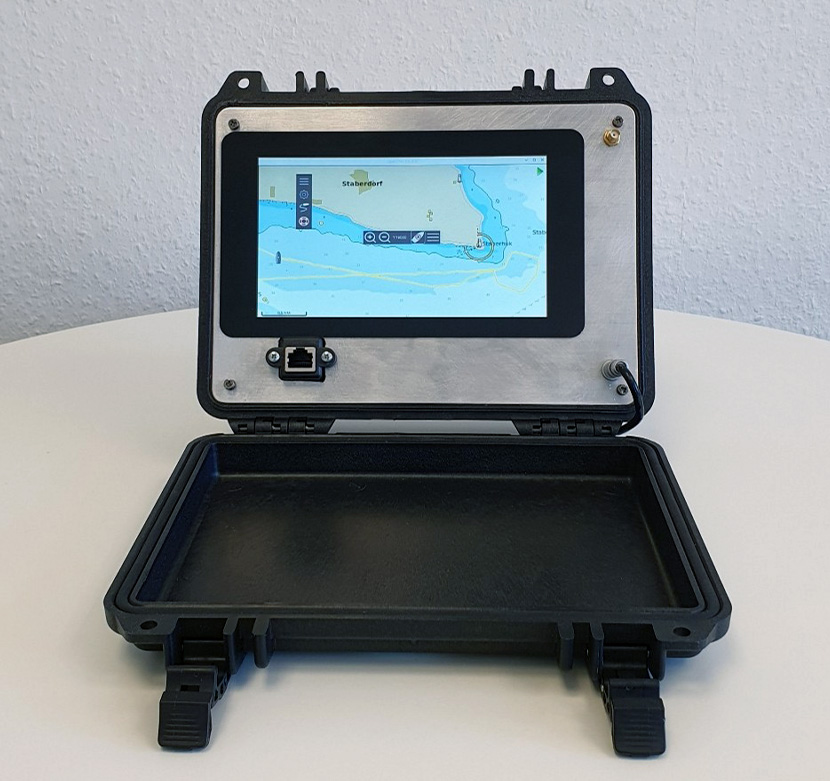
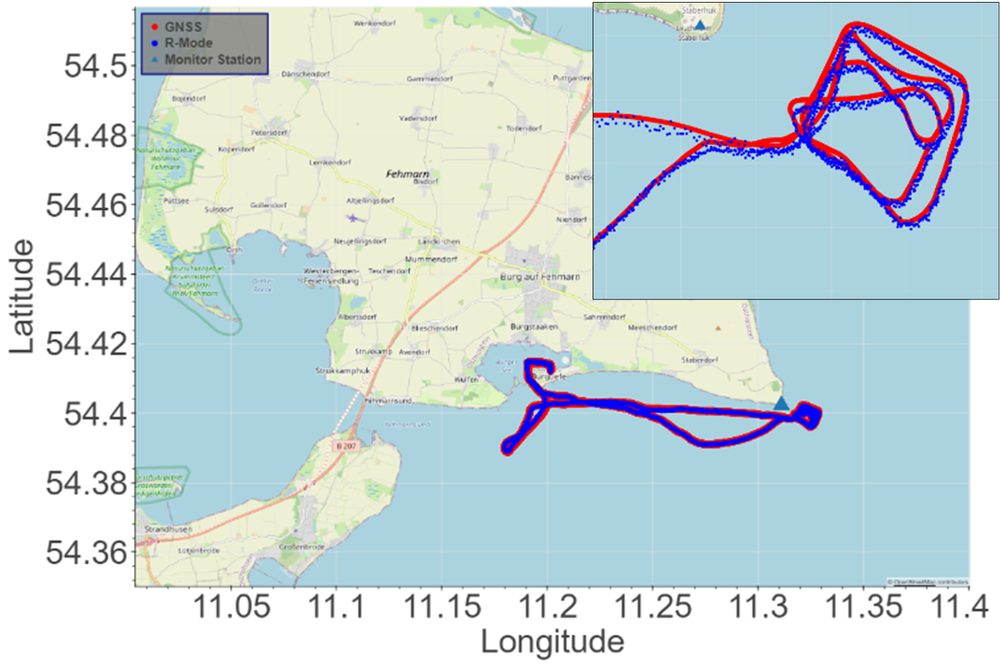
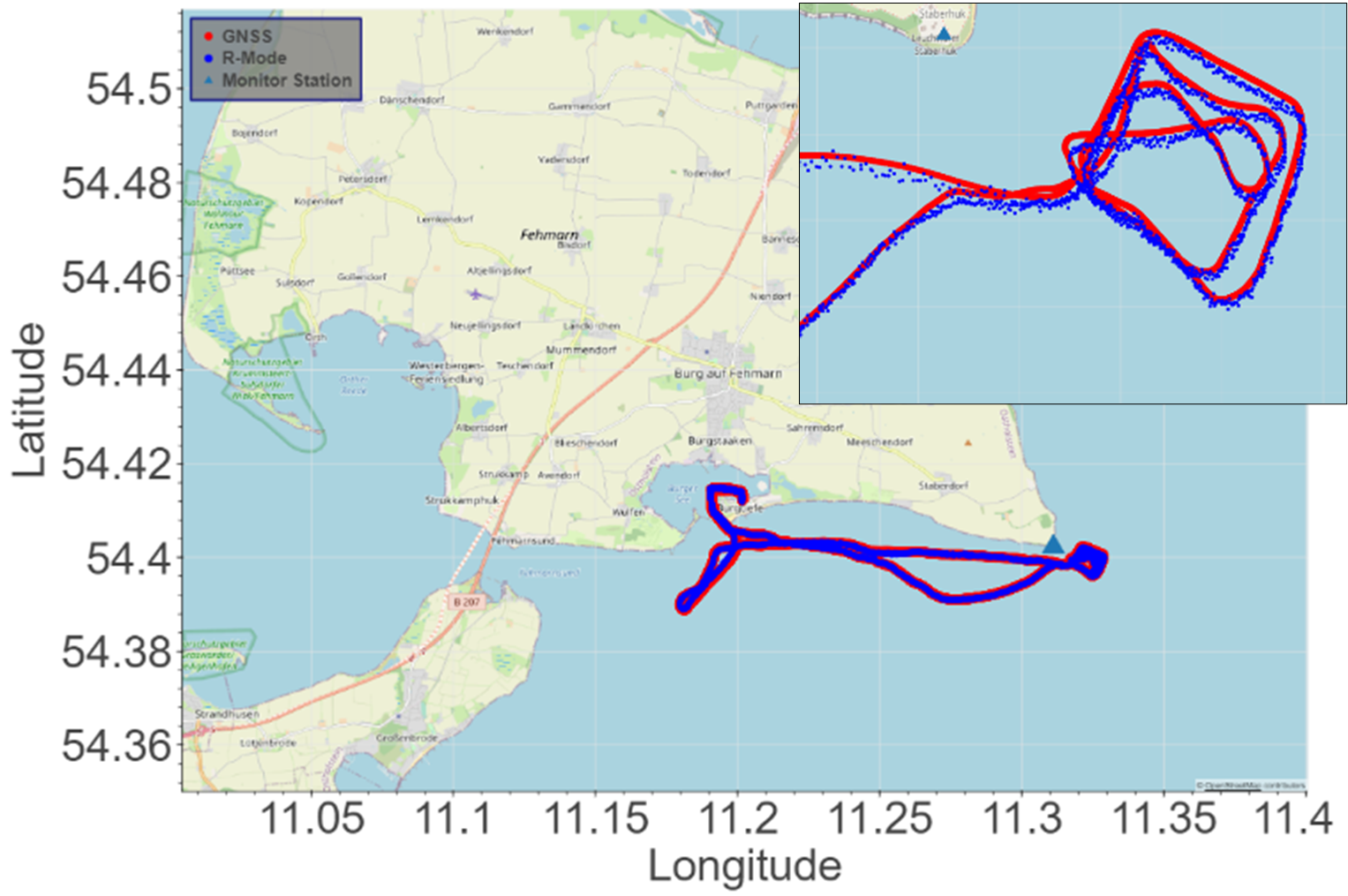
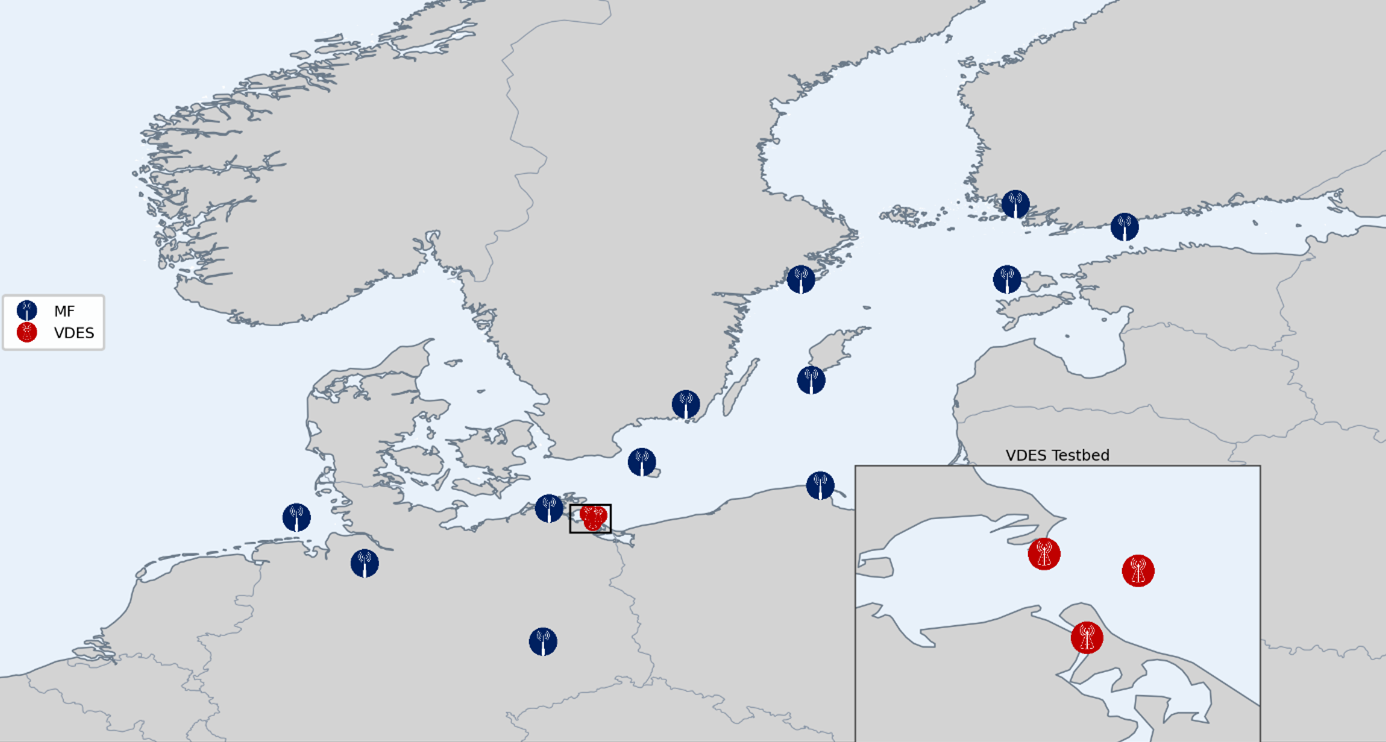
The prototype receiver presented here is a portable version of the medium-wave R-Mode receiver developed by the German Aerospace Center (DLR). Its underlying architecture has already been used to implement the world's first far-field positioning system using R-Mode. Continuous development and miniaturisation have made the receiver suitable for mobile use in the Baltic Sea R-Mode testbed.
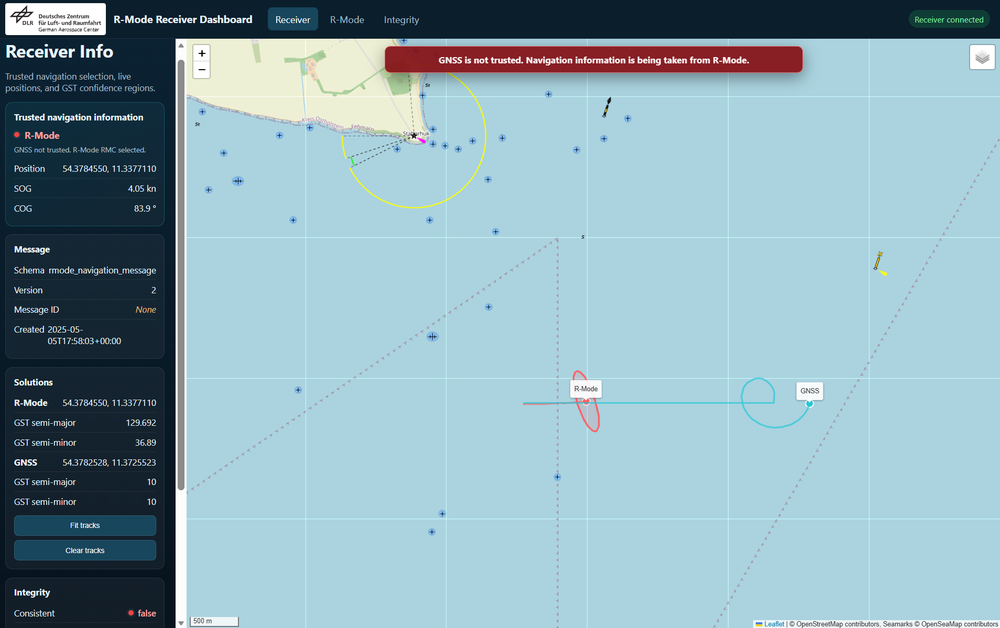
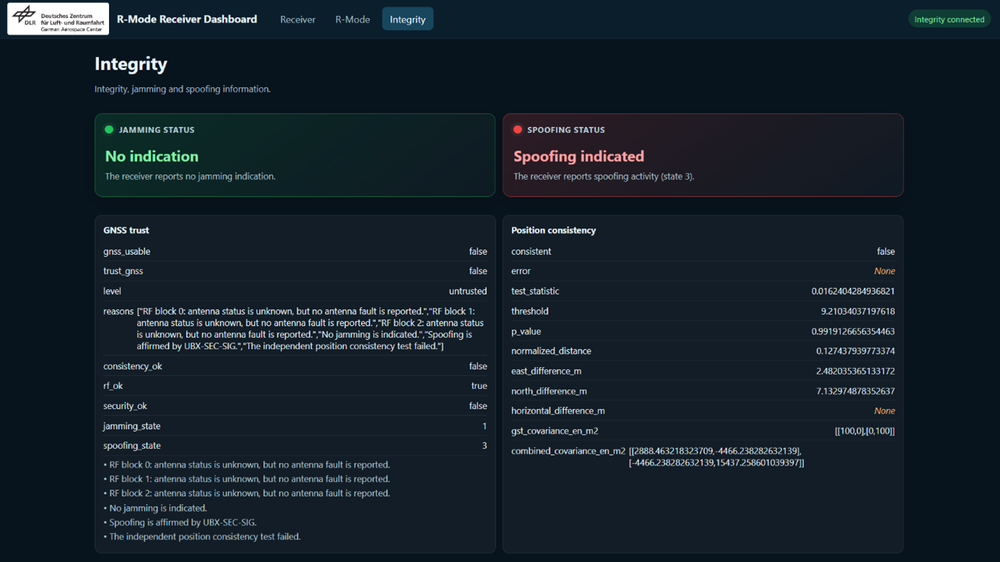
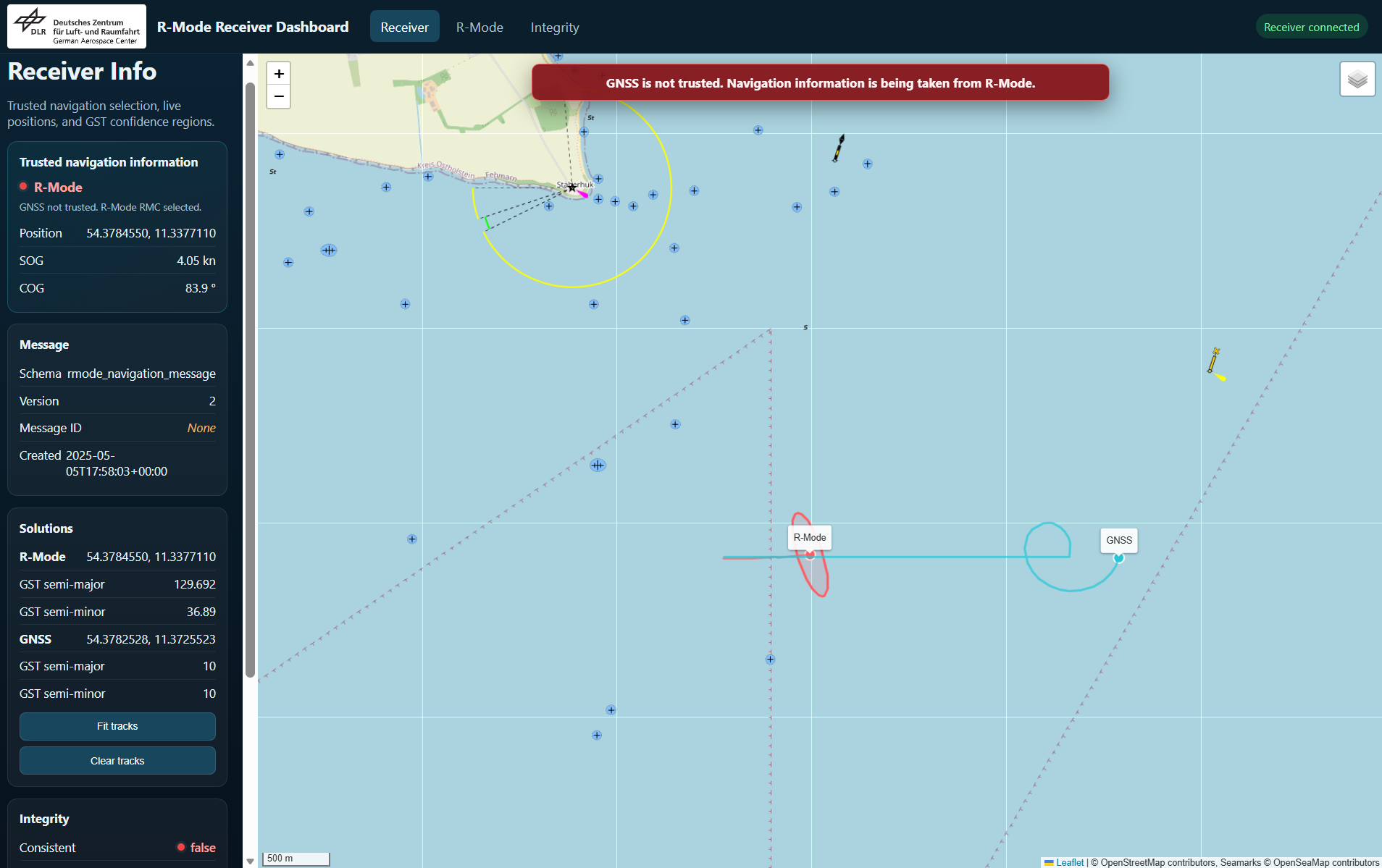
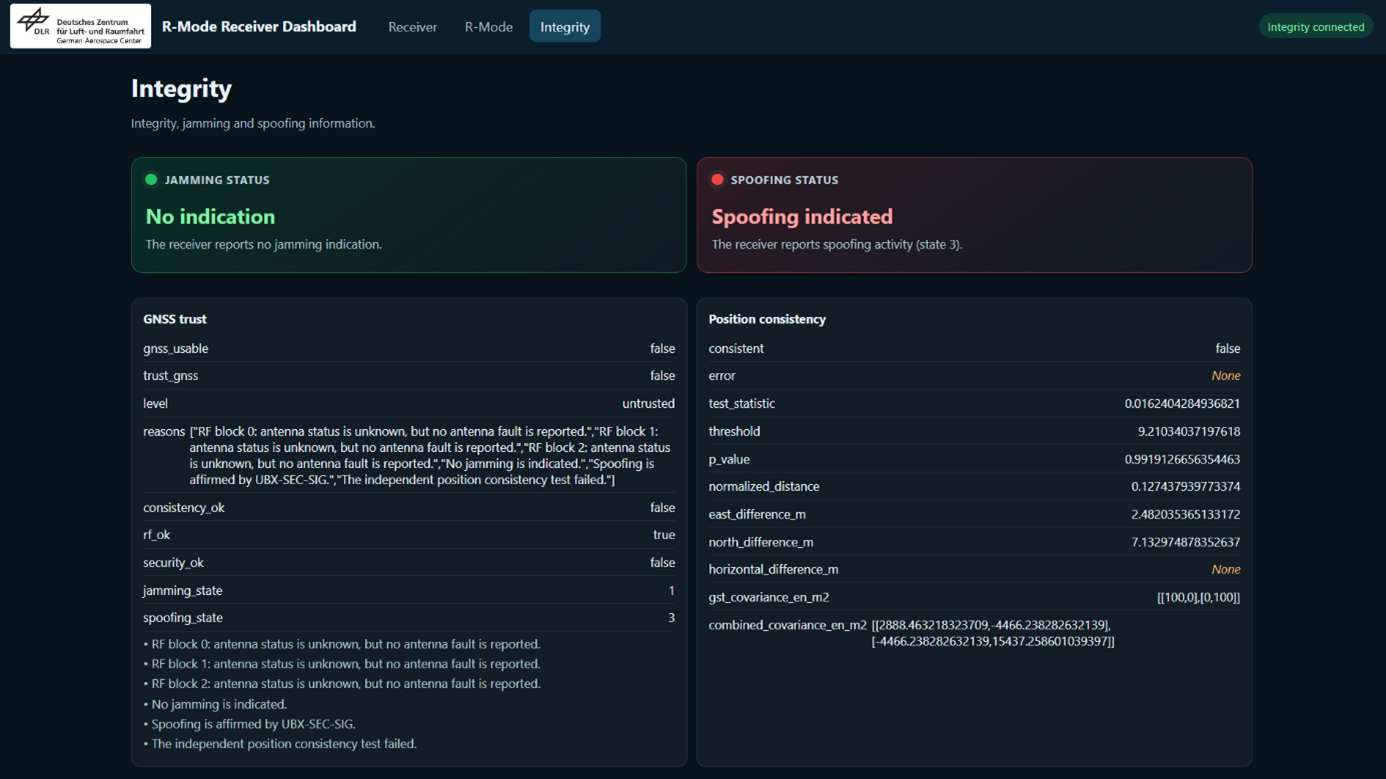
The receiver provides a user-friendly web interface for accessing information about available R-Mode stations, and displaying the calculated position on a map. When GNSS (Global Navigation Satellite Systems) data is available the receiver can also provide integrity information that evaluates any divergence between GNSS and the R-Mode position at different levels of detail.
Further, the receiver can also exchange information with external systems. For example, interference information can be provided to a GNSS interference detection system, while the R-Mode position can be displayed on a chartplotter or an ECDIS (Electronic Chart Display and Information System).
GNSS are the main source of Positioning, Navigation and Timing (PNT) information for safety-critical maritime operations, including AIS and ECDIS. Their global availability and accuracy make GNSS indispensable, but satellite signals remain vulnerable to natural and intentional interference, including jamming and spoofing. Maritime operations therefore need a complementary, GNSS-independent PNT source to support the safe completion of manoeuvres when GNSS performance is degraded or unavailable. IMO (International Martitime Organization) and IALA (International Organization for Marine Aids to Navigation) are advancing resilient maritime PNT solutions such as R-Mode.
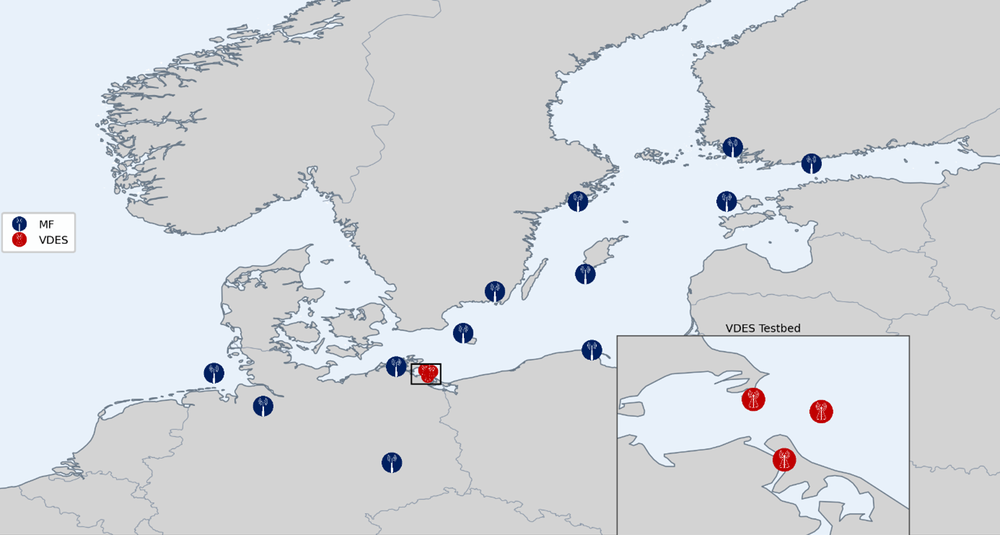
R(anging)-Mode is a terrestrial radionavigation technology that reuses existing maritime radio infrastructure to provide signals for ranging and positioning. Precisely synchronized MF radio beacons or VDES shore stations transmit R-Mode signals from known locations. A shipborne receiver estimates its distance to multiple stations and combines these measurements to determine position and time independently of GNSS.
MF R-Mode – Maritime Radio beacons: MF R-Mode uses maritime radio beacons in the medium-frequency band around 300 kHz. Additional signal components enable precise ranging while preserving the existing communication function. Its long propagation range makes MF R-Mode particularly suitable for wide-area coastal coverage.
VDES R-Mode – VHF Shore Stations: VDES R-Mode uses precisely timed VHF transmissions from synchronized VDES (VHF Data Exchange System) shore stations for ranging. It combines the communication capabilities of VDES with a terrestrial PNT service and benefits from the wider VDES signal bandwidth for precise ranging. Existing VDES sites can therefore form the basis for resilient positioning in coastal waters and port approaches.
R-Mode moves towards international standardization
In June 2026, IMO NCSR 13 finalized draft performance standards for shipborne R-Mode receiver equipment, covering terrestrial R-Mode as a resilient backup to GNSS. The draft standards are scheduled for consideration by MSC 112 in December 2026.