
RAPADO declares war on mountains of paper - Opremic
Whether turbine blade, sensor or hydraulic valve - every single component of a commercial aircraft is relevant to safety. This makes it all the more important to be able to trace where a part comes from, how often it has flown and how it has been serviced or overhauled at any time during maintenance and repair.
This is called "traceability" and is one of the key requirements of aviation safety. This not only plays a role if an accident leads to an investigation by the aviation authorities. It is also essential for an everyday process - the trade and use of used aircraft parts. And these make up a significant proportion of the global spare parts trade today.
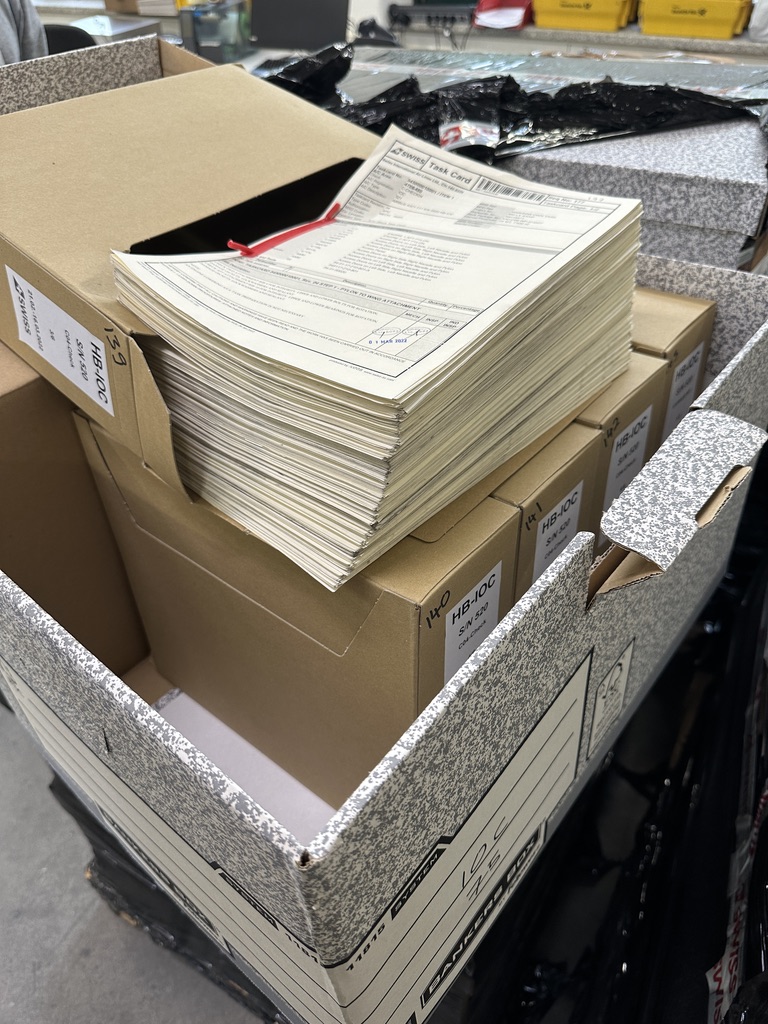
But without complete proof, no aircraft part will find a buyer. And this proof is still largely kept on paper. Although the system is time-consuming and not immune to errors, it has been the undisputed standard in the industry for decades. The Eschborn-based company Opremic has set itself the task of taking it into the digital future. "In our RAPADO project, we have created a digital solution for seamless documentation of the life cycle of aircraft parts," says Bastian Breitenmoser, who founded the company together with Dr Michael Frank in 2019. The research partner of the project, which is funded by the Federal Ministry for Economic Affairs and Energy (BMWE) as part of the Aviation Research Programme (LuFo), is the Free University of Berlin.
Digital chain instead of piles of paper
The basic idea behind RAPADO: every entry for the maintenance, inspection or modification of a part is stored as a secure transaction in a decentralised digital system - complete with time stamp, role allocation and proof of authenticity. "We don't document the part itself, but all the processes that are linked to it," explains Bastian Breitenmoser. "This creates a kind of digital twin with a traceable chain of events." The system is based on open source technologies and utilises the principles of distributed ledger technology (DLT) to enable tamper-proof and verifiable documentation - without unnecessarily straining the term "blockchain". Only authorised partners along the supply and maintenance chain - such as manufacturers, airlines, maintenance companies or testing organisations - have access to the entries.

Opremic trade GmbH
"When we started development, we received the documentation for an Airbus A320," recalls the business economist, who worked for various airlines before founding the company. "We received seven Euro pallets full of paper. Some of it was a good 20 years old." This was not just a challenge for the scanner. One thing quickly became clear: transferring the content from paper to silicon was not enough. "The feedback from the industry was clear: if the data, some of which has been collected over decades, cannot be analysed for specific requirements, it has no added value." This is precisely what was not envisaged in the original scope of the project. "But the DLR's Project Management Organisation for Aeronautics Research was uncomplicated and flexible," says Bastian Breitenmoser, praising the collaboration. "The extension of the project duration contributed significantly to the quality of the solution."
Developed with practical relevance
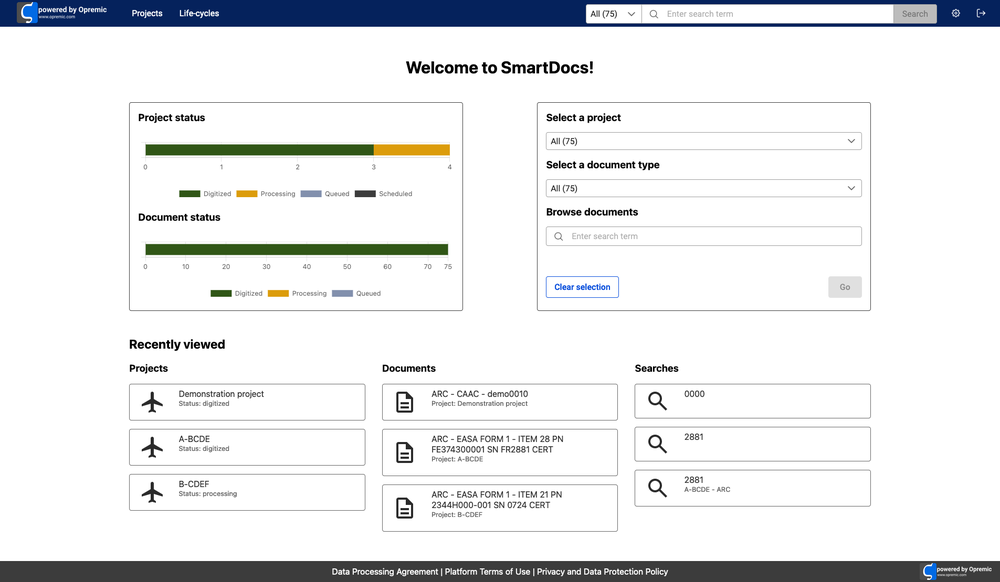
To ensure that RAPADO proves itself in practice, Opremic has worked with maintenance companies (MRO - Maintenance, Repair and Overhaul) from the outset. "Aviation is a strictly regulated sector," says Bastian Breitenmoser. "That's why it was important for us to understand the users' requirements precisely and take them into account at an early stage." Over the course of the project, a digital demonstrator was created that depicts real-life application scenarios - for example, the repair of a valve. "You can see how the digital life cycle map is built up step by step - from production to installation and removal of the component and its maintenance." The digital chain of events links all processes transparently and unalterably - traceable for all authorised persons. Regardless of location.
Opremic trade GmbH
The Opremic team is certain that RAPADO is an important step towards a digital aviation infrastructure. "The system can create transparency and reduce the effort involved in the day-to-day handling of component documents, such as purchasing, sales, queries from aviation security authorities and so on," says the aviation expert. "If we lay the foundations on this basis today, we will be able to map an end-to-end digital life cycle in a few years' time - from the 'birth' of a new part, through its use in various aircraft and maintenance, to scrapping at the end of its life cycle." To achieve this goal, Opremic is working closely with the International Air Transport Association (IATA). Together, they want to develop RAPADO into a new industry standard in aviation. The principles of RAPADO could also be transferred beyond the aviation industry - to other safety-relevant industries such as rail transport or medical technology. Digital identities for components, forgery-proof certificates and transparent supply chains: The approach not only promises greater efficiency, but also more sustainability.
Text: Kai Dürfeld

Projektträger Luftfahrtforschung
Contact:
Opremic trade GmbH
E-Mail: info@opremic.com
www.opremic.com