Safe transport of relief supplies using remote-controlled lorries
Scientists from the Institute of Robotics and Mechatronics at the German Aerospace Center (DLR) and a consortium of other DLR institutes and industrial partners are investigating how remote-controlled lorries can be used to deliver relief supplies safely to their destinations. Robotically controlled vehicles are to travel routes that pose major risks for human drivers, for example in the impassable and flood-affected areas of South Sudan. They are controlled by telepresence from a safe location. The kick-off meeting for the KI4HE and MaiSHU projects took place in Oberpfaffenhofen on 9 March 2022. Both are part of the joint project AHEAD with the World Food Programme (WFP).
The focus of the KI4HE project is on improved environmental perception, self-localisation and assisted remote control of vehicles in difficult-to-access environments. The MaiSHU project extends and complements the work of KI4H and integrates several support options for the user: A robust multimodal perception strategy is complemented by an AI-supported understanding of the environment and a powerful human-machine interface. Both projects develop and utilise various artificial intelligence methods to control the vehicles more safely and reliably.
They are supported by the following cooperation partners:
- BRK (Bavarian Red Cross)
- WFP (UN World Food Programme)

"The Institute of Robotics and Mechatronics is very proud that three DLR spin-offs and spin-offs are involved in the project alongside outstanding humanitarian organisations such as the WFP and the Red Cross. This shows that technology transfer is creating a powerful and technologically innovative ecosystem from DLR research," says Alin Albu-Schäffer, Director of the Institute.
The United Nations World Food Programme (WFP) is the largest humanitarian organisation in the world and provides food aid to more than 80 million people in around 80 countries every year. The WFP won the Nobel Peace Prize for this work. Drivers are exposed to risks from animal attacks, diseases such as malaria and global pandemics when transporting aid supplies. The number of fatal attacks on humanitarian aid convoys has also risen in recent years. These risks make access to many destinations that are in urgent need of aid more difficult. The WFP is committed to creating safe transport options to reach these destinations with aid supplies and thus also expand the WFP's reach. The integration of remote-controlled lorries in cooperation with the DLR is a promising approach to achieving this goal.
"Aid workers from humanitarian organisations are exposed to an increasing number of dangers and threats. Many missions take place in high-risk environments, such as regions with civil unrest, civil wars and/or fragile states with conflict parties." Despite treaties aimed at banning the use of landmines and ongoing mine action initiatives, fatal incidents involving mines or improvised explosive devices are unfortunately commonplace for the drivers of our aid convoys," says Kyriacos Koupparis, WFP Project Manager.
In addition to the dangers caused by humans, there are many natural risks in the respective areas of operation, such as wild animals, snakes and insects that transmit diseases such as malaria. Other health risks for drivers are epidemics, e.g. outbreaks of the Ebola virus (in Sierra Leone, DRC) or the current COVID-19 pandemic.
These risks are difficult to assess in advance, especially in areas that are rarely visited by people. Many of the locations where humanitarian aid is deployed are difficult to reach, as there is usually insufficient infrastructure in the affected areas or, in the event of a disaster scenario, it is no longer intact. This is where remote-controlled vehicles can be used to make the mission safer and save lives.
Aid supplies are currently being delivered by plane to some areas that are difficult to access. This approach is cost-intensive and has a massive ecological impact on the regions due to fuel consumption, for example. The aim is to replace it with local, alternative supply chains. This is where the cooperation project with DLR comes in, explains Armin Wedler, DLR project manager for AHEAD: "We are taking the regional floods in South Sudan as an example project, where large areas are cut off from conventional supply chains. We have succeeded in reducing the costs of emergency deliveries by using boats and lorries. However, the route passes through partially flooded areas that expose vehicle drivers to great risks. Our project outline describes a concept for robotic, remote-controlled vehicles in this very impassable environment of South Sudan, with which the delivery of the last, most dangerous route can be carried out via telepresence from a safe location, e.g. in Tiar."
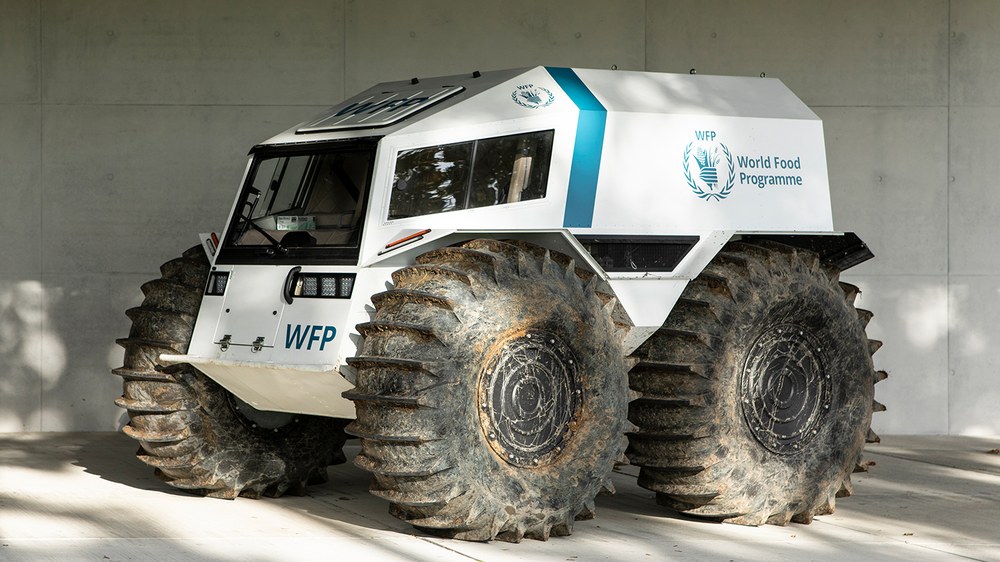
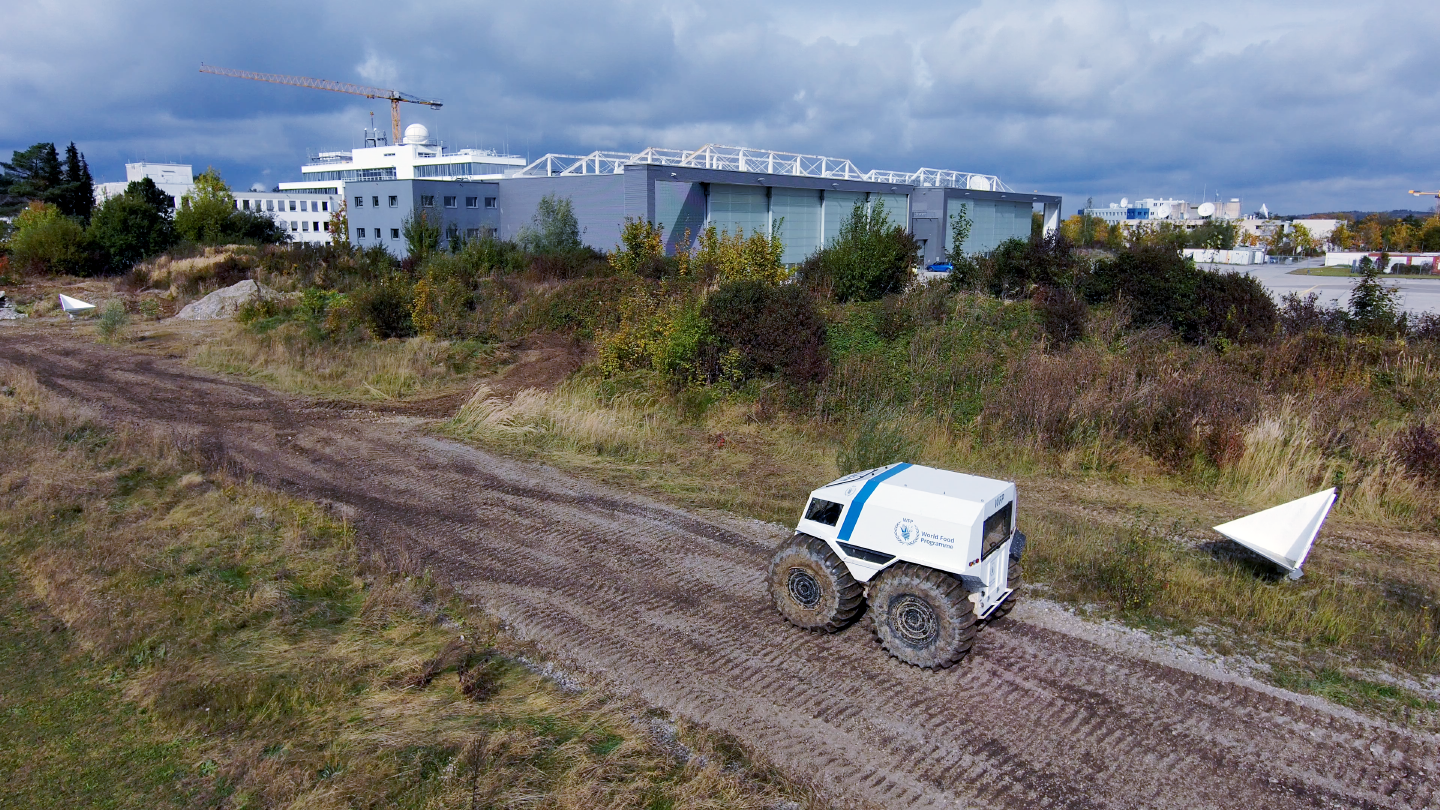
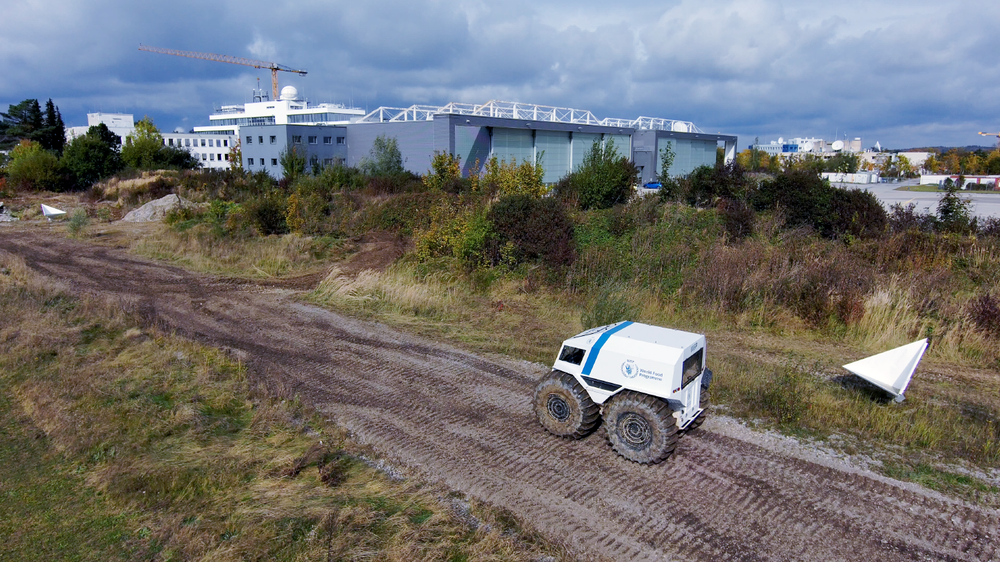
SHERP vehicles, which the WFP has already successfully deployed, are used. The off-roaders can move on any terrain, even in water or swamps, and can overcome climbing obstacles of up to one metre. They are equipped with several sensors to monitor their surroundings in real time and are automated for remote control. If the vehicles lose radio communication with the control system, they must be able to make safety and emergency stops at any time. To do this, they record their surroundings using perception sensors, depth cameras and LiDAR systems. "Remote control of mobile robots, such as rovers on planetary surfaces, but also lorries in inaccessible environments on Earth, are closely related tasks, as both environments are dangerous, difficult to navigate and very demanding in terms of reaching a target. We believe it makes sense to use and operate remote-controlled robots because they keep people out of harm's way and are more cost-effective than air freight deliveries," explains Armin Wedler.