Space Assistance

Cooperation between robots and humans
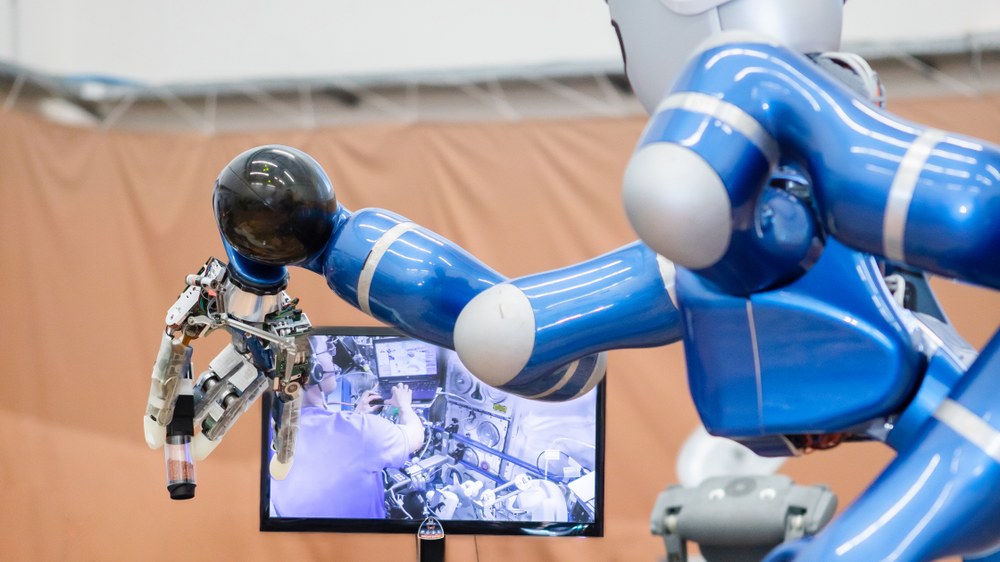
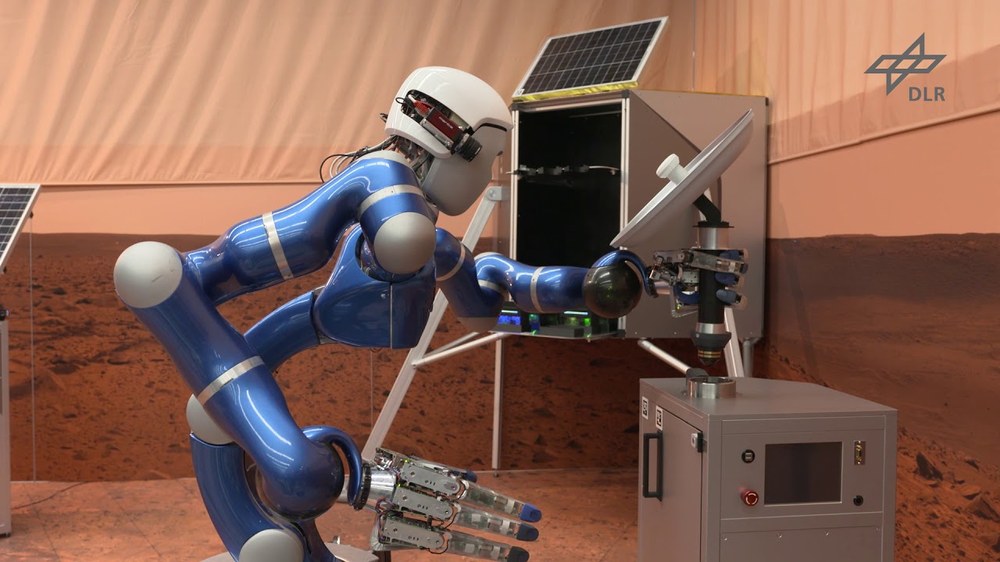
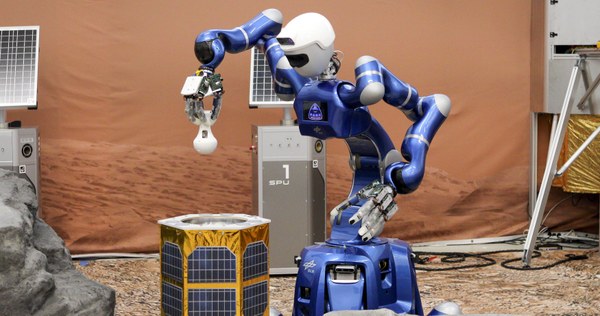
NASA astronaut Frank Rubio is in control of the robot team on board the ISS on "Earthly Mars" at DLR in Oberpfaffenhofen. The humanoid DLR robot Rollin' Justin successfully received the rock sample from the Interact Rover.

Humanity’s endeavour to explore space is taking us further and further into our solar system and beyond. Both astronaut crews and experts on the ground can turn to robotic assistance systems as reliable partners for demanding and dangerous tasks.

Our interaction methods make command and control possible both from spacecraft or from any location on Earth. Our solutions enable intelligent robots equipped with extensive sensor systems to be deployed effectively on the surface of asteroids, moons and planets.

Our research focuses on human-robot interaction to provide simple and intuitive, yet powerful monitoring and control for various robots with a wide range of tasks. Our aim is to provide seamlessly integrated user interfaces enabling people to work with the robots whenever, wherever and however they want.

Our spectrum ranges from the immersive use of individual robots as avatars to the intuitive control of large, diverse robot teams. Our intelligent robotic assistants will become increasingly important in the future. They are capable of cooperating side by side with astronauts or working autonomously over long periods of time. Excellent dexterity and autonomous capabilities allow these systems to perform both routine and dangerous tasks on spaceships to support the crew as well as scientists on Earth. With solutions ranging from individual autonomous systems to teams of diverse support robots, we can expand the limits of space exploration and reach destinations previously unattainable for astronauts.

Video

Video: The METERON SUPVIS Justin Orbit-to-Ground Experiment
The METERON SUPVIS Justin Orbit-to-Ground Experiment: A Glimpse into the Future of Astronaut-Robot Collaboration

Related topics