
HAP-alpha

High-Altitude Platform

HAP-alpha

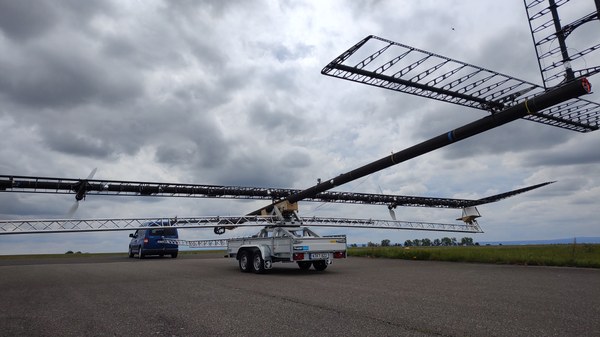
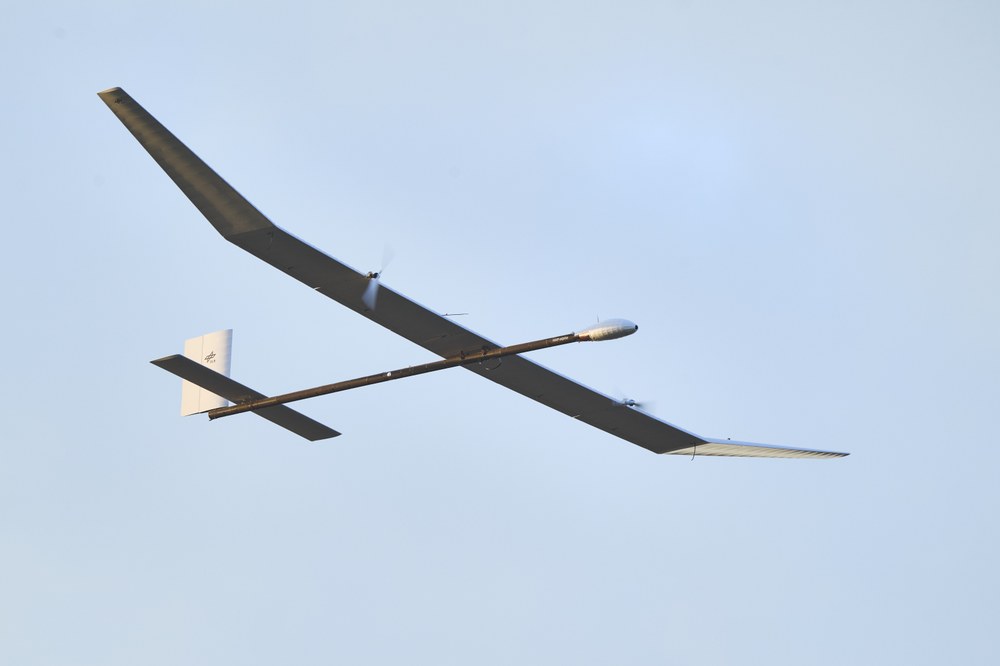
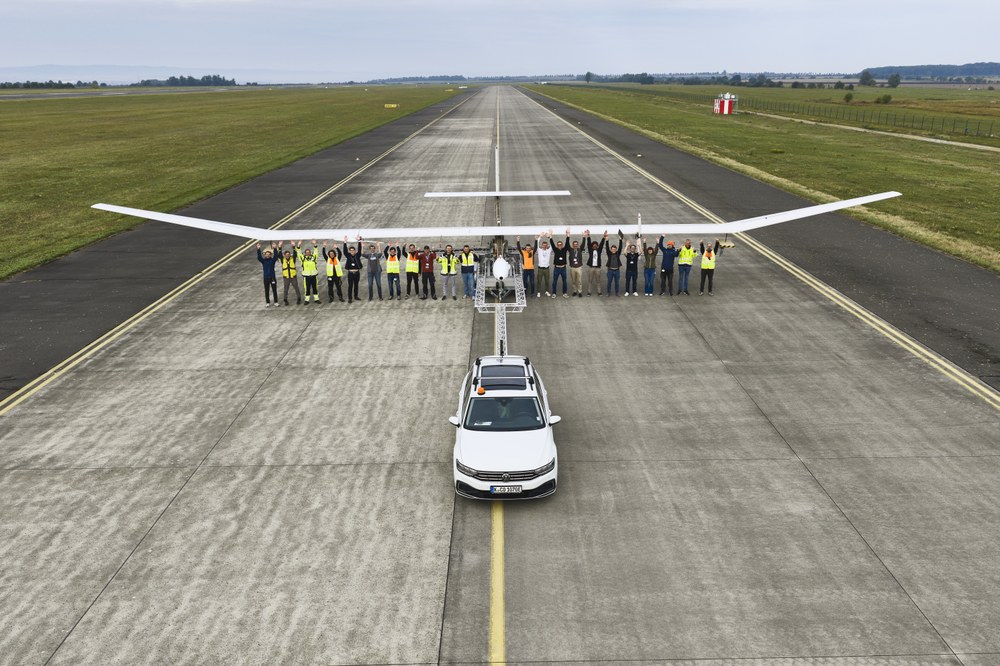
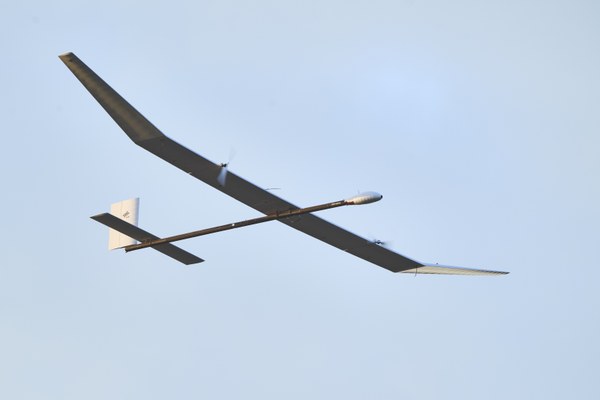
Stratosphere-capable high-altitude aircraft, also known as high-altitude unmanned platforms (HAPs – High Altitude Platforms), represent an alternative to satellites for sustainably performing tasks in the fields of Earth remote sensing and communications. Unlike their counterparts in Earth orbit, HAPs can be manufactured and launched more cost-effectively. With a wingspan of 27 meters, the platform weighs only 138 kilograms and is thus very flexible and extremely 'aeroelastic.'

The goal of the High-Altitude Unmanned Platform (HAP-alpha) project series is to build comprehensive system expertise for high-altitude aircraft at the German Aerospace Center (DLR). This expertise is intended to enable the development, construction, and operation of a certifiable overall system (platform, payload, ground station, operational procedures) for continuous operation.

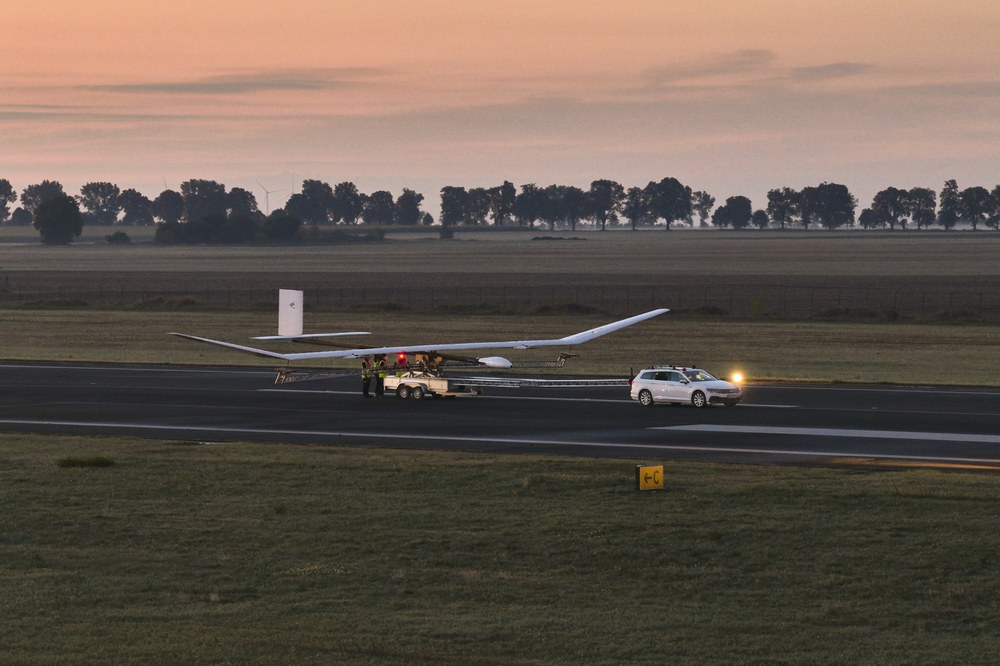
The first flight of DLR's HAP-alpha in 2026 marked not only a milestone for high-altitude platforms but also for the integrated technology behind them.

First flight of the unmanned high-altitude platform HAP-alpha
The unmanned high-altitude platform completed a safe flight of approximately 70 minutes and reached altitudes of up to 180 meters above ground.

Our contributions from the Institute of Aeroelasticity covered the entire spectrum of aeroelastic design and validation:

  • Aircraft design from an aeroelastic perspective in close collaboration with DLR Institute of Aerodynamics and Flow Technology (AS), DLR Institute of Flight Systems (FT), and DLR Institute of System Lightweight Design (SY).
  • Load analysis (maneuver, gust, landing, and propulsion loads), iteratively coupled with structural sizing (SY).
  • Ground vibration test (GVT) and model updating to ensure optimal structural dynamic modeling.
  • Selection, testing, and installation of flight test instrumentation (strain and acceleration sensors), supported by FT and SY.
  • Aeroelastic flight clearance and the conception of flight test maneuvers (together with FT).

This project illustrates that aeroelasticity is not an isolated discipline but a central enabler that connects aerodynamics, structural design, and flight testing.

Press articles about the HAP-alpha project:

Contact

Prof. Dr.-Ing. Wolf-Reiner Krüger

Head of Loads and Design
German Aerospace Center (DLR)
Institute of Aeroelasticity
Bunsenstraße 10, 37073 Göttingen
Germany