DLR conducts ground roll tests with HAP-alpha – the uncrewed high-altitude solar aircraft
December 5, 2025 | On the way to its first flight
DLR conducts ground roll tests with HAP-alpha – the uncrewed high-altitude solar aircraft
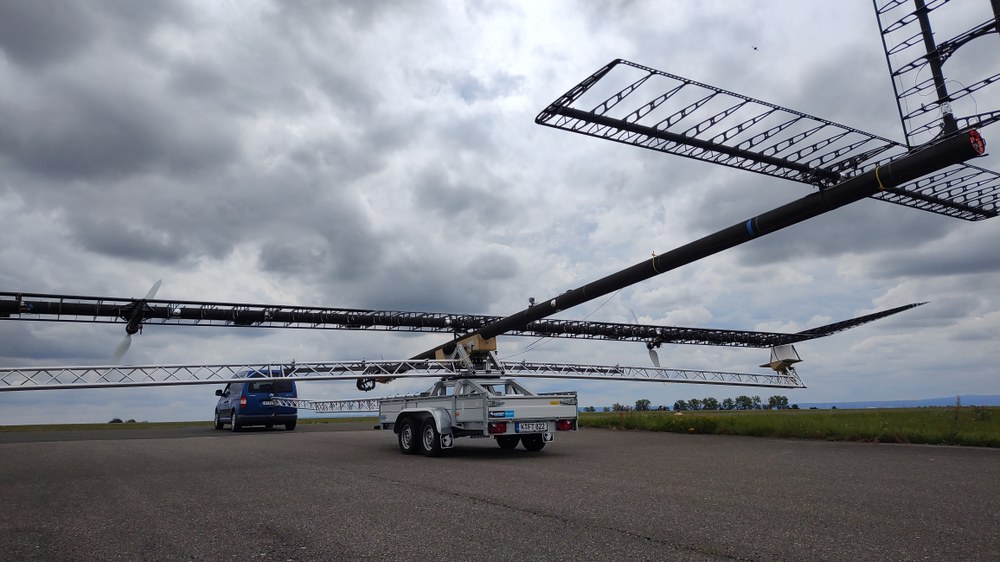
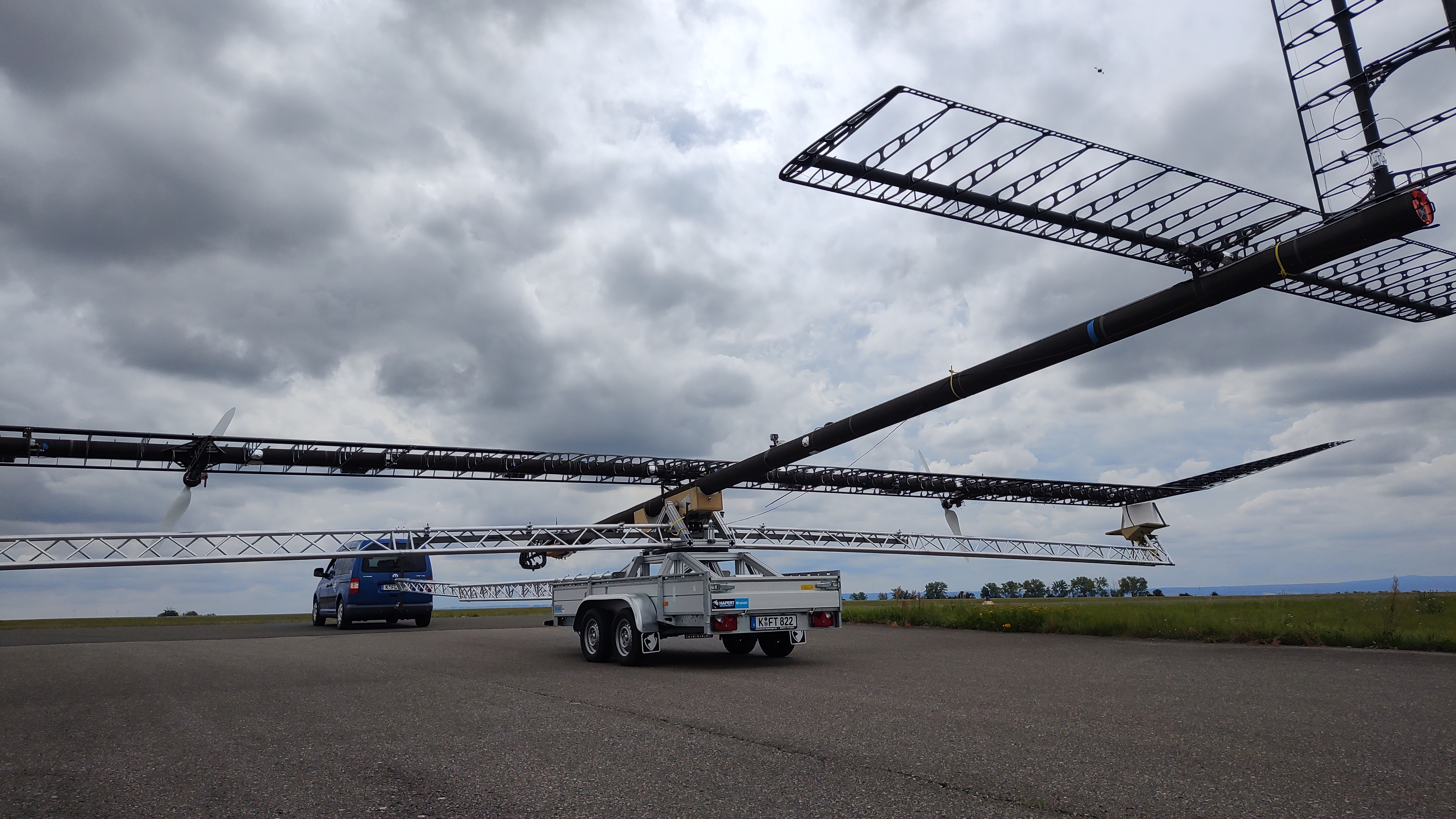
HAP-alpha on the launch trolley
After the aircraft was rolled out of the hangar, it was mounted on its launch trolley and attached to a tow vehicle for the first time. When stationary, the wing must be supported by the trolley's 'outriggers' – as there is no aerodynamic lift to relieve the load on the aircraft's ultra-light structure.
The high-altitude platform HAP-alpha has successfully completed full system tests at the DLR National Experimental Test Center for Unmanned Aircraft Systems in Cochstedt, Germany.
Completion of ground testing paves the way for scheduled flight tests next year.
Focus: Aeronautics, flight systems technology
In preparation for its first flight, the German Aerospace Center's (Deutsches Zentrum für Luft- und Raumfahrt; DLR) high-altitude platform, HAP-alpha, has undergone extensive ground tests up to autumn 2025 – and passed. Researchers have verified that all systems on the uncrewed platform are operating correctly and gathered further data relevant to handling the aircraft. With these successful tests, DLR is one step closer to its first low-altitude flight tests, planned for 2026.
HAP-alpha is designed for long-duration flights at very high altitudes, carrying scientific payloads for Earth observation. Its solar cells must generate enough electrical power to continuously supply its propulsion and onboard systems with energy. To minimise power consumption, the aircraft flies at very low speeds. This is made possible by its large yet ultra-light wing.
In spring 2025, the aircraft structure successfully passed a static vibration test. During the subsequent ground tests, HAP-alpha left the hangar of DLR's National Experimental Test Center for Unmanned Aircraft Systems in Cochstedt, Germany – for the first time in its fully assembled configuration.
Testing aircraft systems under flight-like conditions
DLR researchers planned the necessary procedures in advance and studied them in detail during this first real-world deployment. The aim of the ground tests was to verify whether the developed procedures and the aircraft systems operated correctly under flight-like conditions. The elastic structure was subjected to vibrations similar to those that occur during take-off or in flight. High-precision measurement systems analysed every vibration, while the aircraft powered itself and responded only to commands received via the same radio link used in flight.
During the test, the wings and tail of HAP-alpha remained supported to prevent aerodynamic forces from damaging the delicate structure.
The setup for the upcoming flight tests will remain largely the same: as in this ground roll test, HAP-alpha will take off from a specialised trailer. A patented mechanism initially secures the aircraft, releasing it only when the necessary angle of attack has been reached. The lightweight aircraft then lifts off automatically and subsequently gently lands on skids and with the engine switched off.
Next steps before first flight
Before flight clearance can be granted, final measurements and integration work must be carried out in the first quarter of 2026. Although HAP-alpha is designed for altitudes of up to 20 kilometres, initial test flights at the Cochstedt site will be limited to a maximum altitude of 150 metres for safety reasons. Higher-altitudes flights will be planned subsequently in remote regions, such as over the sea.
A total of 16 DLR institutes and facilities have jointly developed the uncrewed aircraft and its associated ground systems, coordinated by the DLR Institute of Flight Systems.
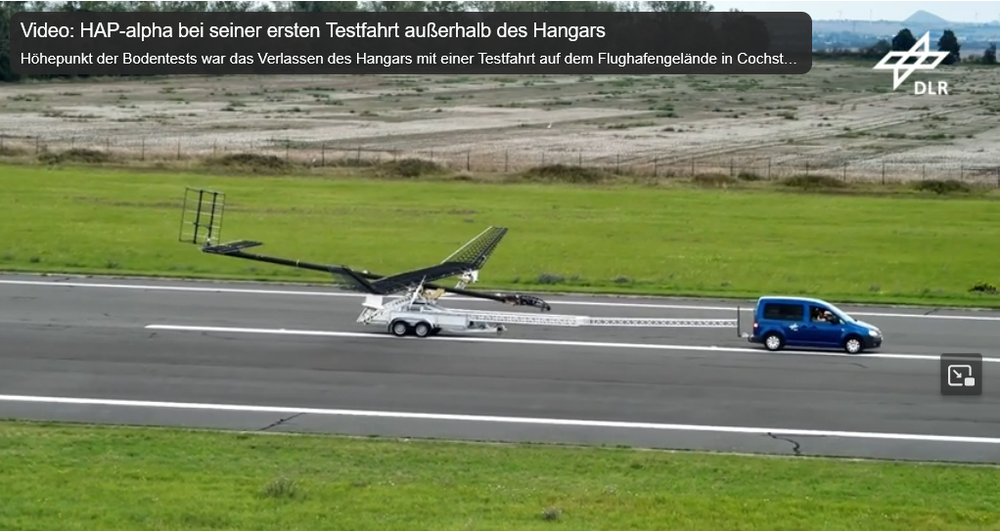
The highlight of the ground tests was the aircraft leaving the hangar for a ground roll test at the airport in Cochstedt. This meant the team could rehearse flight preparation procedures and test aircraft systems under realistic conditions.
Video: HAP-alpha on its first ground test outside the hangar
Your consent to the storage of data ('cookies') is required for the playback of this video on Quickchannel.com. You can view and change your current data storage settings at any time under privacy.
Video: HAP-alpha on its first ground test outside the hangar
The highlight of the ground tests was the aircraft leaving the hangar for a ground roll test at the airport in Cochstedt. This meant the team could rehearse flight preparation procedures and test aircraft systems under realistic conditions.