Electric propulsion systems
Both chemical and electric propulsion systems are used to propel satellites into space. German industry already has a solid market share in the field of chemical thrusters in the thrust range between one and 400 newtons.
Here, only technical optimisations are required in terms of the high-temperature resistance of materials, new non-toxic fuel combinations and more cost-effective production. In the thrust range below one Newton, on the other hand, chemical or cold gas propulsion systems are increasingly being replaced by so-called electric propulsion systems. These can utilise the available fuel an order of magnitude more effectively than conventional propulsion systems.
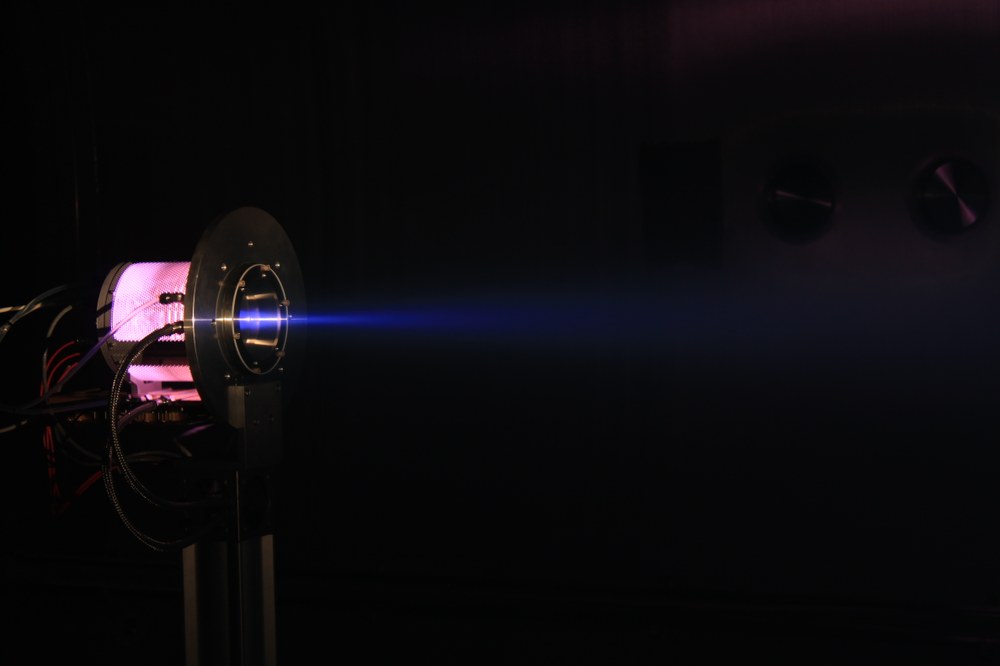
One of the focal points of German research activities is the further development of radio frequency ion propulsion technology. It serves as the basis for future propulsion systems for commercial and scientific satellites and spacecraft. An engine of this type made a decisive contribution to the European communications satellite Artemis reaching its destination at an altitude of 36,000 kilometres above the equator approximately 18 months after its unsuccessful launch. Another focus is the development of highly efficient multi-stage plasma engines.