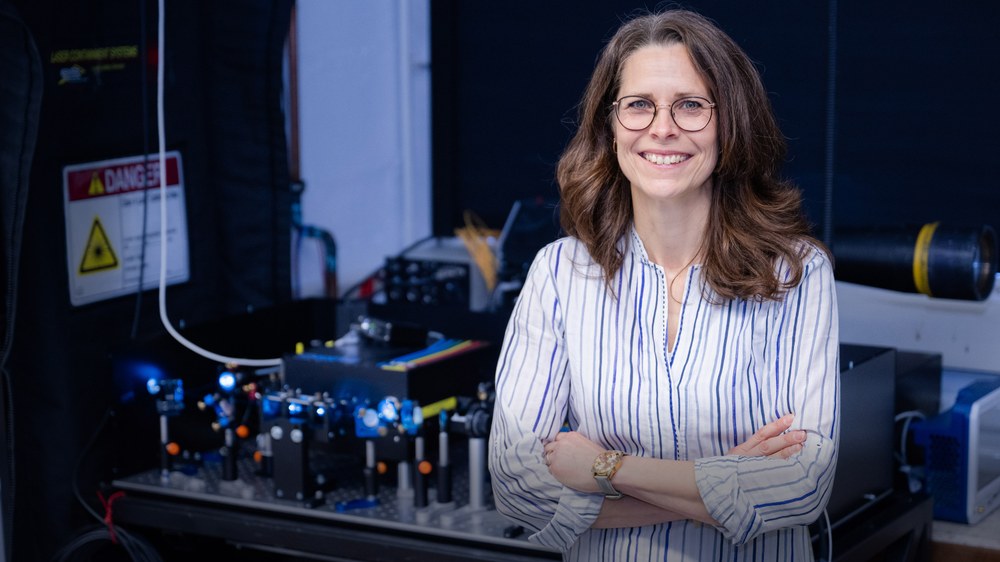
Dr. Melanie Voges

“I wanted to go back into academia”
Melanie spent the first few years after graduating working in industry. But it didn’t take long for the engineer to realize: “I wanted to return to academia; applied research was what really motivated me.” She was already familiar with the German Aerospace Center (DLR), and when the opportunity arose, she joined the Institute of Propulsion Technology.
As a researcher, Melanie initially worked on the development of laser-optical measurement techniques for use in turbomachinery. The testing environment for aircraft engine and gas turbine components presents many challenges. On the one hand, velocity measurements must be taken on rotating blade rows without affecting the flow itself. On the other hand, the high temperatures in combustion chambers and turbines place significant demands on the materials used in the measurement technology.
In her early years at the institute, Melanie spent a lot of time developing and preparing measurement techniques specifically for use on the institute’s test benches. These days, she spends less time in the laboratory and instead takes on more organisational tasks. “It’s been quite a while since I last held a laser in my hand”, she jokes.
Today, for example, she is responsible for project management and ensures that her colleagues have the best possible working environment. “Over the years, you gain experience, take on more responsibility in projects, and eventually I found myself in the role of project manager,” she explains.
What Melanie would say to young scientists: “Have the courage to embrace uncertainty! Don’t doubt yourself so much - you can only learn from it. Especially when it comes to personal growth, the word ‘failure’ is so terribly out of place. These are all steps in the learning process, and if you realize that this path isn’t the right one for you, that’s an incredibly positive insight.”
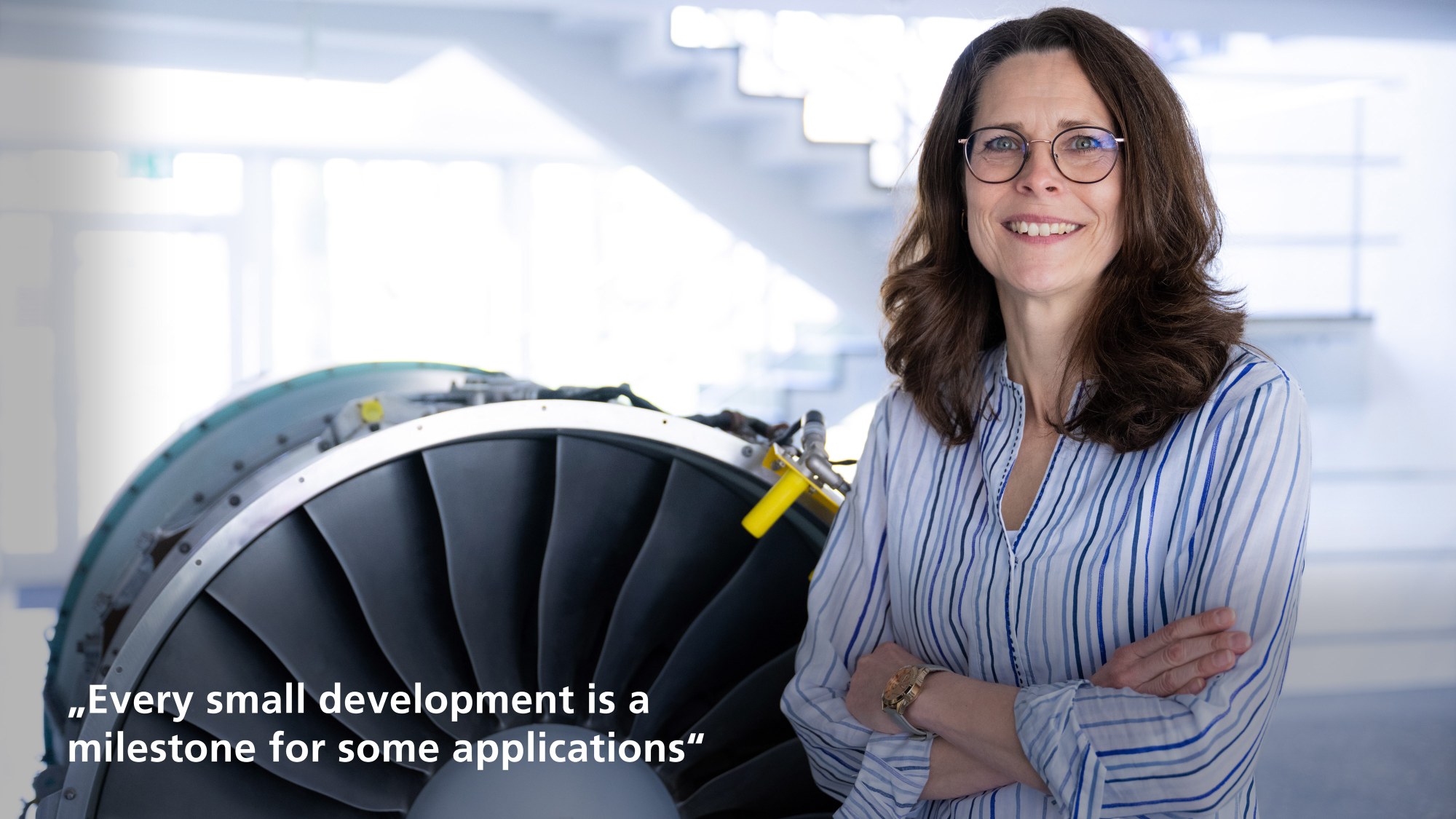
“Every small development is a milestone for some applications”
The challenge of project management: “You always have to strike a balance between the development steps we need to drive applications forward and the time and resources we have available.” Where possible, she therefore deliberately creates breathing space within her team so that, on the one hand, measurement campaigns in projects can be completed with focus and, on the other, new measurement approaches can be tried out. “So that the researcher’s heart is satisfied too,” says Melanie with a laugh.
“Every small development is a milestone for some applications.” That is why Melanie attaches particular importance to highlighting even small successes or highlights within her research group: “I love those moments when someone comes up to me and says: Look! That worked.” She is delighted when everyone realizes together that the hard work is paying off. “They’re lots of small steps, but I just really love acknowledging them. Because those are the things that get you through the day.”
Follow your own path
Melanie is pleased with her experience at the Institute of Propulsion Technology. “Looking back, I realise that I’ve done a lot of things right in my career and haven’t let myself be deterred from my goals. And I’m actually a little bit proud of that”, she admits.
A personal highlight for her was her PhD. This took place entirely alongside her project work and showed her how valuable good collaboration is, even beyond the boundaries of the institute. For their work on the development of optical measurement technology, Melanie and a colleague were even awarded the annual DLR Science Prize at the time.
The DLR is generally committed to offering staff with a university degree in a scientific subject the opportunity to pursue a PhD. “The Institute of Propulsion Technology offers a wide range of opportunities to contribute to research”, says Melanie. “There’s plenty you can do in the fields of aerospace engineering and physics.”
Whether you’re aiming for a managerial or purely scientific career depends on your personal interests. At DLR, various career paths are possible and can be pursued through a comprehensive training programme for junior staff and managers. Personal development is also strongly encouraged at the Institute of Propulsion Technology: “Of course, a little bit of luck is involved, but I haven’t yet experienced a situation where doors haven’t opened.”
If you’d like to find out more about the various development opportunities at DLR, take a look at the Qualification and continuing education page. There’s also a wide range of options available for students and PhD candidates.