Research Project EIS2035+Engine Technologies Entry Into Service 2035+
Research Project EIS2035+
Engine Technologies Entry Into Service 2035+
Together with 8 other DLR institutes, the Institute of Propulsion Technology is researching innovative engine technologies in EIS2035+ (Entry Into Service) that will be used in the next generation of engines for short and medium-haul flights.
Air traffic accounts for a significant proportion of human-induced climate change. In order to sustainably reduce the climate impact of aviation, it is crucial to analyze emission sources in detail and develop innovative technologies that enable more climate-friendly aviation. The EIS2035+ project therefore aims to establish future-oriented and climate-compatible propulsion technologies for the next generation of aircraft engines, which are expected to enter the market during the 2030s. Through the holistic further development of components, systems and simulation methods, significant progress is to be made in reducing emissions, increasing efficiency and shortening development times (time-to-market).
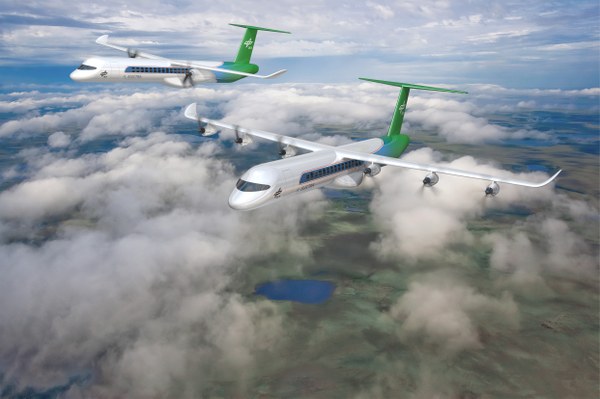
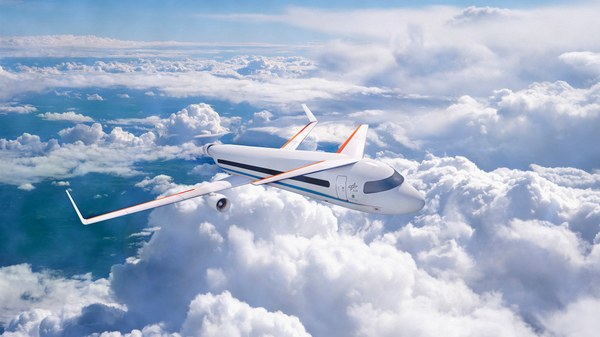
The F25 short- and medium-range aircraft, which is available in the DLR Virtual Hangar, serves as a platform for integrating more detailed and improved engine models within the project. Various technological developments in the course of the project will be traced back to the overall system level, enabling a more precise assessment of engine performance and an analysis of the overall configuration in relation to different flight trajectories and their climate impact. Part of these technological developments is the creation of a consistent development environment for electric propulsion systems in the GTlab simulation environment, which enables accelerated and more precise design of future engine generations. Research is also being conducted into significantly reducing the installation space, specifically the axial length of the transition channel of the compression system, without compromising aerodynamic performance, thereby achieving a measurable improvement in fuel efficiency. The development of innovative joining technologies for titanium-FRP hybrid structures is also intended to enable the use of lightweight, temperature-resistant structures in engine areas in order to increase performance. In parallel, combustion processes for lean burn chambers are being investigated to analyze partial load behaviour with conventional kerosene and sustainable, aromatic-free synthetic fuels (SAF) and reduce emissions from future engines.
The ultimate goal is to integrate the developed technologies into the overall system model and analyze them in terms of efficiency, emissions, weight and climate impact at the engine, aircraft and fleet levels. On this basis, technological interrelationships can be evaluated in a well-founded manner, development paths can be derived in a targeted manner and the impact of new propulsion concepts on the system and climate balance can be reliably assessed in order to enable climate-compatible aviation from 2035 onwards.
Running Time
01.01.2026 - 31.12.2028
Keywords
Entry Into Service, Hybrid-electric flight, Reduced installation space, Titanium-FRP hybrid structures, Simulation, Sustainable Aviation Fuels