
(Bachelor thesis/ internship w/m/x) Deriving Wheel-Wear Cost Functions for Planetary Rover Motion Planning
What to expect:
Understanding wheel wear is crucial for long-duration planetary missions, where abrasive terrain and sharp steering maneuvers can significantly reduce rover lifetime. NASA’s surface mission experience (see Lessons Learned – Mobility System, point 5) highlights how in-place steering and high-curvature motions accelerate wheel degradation. Building on these insights, the Institute of Robotics and Mechatronics aims to develop motion-planning cost functions that reduce harmful steering actions on our LRU rover.
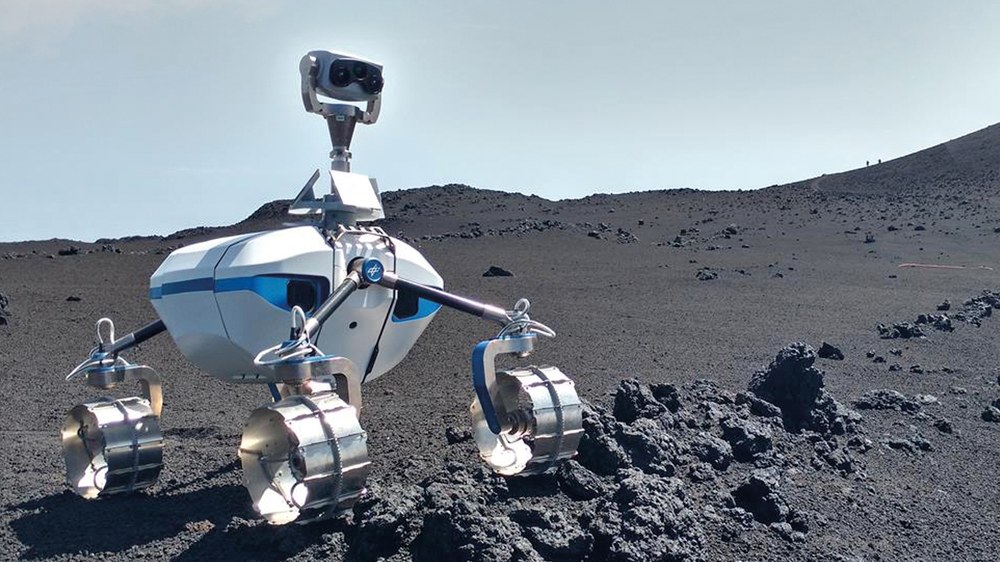

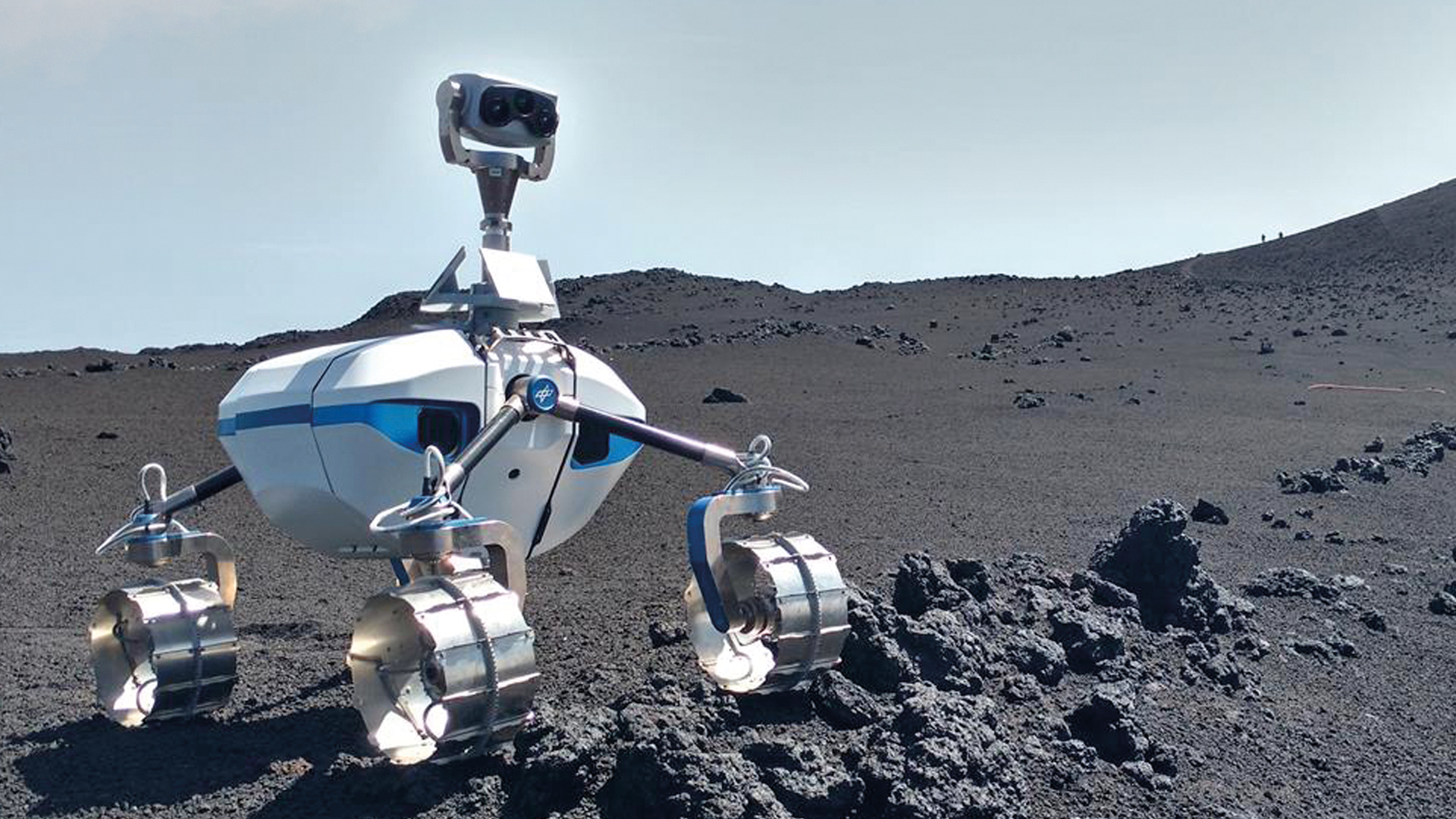
The goal of this position is to investigate whether curvature-based trajectory costs are suitable proxies for steering-induced wheel wear. You will analyze how rover wheel motions interact with the ground and how actuator effort reflects this interaction. The work combines motion-planning research, data-driven evaluation, and some hands-on experimentation with the rover. The position is primarily software-focused but involves data collection and limited hardware work.
Your tasks will include:
- Planning and conducting data-collection experiments on the rover involving steering-intensive maneuvers.
- Building a data pipeline to record and process relevant actuator and motion signals.
- Studying the relationship between wheel motion, steering effort, and terrain interaction.
- Deriving and evaluating candidate cost functions that estimate wheel wear for trajectory planning.
- Summarizing findings and recommending improvements for rover navigation strategies.
The successful candidate will have:
- the chance to work on a cutting-edge mobile robot for planetary exploration,
- an opportunity to learn from experienced roboticists in a professional environment,
- the potential to grow and apply your skills and knowledge.
What we expect from you:
- currently enrolled in a Bachelor's or Master's degree in robotics, computer science, or a related field.
- Knowledge of fundamental concepts in autonomous systems/ robotics (planning, control, state-estimation, mapping).
- Proficiency in Python and/or C++, basics of linux and git.
- Professional working proficiency in English and/or German.
- Experience in working with mobile robotics/ROS is a plus.
What we offer:
DLR stands for diversity, appreciation and equality for all people. We promote independent work and the individual development of our employees both personally and professionally. To this end, we offer numerous training and development opportunities. Equal opportunities are of particular importance to us, which is why we want to increase the proportion of women in science and management in particular. Applicants with severe disabilities will be given preference if they are qualified.
Further information:
- When applying for a position, please indicate your current GPA, experience in relevant projects and/or classes, and the time frame you would be interested in.
- Internships need to count towards your studies progress (i.e. you receive credits for it).
- Earliest starting date: roughly 3 months after application.
- Duration of contract: 3+ months.
For application, first make contact (see below) to indicate your interest. We will then get back to you.
Kontakt
Office (AUF)