The RoX project aims to develop a decentralised data and services ecosystem that enables the development, use and continuous improvement of advanced, AI-supported robotic systems throughout their entire life cycle. The focus is on data sovereignty, sustainability and energy efficiency. RoX cooperates closely with European initiatives such as Manufacturing-X and IPCEI-CIS
Runtime:
2024-09-01 to 2027-02-28
Project partner:
Siemens
ABB
Fraunhofer IPA
Application fields:
Loading and unloading processes along the entire logistics chain
Federal Ministry of Economic Affairs and Climate Protection (DARP)
Project description
The RoX – Digital Ecosystem for AI-based Robotics project aims to develop an open and modular digital infrastructure to support the entire life cycle of robotic systems. The aim is to provide concepts, methods and technical tools that enable robotics applications to be planned, commissioned, operated and continuously developed more efficiently. Central components of the project are standardised data and software architectures, quality-assured AI models and interfaces for integration into existing industrial environments.
The focus is on the development of a networked, interoperable ecosystem that enables the exchange of data and services between different players in robotics along industrial value chains. The platform is intended to function across all providers and, in particular, promote the reuse and combination of software modules, control algorithms and AI-based functions. This should shorten development times, reduce costs and improve the adaptability of robot systems.
One particular focus is on safeguarding the data sovereignty of all partners involved. Users of the platform should be able to decide for themselves which data they provide and to what extent it may be used by third parties. The development therefore takes into account principles such as trustworthiness, transparency and traceability when handling data and AI systems.
The concepts and technologies developed in the project are being trialled using specific industrial use cases. These include the automated loading and unloading of transport vehicles, order picking processes in logistically challenging environments and the use of mobile, multifunctional robot cells for tasks such as welding or packaging. The aim is to demonstrate the practical suitability of the developed solutions and to enable their scalability across different industries. In addition, tools for simulation and virtual commissioning are being developed to speed up planning and testing processes while making physical implementation more efficient. AI-supported components for risk assessment and system monitoring are also used to ensure operational reliability and performance even in complex application scenarios.
Overall, RoX aims to create the structural and technological prerequisites for future-proof, AI-based robotics characterised by openness, reusability and trustworthiness. The project aims to make a contribution to sustainably strengthening industrial robotics in Germany and Europe and connecting it to international developments in the field of digital ecosystems.
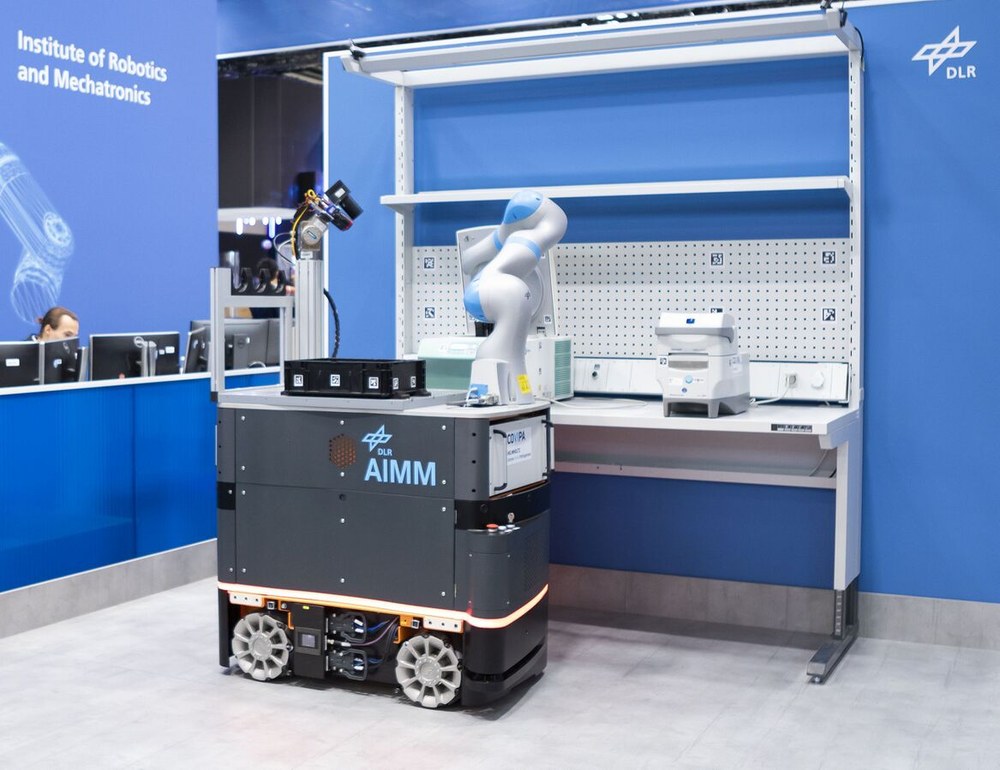
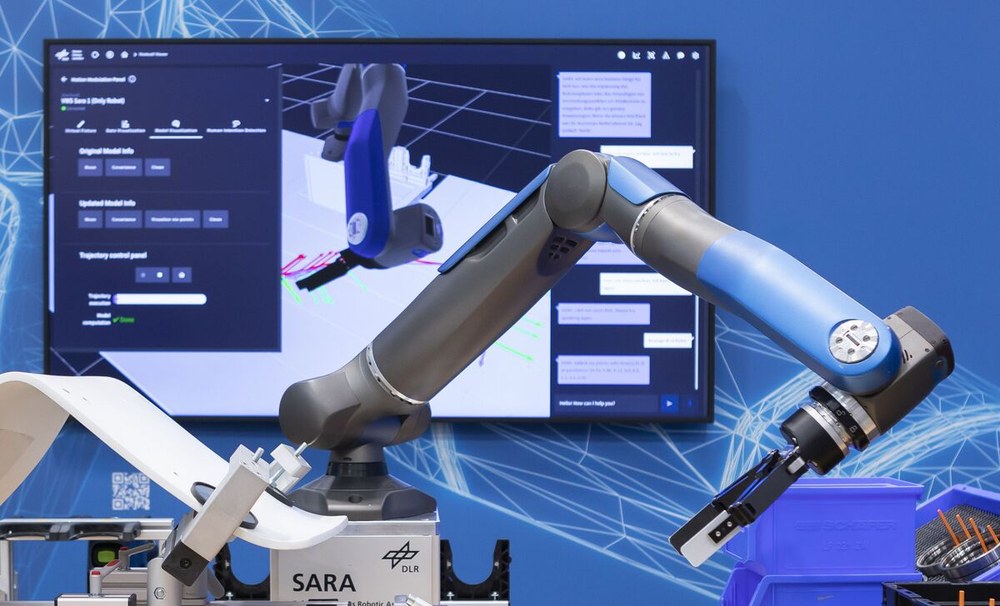
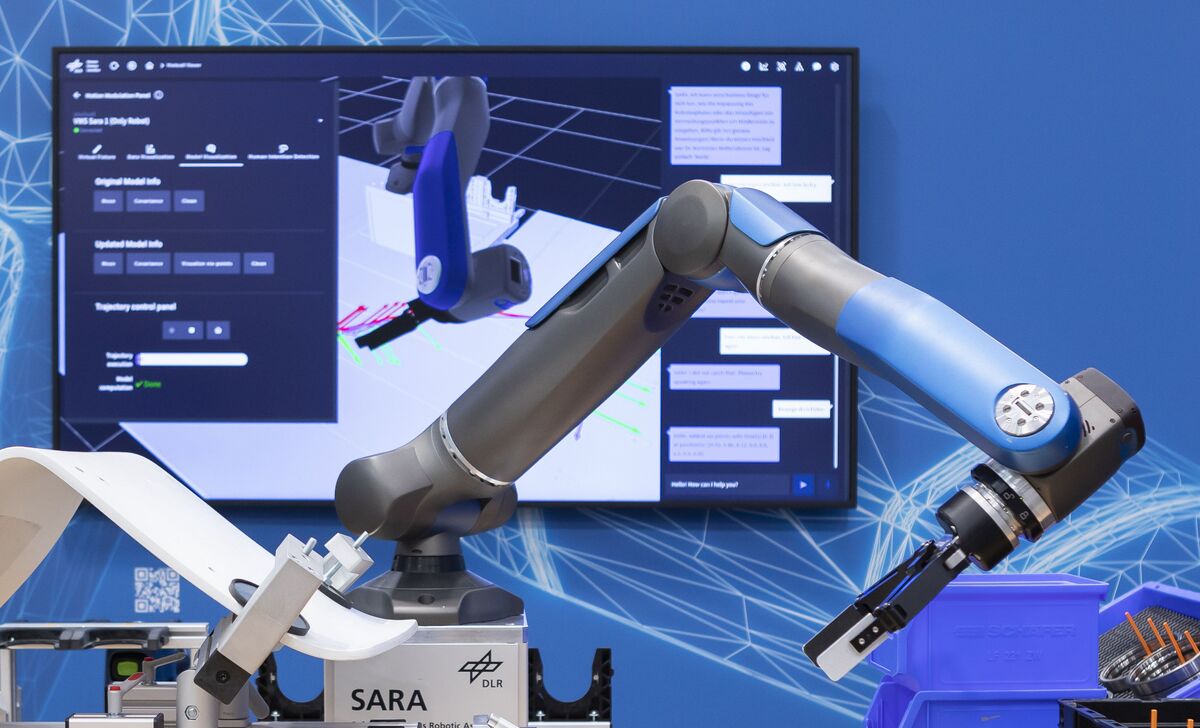
In the project, the Institute of Robotics and Mechatronics is focussing on the development of advanced methods of perception and autonomy and is therefore focusing on mobile manipulation in industrial kitting tasks for assembly preparation and in laboratory automation. At the same time, AI-supported programming and commissioning methods for robot cells are being developed. By linking user-friendly commissioning processes and adaptive algorithms, the complexity of the system setup is significantly reduced, resulting in highly efficient and flexible automation.
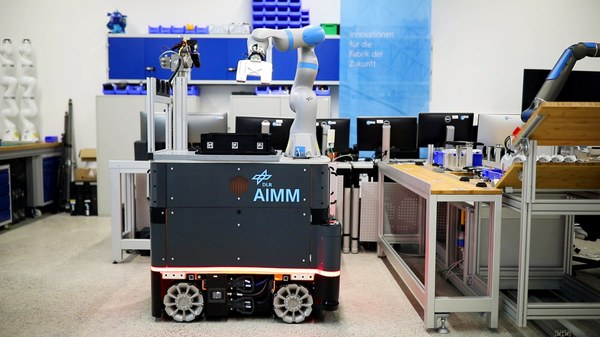
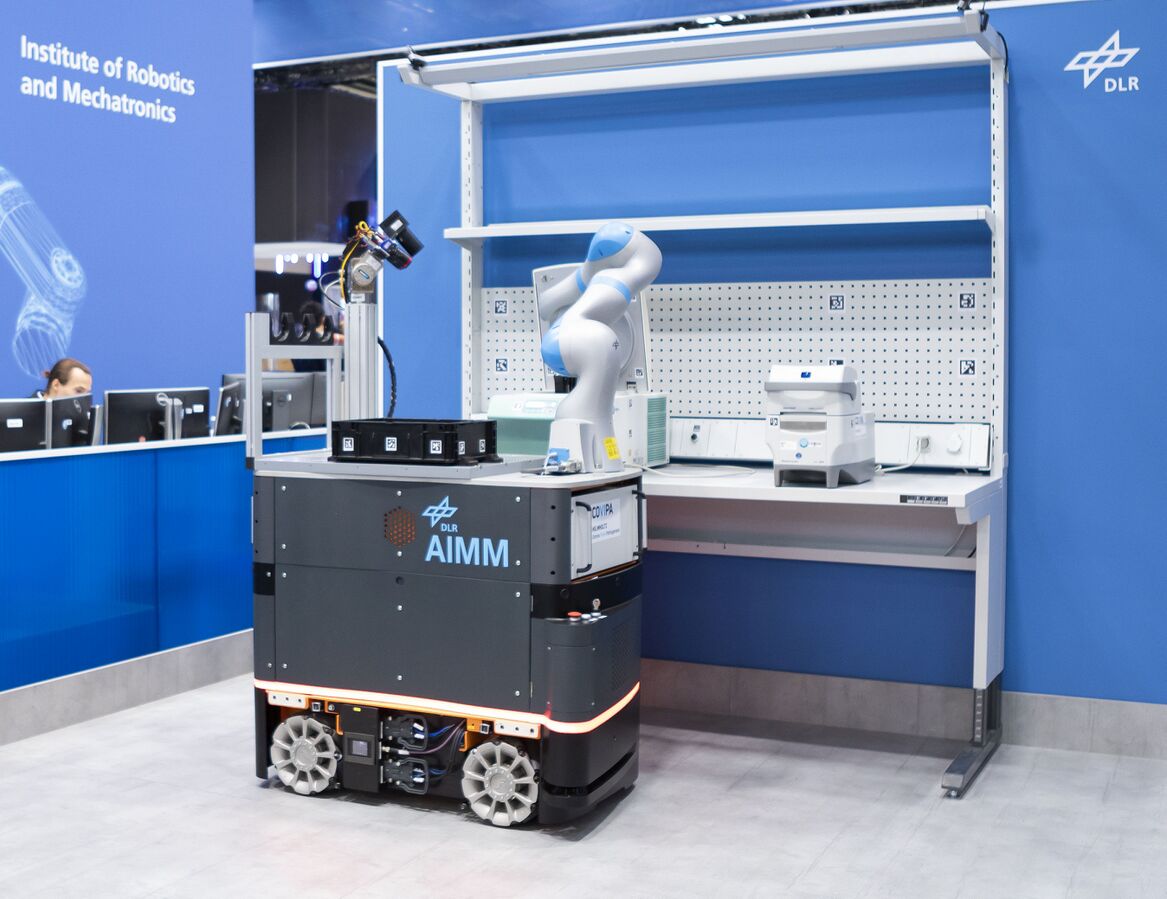
AIMM at the Automatica 2025
As a mobile manipulator, the AIMM system carries out work in a laboratory environment.