Robust Train Routing Optimization for Railway Stations

Visit us at Booth 440, Hall 2.2 at the InnoTrans 2026!
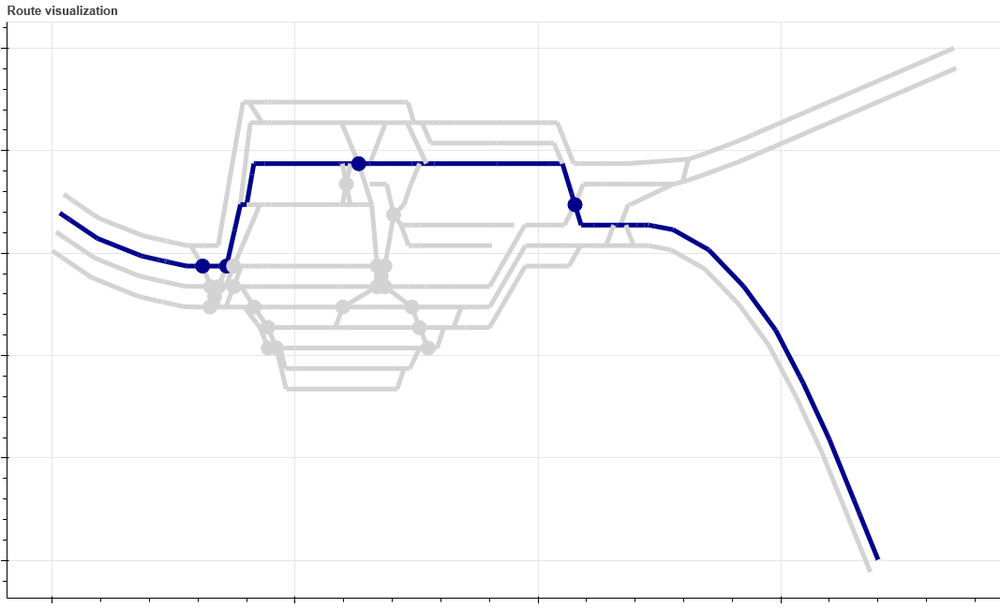
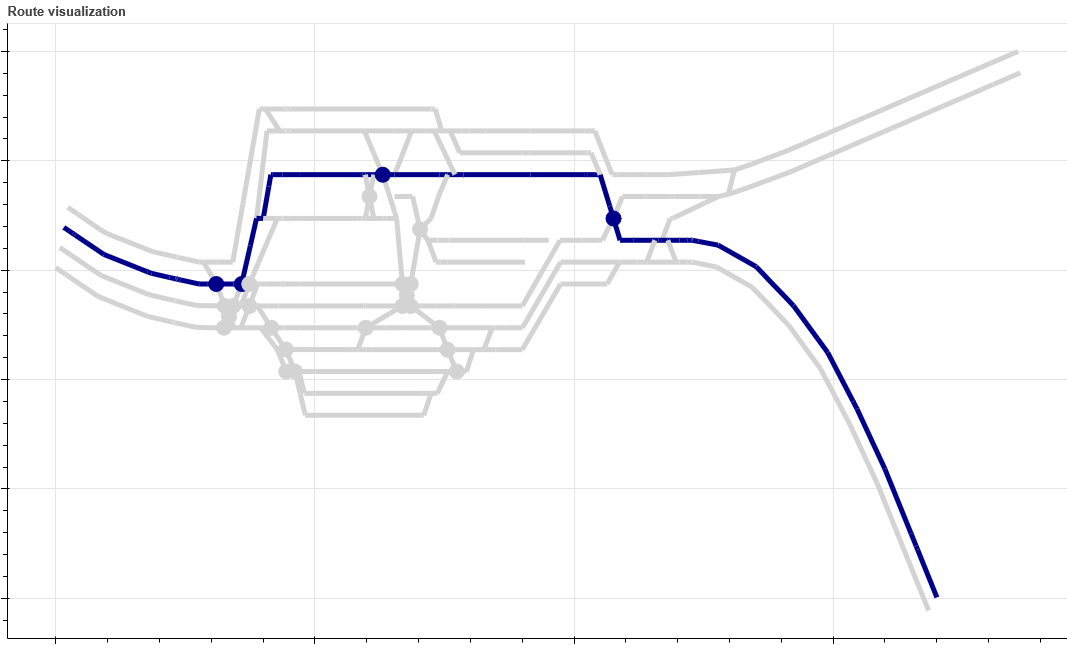
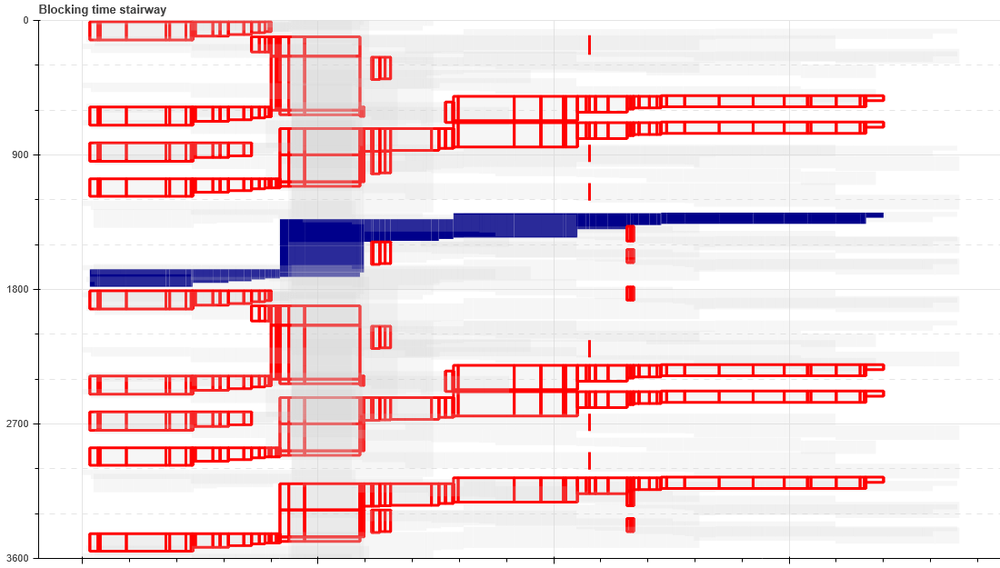
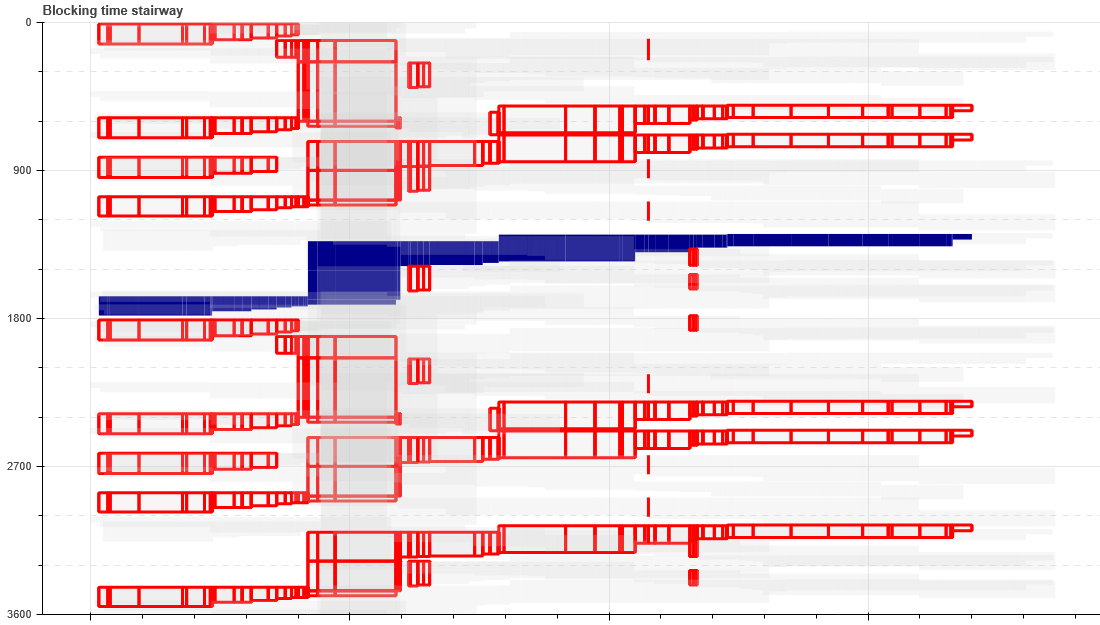
Railway stations are neuralgic points where train delays can cascade across the network. In the project MOTIONAL, we develop a robust routing-optimization framework that mathematically optimizes routing plans in early planning stages to minimize the expected propagation of delays, delivering decision‑support for railway timetable planners.
The continuing increase in railway traffic leads to higher capacity usage and reduces available time supplements to handle disruptions. Particularly, busy stations act as critical junctions where even a small delay can spread to multiple lines. Traditional planning approaches, which rely heavily on manual expertise, are time-intensive, making it difficult to explore different options and account for the complex inter‑dependencies. Supporting planners through a systematic method that can anticipate and mitigate delay propagation can enable operators to improve punctuality, reduce costs, and enhance customer satisfaction.
We have developed a robust routing‑optimization methodology that leverages advanced mathematical optimization to construct routing and timetabling plans at the station level that minimize the expected propagation of delays and fix local infeasibilities of a desired network timetable. This can be used to offer decision support to railway planners, both in the tactical phase of making yearly or construction timetables, as well in strategical planning scenarios like infrastructure dimensioning, where multiple potential future scenarios and timetables must be explored.
The algorithm can be integrated with broader network‑planning approaches, as was experimentally done in the project MOTIONAL in collaboration with European research partners. The routing plans produced by our algorithm have been experimentally validated by railway planners on Dutch and Norwegian test instances and deemed to be very promising. Further development and refinement is planned in the continuation of the project.
Publications:
The project FP1-MOTIONAL
The project FP1-MOTIONAL aims to improve planning and operational management of rail services and offers to meet the European goal of making rail the preferred mode of transport. The project aims to develop a future European Traffic Management System (TMS) that is interoperable, resilient, able to adapt the capacity and able to integrate all involved services, including last mile operations provided by other transport modes, by taking advantage of the potential of digitalisation.
Funding statement: Co-funded by the European Union. Views and opinions expressed are however those of the author(s) only and do not necessarily reflect those of the European Union or Europe's Rail Joint Undertaking. Neither the European Union nor the granting authority can be held responsible for them.
More information about the MOTIONAL Project:
https://rail-research.europa.eu/rail-projects/fp1-motional/