
The three stakeholder boards of the IMoGer project
A central concern of the project is not only to develop technical innovations, but also to make them usable in the long term. To this end, three so-called stakeholder boards are being set up: accompanying committees that provide technical advice to the project consortium, involve important stakeholders at an early stage and ensure that the results can find their way into regular operations.
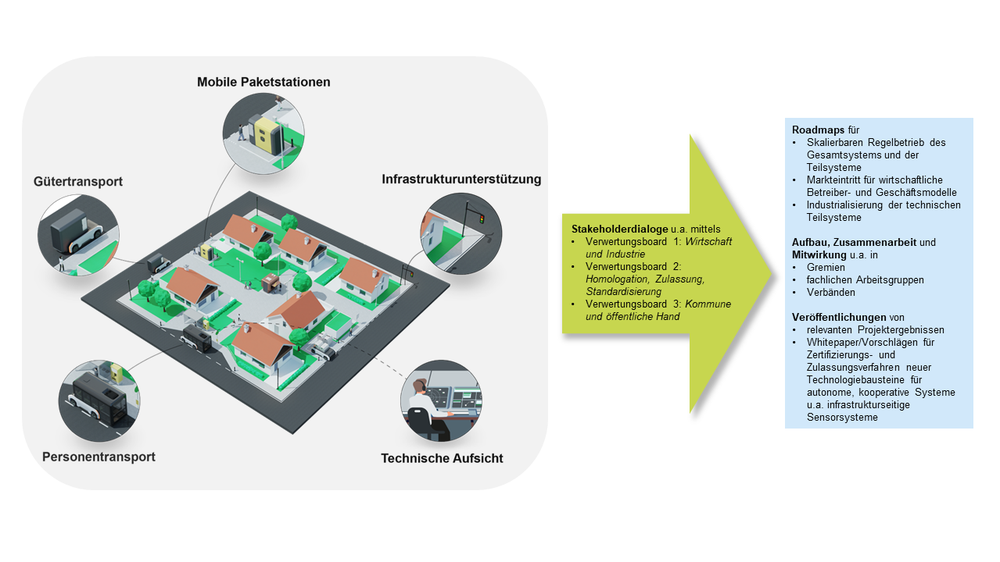

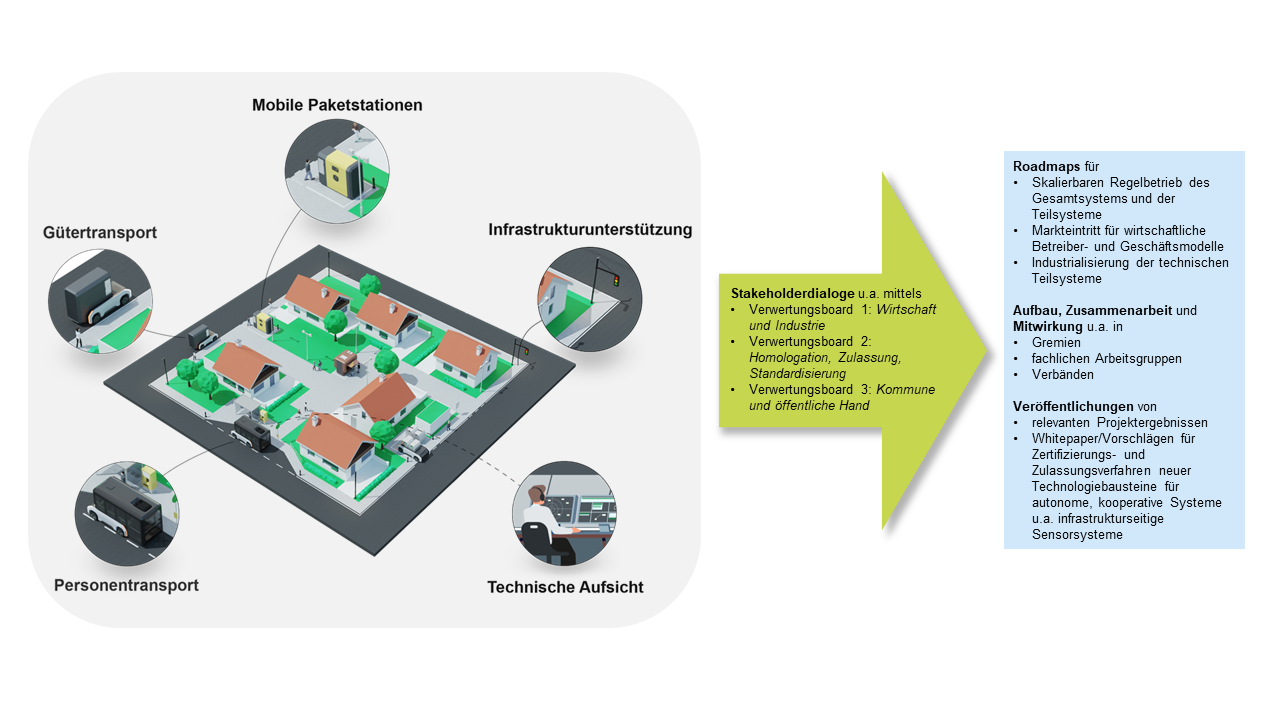
Board 1 – Economy and industry
This board brings together the market-oriented perspectives: companies from vehicle development and production, automotive manufacturers (OEMs), suppliers and potential operators of autonomous mobility services will be represented. Their task is to formulate the technical requirements for vehicle development from a market perspective and to help shape the path to prospective series production. The aim is to ensure that the solutions developed in the project not only function technically, but are also economically viable and scalable.
Board 2 – Homologation, approval and standardization
Before autonomous vehicles can be used on public roads, they must undergo extensive approval and licensing procedures. This board brings together the key players from authorities, standardization bodies and certification bodies. The focus is on the development of a homologation framework – a structured framework that enables standardized certification and approval procedures for autonomous vehicles and the associated infrastructure. This framework is intended to contribute to a holistic understanding of the interaction between the vehicle, cooperative infrastructure-side sensors and infrastructure - an important building block for the broad market launch of new and pioneering technologies.
Board 3 – Municipalities and the public sector
Autonomous mobility is particularly beneficial when it is embedded in existing urban and regional structures. This board brings municipal stakeholders – including the city of Brunswick and the Greater Brunswick regional association – into the project. They formulate the requirements from the perspective of public services of general interest: How can the autonomous, modular offering of the IMoGer project contribute to network and service planning in a way that preserves or promotes the structure of underserved areas and opens up potential demand? What opportunities do these technologies offer for sustainable integrated mobility development and planning in cities and regions?
Why do stakeholder boards exist?
To turn technological developments into innovations, it is important to involve the relevant stakeholders – industry, authorities and local authorities – in the development processes at an early stage. The three stakeholder boards help to ensure that the project results are practicable, economically viable, approvable and socially acceptable with the stakeholders at an early stage and that they are prepared in the best possible way for regular operation after the end of the project.


The boards are deliberately designed to be open. For a direct exchange with the project participants and an insight into the project and its market potential, please register using the following QR code:
Do you have any questions?
imoger.pmo[at]dlr.de