Automated traffic analyses promise greater objectivity and reliability for traffic audits, but have so far been labour-intensive and costly. In the VADA project, the DLR is therefore developing a compact, integrated solution comprising hardware and software for traffic data collection and analysis. This can be operated by auditors themselves and thus used directly during the audit – for more effective audits and, consequently, greater road safety.
Inventory audits are carried out to identify weaknesses in the existing road network, on the basis of which measures can be devised to improve road safety and efficiency. Since 2019, they have been carried out in accordance with the FGSV’s ‘Guidelines for Road Safety Audits’ (RSAS, 2019 edition). The effort involved is considerable; at present, the audits are carried out with the involvement of experts.The results are prone to error and subject to subjective interpretation. The VRIEDRICH research project demonstrated that a traffic survey carried out as part of an audit – that is, traffic observation and analysis – can yield valuable insights for the audit process. Microscopic traffic data – so-called trajectories – were extracted from image data and analysed automatically to identify anomalies in traffic flow, such as critical situations. However, the approach was relatively cost-intensive in terms of evaluation due to the small sample size and the programming effort involved.
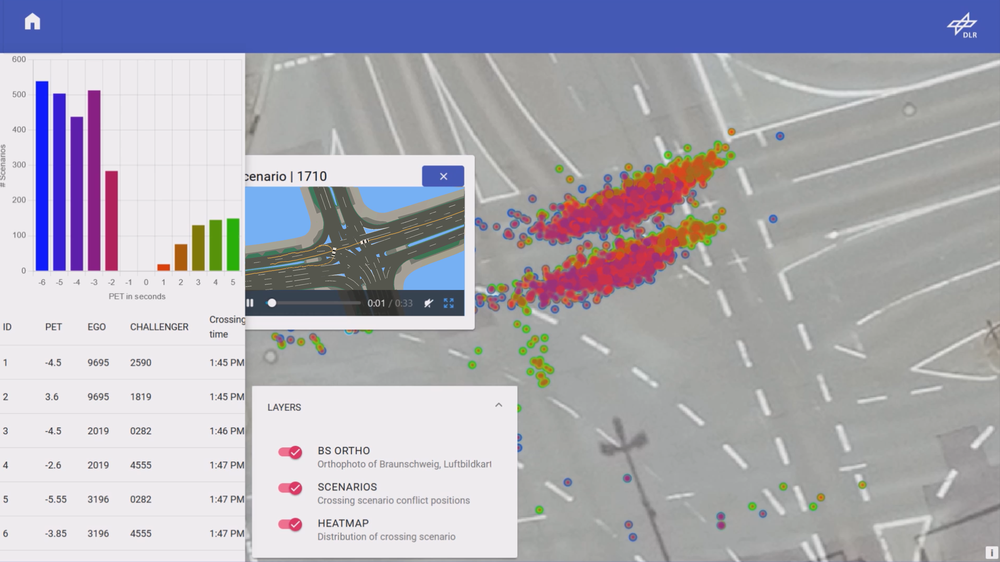
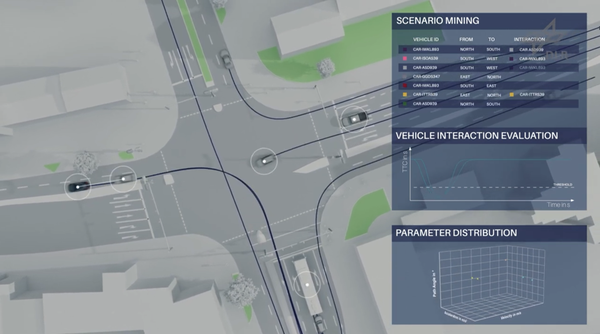
VADA is designed to enable auditors to capture data using compact technology and analyse it ‘at the touch of a button’. To this end, VADA is enhancing the maturity of the MOTSS-BoB software, which generates vehicle trajectories from image data, and the Scenimini software, which analyses the trajectory data. As part of the VADA project, a comprehensive solution comprising hardware and software for traffic recording, including analysis, is being developed, tailored to the needs of auditors. The VADA software is so highly automated that it can be operated by the auditor themselves. The quality of the trajectory data generated makes it possible to reliably detect critical situations in traffic, thereby increasing the effectiveness and efficiency of the auditors. This enables auditors to apply the method cost-effectively and profitably in practice.
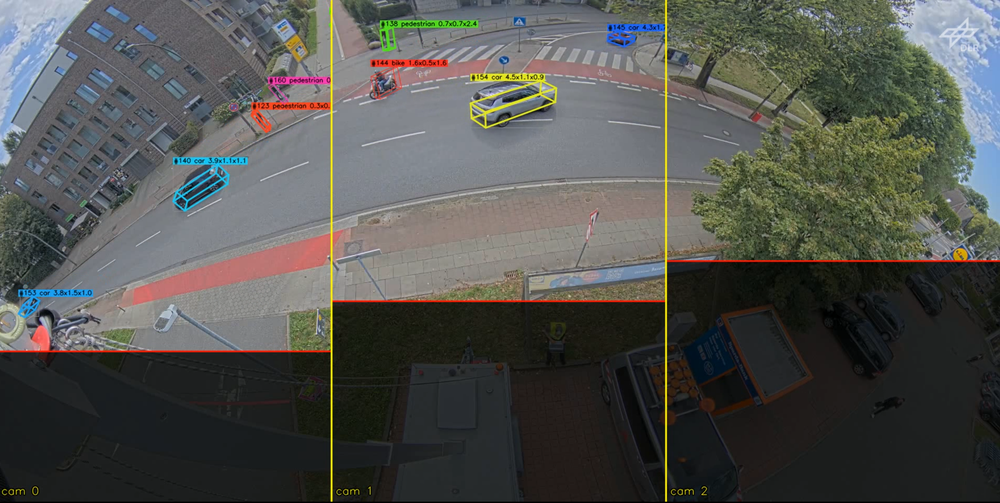
Collection of trajectory data at an urban junction.