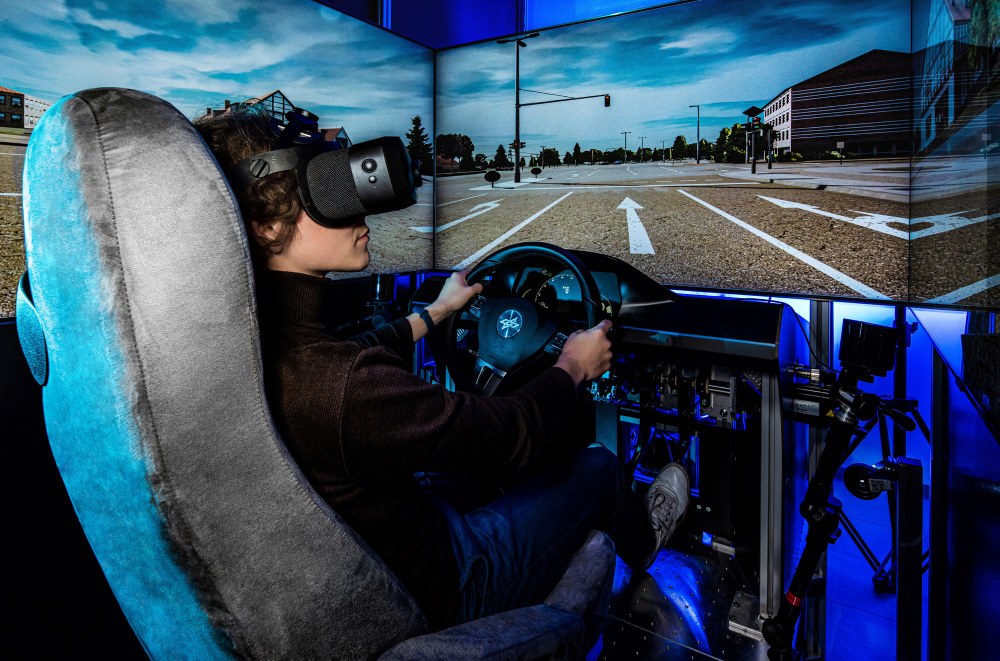
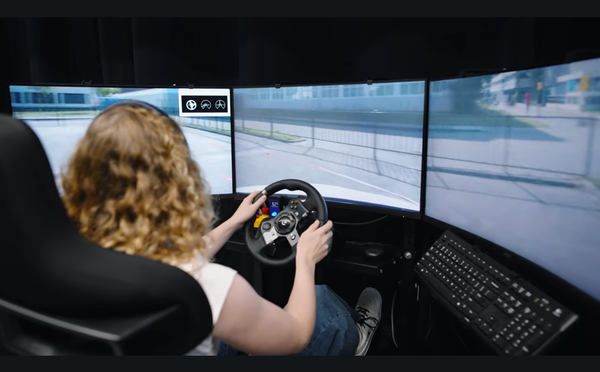
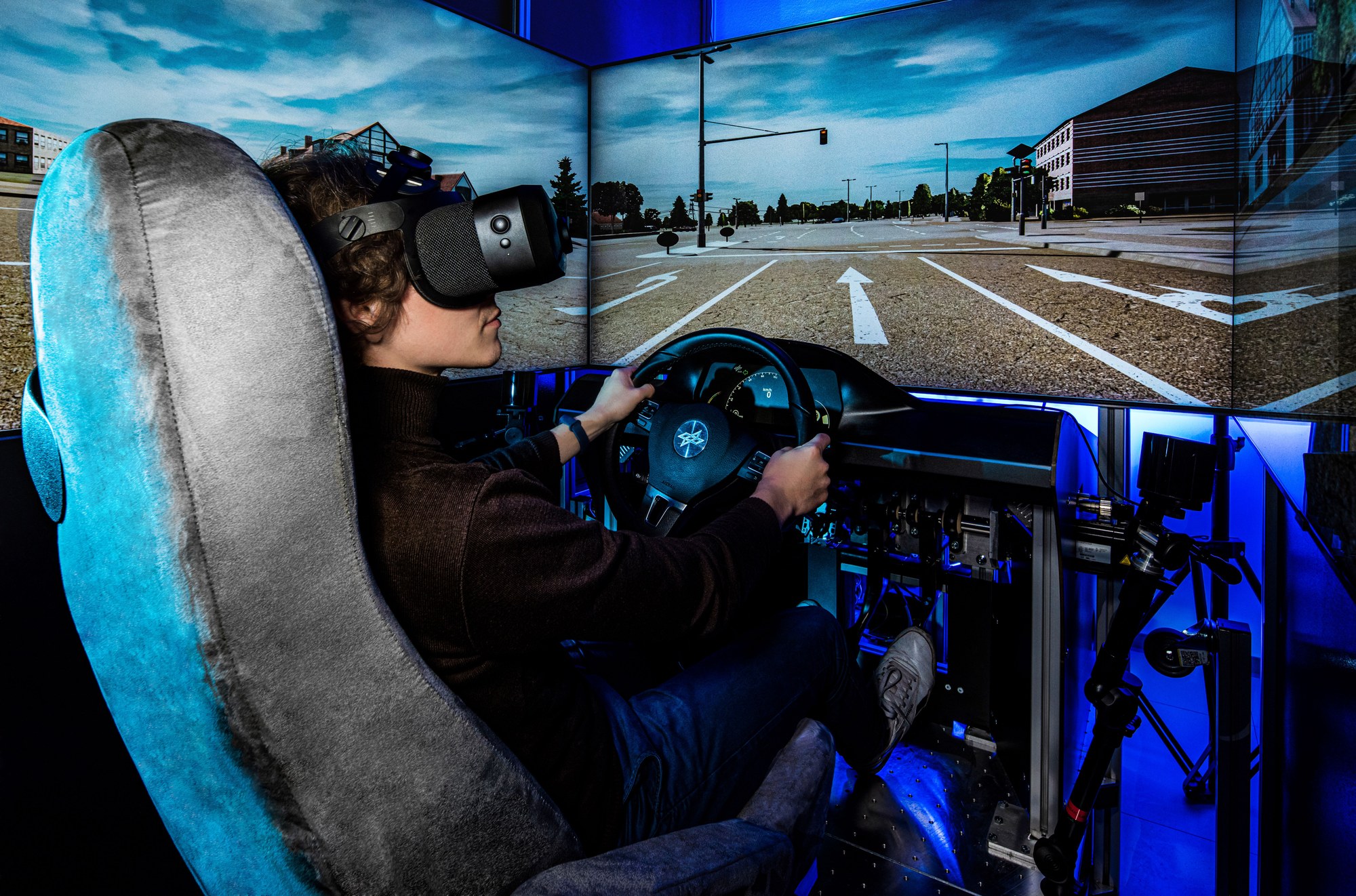
The Road Traffic Remote Steering Ordinance (StVFernLV) creates the first legal framework for testing remote-controlled motor vehicles on public roads. With remote steering or remote driving, a person controls a vehicle from an external control center.
The Institute of Transportation Systems at the German Aerospace Center (DLR) is conducting intensive research into technologies and concepts for remote driving as a building block for efficient, safe and resilient mobility. With our large-scale facilities and research services, we support the industry in the successful introduction, operation and evaluation of technologies for remote driving, consistently placing people at the center of the control station.
What is remote driving?
The term describes the direct control of a vehicle from a distance. The Road Traffic Remote Control Ordinance (StVFernLV) creates a legal framework here for the first time and comes into force on 1 December 2025. A distinction can be made between continuous remote driving and event-based remote driving as an operating mode for vehicles. While the operator performs the driving task continuously in continuous remote driving, the vehicle is usually equipped with autonomous driving functions in event-based remote driving. It only sends a request to the operator if it requires a remote driving intervention due to a special event in order to continue the journey safely.
Where is remote driving used?
Remote driving can be used in logistics and local public transport. In particular, event-based remote driving – in combination with autonomous driving functions – enables efficiency gains by allowing control of autonomous vehicles in complex traffic situations to be handed over to a remote-control person in the future without them being on site. New opportunities are also opening up in car sharing: for example, vehicles can be driven remotely to the next customer after use. Other applications can be found in the commercial vehicle sector in particular, for example in agriculture.
Research services
Thanks to our extensive expertise in the areas of vehicle automation, remote operation and technical supervision, which take into account technical and human factors aspects, digital twins and simulations, the Institute of Transportation Systems and its interdisciplinary team can offer a broad portfolio of research services. We utilise cross-domain synergies from aviation, aerospace, rail and waterborne modes of transport as well as experience from cooperation with industry and local authorities:
Accompanying scientific research on the appropriateness of the requirements of the StVFernLV and the effects of operating the remote-controlled motor vehicle on the safety and ease of road traffic and on the remote-controlled person (see StVFernLV §4 No. 8)
Development of customised control station concepts for continuous and event-based remote driving of vehicles in public road traffic and integration into an overall system with vehicles, other participants such as surrounding road users and communication interfaces
Human-centred design of control stations and control station concepts, taking into account the requirements of the StVFernLV and human-machine interaction
Evaluation of control centres and control centre concepts for the remote control of vehicles
Development of concepts for the coupling of remote operation tasks, e.g. technical supervision (AFGBV) and remote steering (StVFernLV) with a focus on event-based remote driving