
FASCar - Research vehicle for automated driving
Automated driving is a revolution in modern traffic system technology. But in order for driving assistance systems and automated vehicles to be used safely on public roads and contribute to improving road safety, they must be tested under realistic conditions. We conduct these tests using the FASCar research platform.
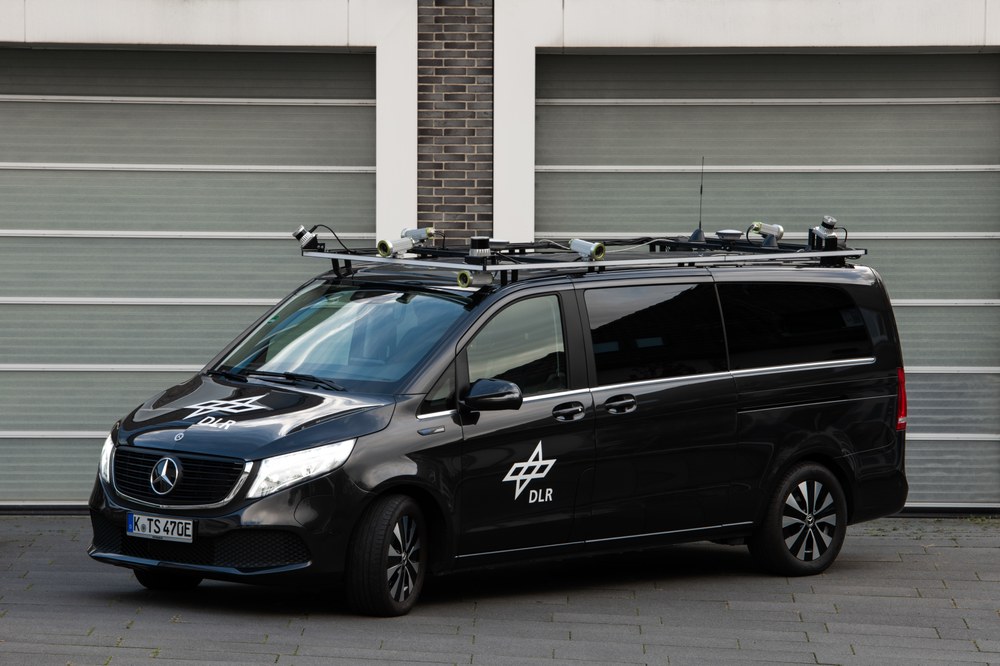




NGC-FASCar and FASCarE – testing on German roads
The FASCar serves, on the one hand, as a test platform for trialling innovative driver assistance functions and, on the other hand, as the target platform for research into highly automated driving. The DLR currently has two research vehicles at its disposal: the NGC-FASCar (Mercedes-Benz EQV) and the FASCarE (VW e-Golf). FASCarE is used for research into the automation of passenger cars, whereas the NGC-FASCar is also designed for operation as an autonomous shuttle. In addition, the NGC-FASCar serves as a flexible platform for researching various sensor concepts.
Depending on the research question, these vehicles can be used on non-public test tracks as well as on public roads. The modular design allows for flexible and customised configuration of sensor systems and prototype driver assistance functions with minimal time and cost. Both vehicles are subject to the highest safety requirements: whilst vehicle automation operates within defined limits in real-world traffic and the systems can be safely deactivated at any time, all autonomous driving functions can be utilised to the full on test tracks.
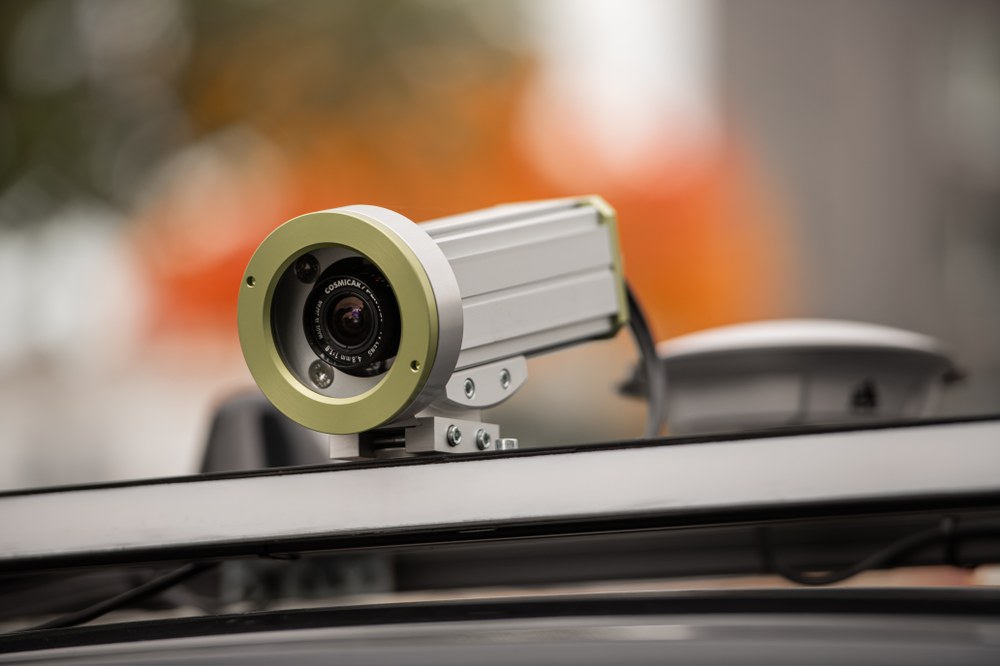
Our research vehicles are equipped with state-of-the-art environmental sensors, which detect, amongst other things, the vehicle’s position, objects and other road users, and feature cutting-edge V2X communication technology.
Benefits of the FASCar research vehicle
- Research vehicles can be used for tests by external partners and customers
- Test scenario can be adapted to specific conditions
- Open architecture reduces the time and cost associated with additional equipment (sensors, communication devices, human-machine interfaces (HMI) and assistance systems)
- Studies on human-vehicle interaction are possible
- FASCar can communicate and interact with customer research vehicles in a cooperative network
- Customers and external partners can access the high-precision data collected by DLR
Application
The FASCar enables the following activities:
- Testing of novel driving assistance systems on test fields and in public road traffic
- Research on automated driving
- Studies on driver behaviour
- Acceptance studies for future driver assistance systems
General and technical data
General data
- Location: Braunschweig, DLR Institute of Transportation Systems
- Commissioning of the Mercedes Benz EQV: 2023
- Commissioning of the VW eGolf: 2016
Technical data
FASCarE: VW eGolf is equipped with
- Laser scanner
- High-precision GPS
- Lane camera
- Sensors for environment perception such as radar and optical tracking system
- V2X components
- CAN access for longitudinal and lateral control
NGC-FASCar: MB EQV is equipped with
- 360° laser scanner
- Positioning via a high-precision differential Global Navigation Satellite System
- Sensors for environmental perception, such as camera-based systems
- V2X components
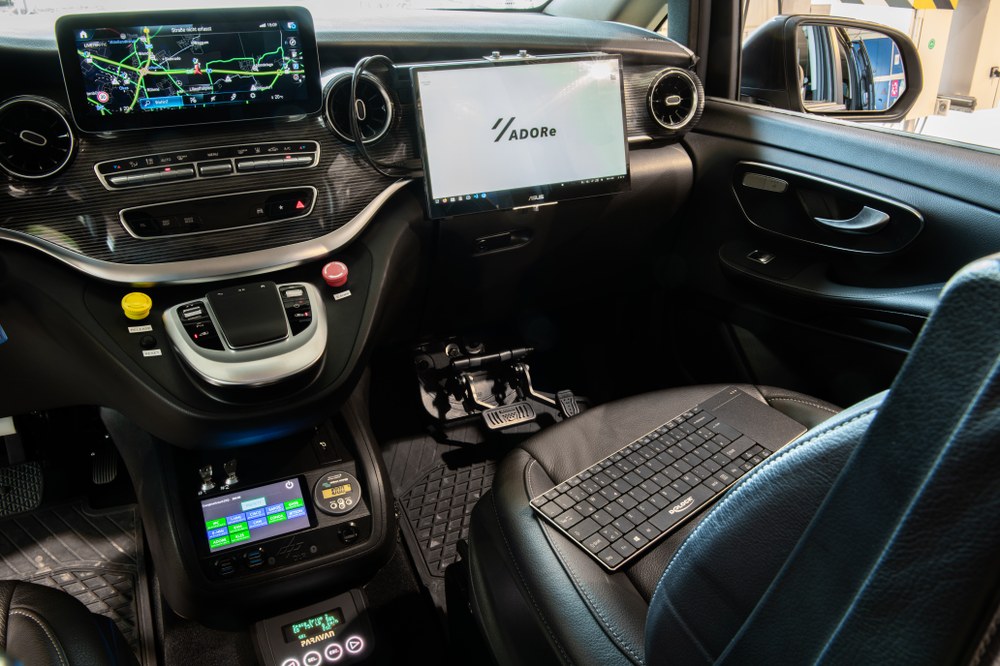
- Access to the control system in the longitudinal and transverse directions
- Flexible interior layout
- Modular roof structure for the integration of new sensor technology
FAQ – frequently asked questions about the FASCar research vehicle
Where can the FASCar be used?
We use the FASCar both on public roads and on dedicated test fields.
Can the technology of the FASCar be combined with my own driving assistance systems?
The FASCar has a modular design that allows your own components to be quickly and easily deployed and put into operation.
What is the procedure for booking the FASCar research vehicles?
All DLR research vehicles are available to customers and external partners for their own tests. Please submit a booking request via our booking form or contact us for further information.