
SILOW

Silicone-based heat transfer fluids in power and process heat applications – with low costs and low technical risks
Duration: 1.10.2025 -30.9.2028
For an economical, sustainable and resilient industry, it is essential to reduce process heat costs, decarbonise the high-temperature heat supply and at the same time increase system reliability through improved components. This is precisely what the SILOW project is contributing to.
In this three-year project, seven innovations are to be developed that enable the reliable and environmentally friendly use of silicone-based heat transfer fluid technology in thermal synthesis reactors, parabolic trough power plants and in the field of process heat in general, as well as in thermal storage systems at temperatures of up to 450 degrees Celsius.
SILOW develops seven innovations
Silicone-based oils are particularly interesting for the operation of thermochemical reactors in which regenerative fuels and base materials, such as green ammonia or synthesis gas, are produced. By supporting higher operating temperatures. SILOW therefore creates the basis for being able to drive thermal processes on a broader renewable energy source basis in the future. In addition to the operation of thermal synthesis reactors, this also supports the sustainable use of electrical flow heaters with wind or PV electricity (power-to-heat or power-to-heat-to-chemicals/fuels).
In the SILOW project, the DLR Institute of Future Fuels is working in parallel and synergistically with five industrial companies on individual innovations of their products and services. Together with FLEXIM - Flexible Industriemesstechnik GmbH, flucon fluid control GmbH, heat 11 GmbH & Co. KG, Kleinesdar Wärmetechnik GmbH and Volateq GmbH, the project team is pursuing seven innovations:
1. Cost reduction of silicone-based heat transfer fluid systems
Heat transfer fluid (HTF) systems are systems that use heat transfer fluids to transport thermal energy – for example to provide process heat in industrial plants or in parabolic trough power stations. Reducing the pressure within these systems using silicone-based heat transfer fluids (Si-HTFs) lowers component- and subsystem costs und thus the overall system costs.
2. Avoidance of excessive heat transfer fluid wear
Heat transfer fluid overheating and exceeding the film temperature can accelerate the ageing of heat transfer fluids or cause so-called fouling (an undesirable surface contamination) on the heaters and heat exchangers. By determining the thermal limits by means of precise surface temperature measurements, fouling can be specifically avoided, thus ensuring technically reliable operation.
3. Reducing the risk of failure of the flexible pipe connections (REPA, Rotation and Expansion Performing Assemblies)
Automated early detection of damages to flexible pipe connections in parabolic trough power plants helps to avoid costly failures of these components.
4. Reduction of operating costs through automated optical collector and individual assembly monitoring (heat losses) as well as customised maintenance
The automated and regular monitoring of the parabolic trough collector solar fields and their components is the basis for the rapid detection of faults and the early recognition and thus avoidance of future problems in solar power plants. This makes a significant contribution to reducing operating costs and increasing power plant reliability.
5. Development and testing of a cost-effective and simple heat capacity measuring device for heat transfer oils
In order to use a heat transfer fluid efficiently, precise knowledge of the heat capacity is crucial. The development and testing of a cost-effective and easy-to-use measuring device facilitates the development of future innovations in the field of heat transfer fluids.
6. Reducing the measurement uncertainty of flow measurement technology for process heat applications up to 400 degrees Celsius
Up to now, there has been considerable measurement uncertainty in flow rates at temperatures above 150 degrees Celsius. The further development of a flow meter for operating temperatures of up to 400 degrees Celsius enables significantly more accurate measurement of flow rates and heat flows in process heat and other heat transfer fluid applications. This increases the reliability of flow-based measurements at temperatures up to 400 degrees Celsius.
7. Development and demonstration of a high performance heat transfer fluid flow heater for process heat in the MW power range
In order to be able to utilise large-scale, sustainably produced "excess electricity" in the form of heat in heat transfer systems, a flow heater – i.e. a device that heats heat transfer fluids as they flow through it – with a higher nominal power is required. For this purpose, a high-performance heat transfer fluid flow heater for process heat is to be developed. This enables, for example, the large-scale integration of PV electricity into process heat systems, CSP power plants and, similarly, the simplification of regenerative heat generation in industrial applications.
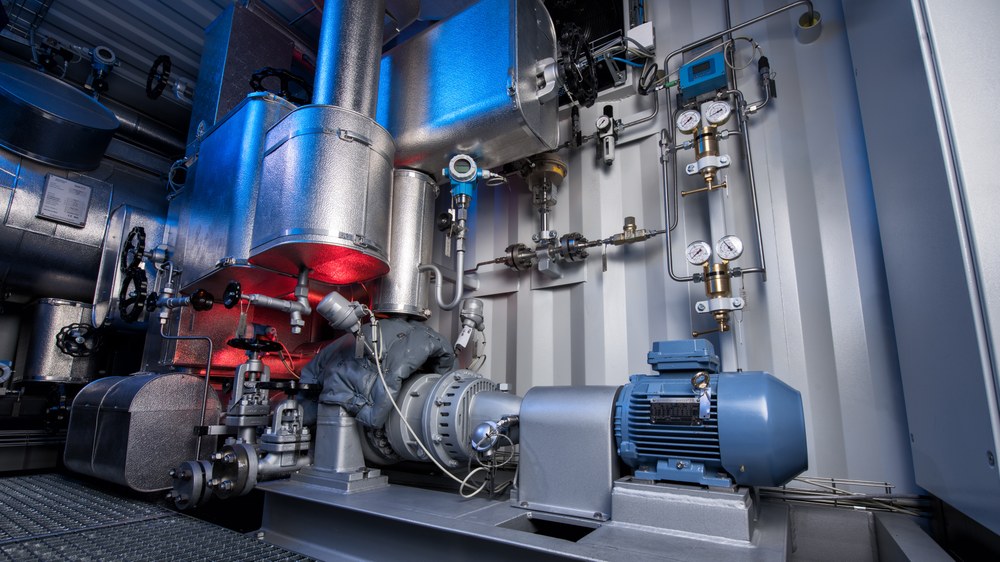
Tests in the heat transfer laboratory and on the mobile pump and heat transfer fluid test stand in Cologne-Porz
The project team is testing the innovations and their development steps at participating industrial companies and at the Plataforma Solar de Almería (PSA) in Spain (owned and operated by CIEMAT), among others. However, the majority of the tests and investigations are carried out by the researchers at the DLR site in Cologne-Porz in the heat transfer laboratory and on the mobile pump and heat transfer test rig (MOPUW). The test rig enables experiments with thermal oils up to 500 degrees Celsius in continuous operation.
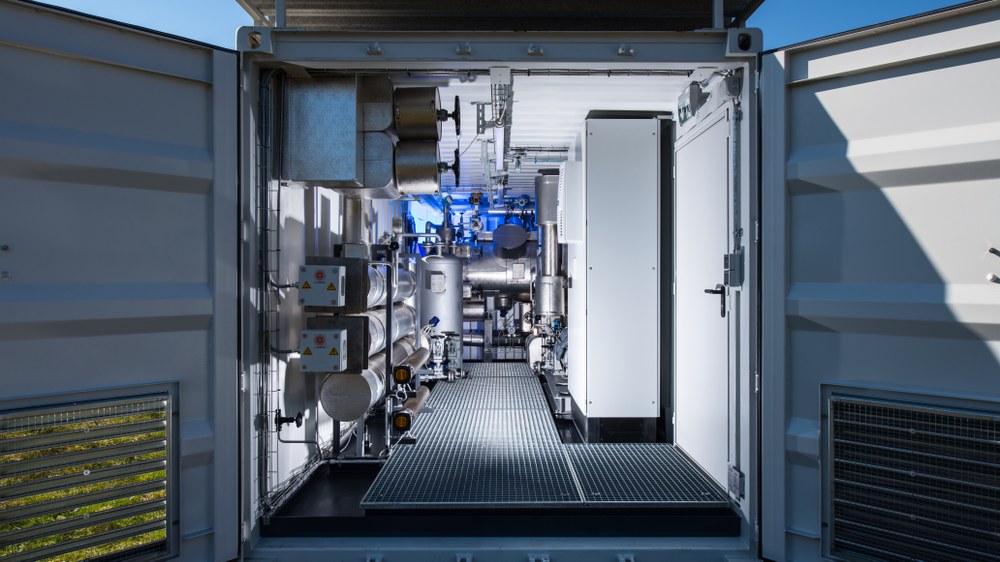
The products, measuring devices and software to be developed and demonstrated as part of SILOW are to be further developed by the industrial companies after the end of the project and launched on the market or integrated into their own systems within the next few years.
The SILOW project is thus laying the foundations for process heat applications, possibly with integrated thermal storage in various areas, as well as for thermal synthesis reactors and parabolic trough power plants, among other things. This promotes the transition to low-CO₂ processes. In the long term, the project thus supports decarbonisation through the integration of renewable energies in industry and a more resilient economy.
Project | SILOW |
|---|---|
Duration | 1.10.2025 - 30.9.2028 |
Project participants |
|
Funding | The project is funded by the Federal Ministry for Economic Affairs and Energy. |