
Seasonal storage [SF]
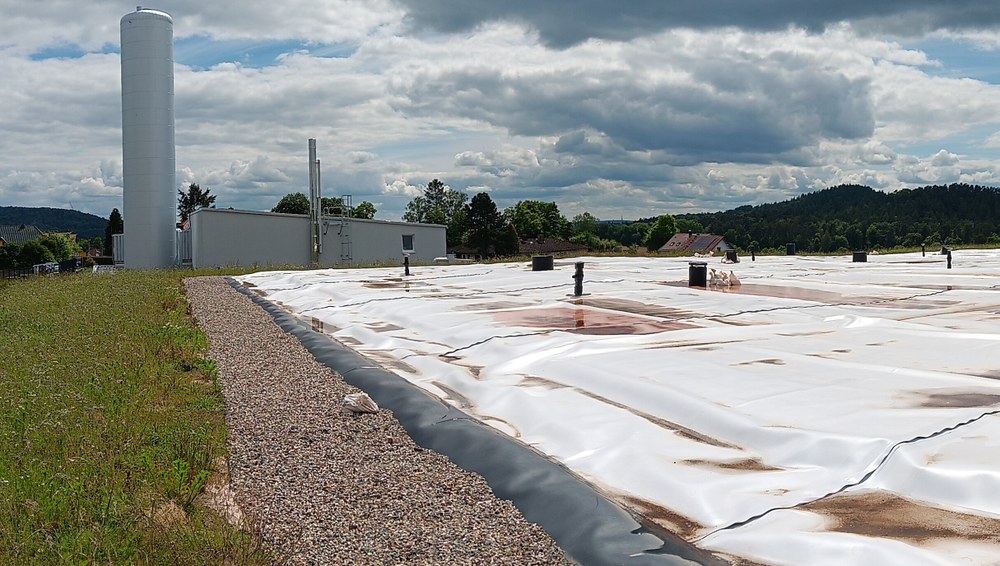


Schmidt, T., Pauschinger, T., Sørensen, P. A., Snijders, A., Djebbar, R., Boulter, R. & Thornton, J. (2018) https://doi.org/10.1016/j.egypro.2018.08.223. CC BY 4.0

Seasonal thermal energy storage systems are designed for significantly longer storage periods than short-term storage systems and can store heat for several months. For example, they enable excess heat from solar thermal systems to be stored during the summer months and made available for heating in winter.
However, other heat sources are increasingly being used and combined with solar thermal energy. Due to the long storage periods, low heat losses and high storage capacity are particularly important. A detailed overview is available at https://www.saisonalspeicher.de/
Aquifer
An aquifer thermal energy storage (ATES) system is an underground thermal storage system that uses a naturally occurring groundwater-bearing formation (aquifer) for heat storage. The aquifer consists of water-bearing geological layers, such as sand, gravel or porous rock. An aquifer thermal energy storage system uses an underground groundwater-bearing formation as a natural storage medium. Typically, two wells are used for its operation. During charging, groundwater is extracted from the aquifer, heated to the desired temperature level via a heat exchanger and then reinjected into the ground through a second well. During subsequent heat extraction, the process is reversed: the heated groundwater is pumped from the storage system and transfers its stored heat to the connected heating system via a heat exchanger. Aquifer thermal energy storage is particularly suitable for large-scale thermal storage systems, as the natural pore volume of the aquifer can provide a substantial storage capacity. However, its dependence on the site's hydrogeological characteristics represents a significant limitation.
Borehole Thermal Energy Storage
Geothermal probe storage systems are a form of thermal energy storage in which the surrounding soil and rock are used as the storage medium. To achieve this, geothermal probes or borehole heat exchangers are installed in a field comprising several vertical boreholes. During the charging phase, a heat transfer fluid circulates through the probes, allowing heat to be transferred to the surrounding subsoil. This raises the temperature of the subsoil to up to approximately 90 degrees Celsius in the vicinity of the boreholes, thereby storing the thermal energy. During the discharging phase, the direction of flow is reversed. As the heat transfer medium flows through the pipes, it reabsorbs the heat.
Borehole battery
The borehole battery is a concept for storing large amounts of energy as heat underground. It uses decommissioned boreholes or underground cavities from former oil and gas production sites as thermal energy storage systems. To store energy, surplus electricity from renewable sources, such as wind and solar photovoltaic installations, is used. A high-temperature heat pump converts the electrical energy into heat, raising the temperature of the water present underground to approximately degrees Celsius.
The concept is primarily designed for storing electrical energy. However, the same storage principle can also be used directly for thermal energy storage. In this case, heat can be supplied directly from a heat source, such as a solar thermal system, eliminating the need for conversion by a heat pump. A turbine for reconverting the stored energy into electricity is also unnecessary. The heat is then retained in the underground storage system for extended periods. When required, the stored heat can be recovered and used to generate electricity via a turbine or supplied directly for heating applications. The concept is therefore similar to the use of an artificially created geothermal heat source.
Pit Thermal Energy Storage
Pit thermal energy storage systems consist of an artificially constructed basin excavated in the ground and filled with a suitable storage medium, water. The excavated pit provides the storage volume, with its base and side walls forming the boundaries of the storage unit. The inner surfaces of the pit are lined with a waterproof liner. This prevents water from seeping into the surrounding ground and protects the adjacent soil from becoming waterlogged.
The choice of liner material is particularly important at elevated temperatures, as the material must be resistant to both the operating temperature and the storage medium. Typical maximum operating temperatures are around 90 degrees Celsius. Thermal insulation is installed outside the waterproof lining, covering the base and side walls of the storage pit, to minimise heat losses.