
Networked data rooms for intelligent mobility and planning services

DiVe

Digitally organised transport system
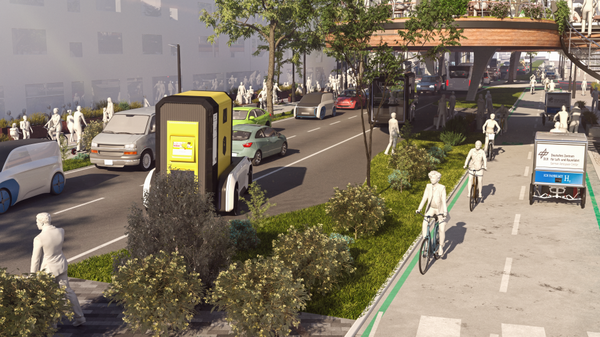
The DLR DiVe project focuses on innovative mobility and planning services, as well as their integration into networked data spaces. Designed for specific situations and target groups, as well as different stakeholders, these services are based on real-world applications. This enables them to accelerate, digitise and improve transport planning and operational processes.

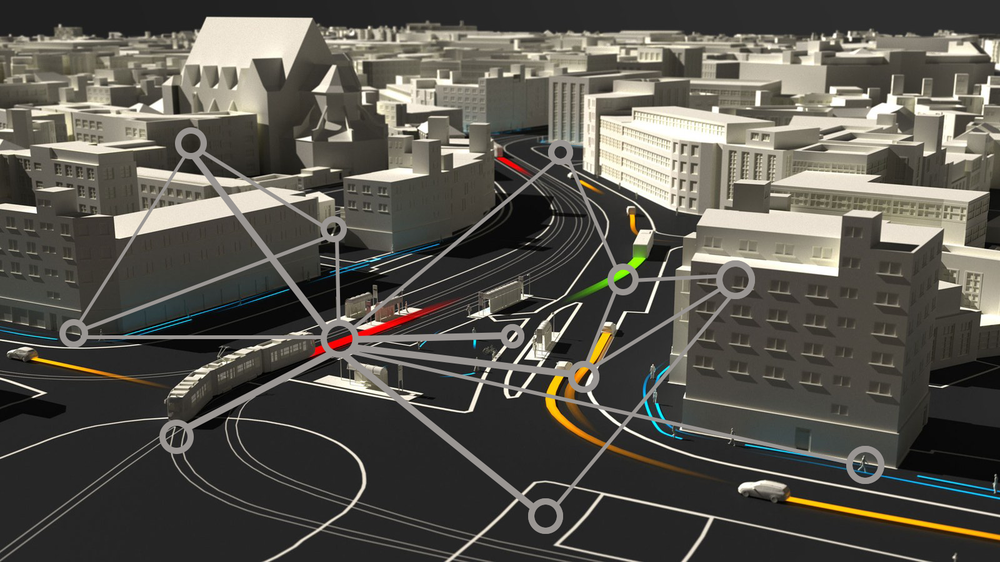
The DLR project DiVe (Digitally organised transport system) focuses on innovative mobility and planning services embedded in networked data spaces. We define these data spaces as environments that are interoperable, trustworthy and data-sovereign, in which stakeholders from the fields of administration, business and research can share and use information in a targeted and controlled manner.
The solutions developed are tailored to specific situations and target groups. Based on real-life use cases, they support concrete decisions in everyday situations, from planning to operation. Standardised interfaces, clear governance rules and privacy by design enable data sources to be networked in a decentralised manner, while ensuring that data providers retain control over their data. At the same time, new services can be tested and scaled up more quickly.
DiVe thus accelerates the digitalisation of transport planning and operational processes, improving their quality and transparency while creating the conditions for the evidence-based evaluation of measures. The central goal is to map the entire process chain of a digitally organised transport system, from secure data access and analysis to the orchestration of user-friendly applications that are as understandable to citizens as they are to specialist departments in public authorities and companies.

Contribution Institute for AI Safety and Security

As part of the DiVe project, the Institute for AI Security is responsible for sub-project TP1000, which involves designing and implementing hybrid AI-based data and service rooms. First, a concept is developed that considers the requirements of different user groups while integrating security and resilience design. Building on this, a prototype is created within a secure DLR infrastructure connected to recognised dataspace standards, such as Eclipse Data Space Components.
Hybrid AI approaches combining symbolic procedures, graph methods and learning agents will better describe metadata and semantically expand data spaces without compromising the sovereignty of data providers. Particular attention is being paid to practical use cases. One example is a new format for obstacle profiles that helps mobility apps consider individual barriers while on the move without disclosing personal information.
In addition, we are exploring the potential application of blockchain technologies to enhance integrity and transparency. Security is consistently implemented according to the ‘security by design’ principle and supported by legal and ethical analyses. Finally, user-friendly manuals and interfaces guarantee the practical application of the developed data rooms, enabling administrations, companies, and partners from science and society to reap the benefits.
The DiVe project is a joint initiative of several DLR institutes and programme directorates. This close collaboration guarantees the equal incorporation of technological, medical, legal and social perspectives into the design of the data rooms.
Further information can be found on the official project website: DiVe

Participating DLR institutes and facilities

Contact

Dr. Michael Karl

Head of Department
German Aerospace Center (DLR)
Institute for AI Safety and Security
Safety-Critical Data Infrastructures
Rathausallee 12, 53757 Sankt Augustin
Germany

Karoline Bischof

Consultant Public Relations
German Aerospace Center (DLR)
Institute for AI Safety and Security
Business Development and Strategy
Rathausallee 12, 53757 Sankt Augustin
Germany