The Institute of Future Fuels was represented at the PASQUALINI time jump festival in Jülich at the weekend with exciting scientific presentations.
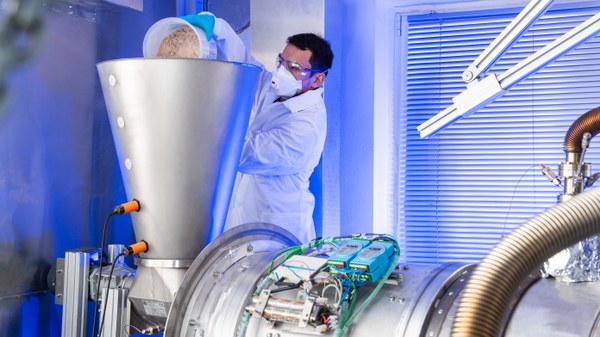
Researcher Jana Barabas presented the CemSol project, which aims to save CO2 in the production of cement with the help of solar energy.
Scienctist Cord Bleibaum took the audience on a historical journey from Albrecht Dürer to modern animated films such as Ice Age.
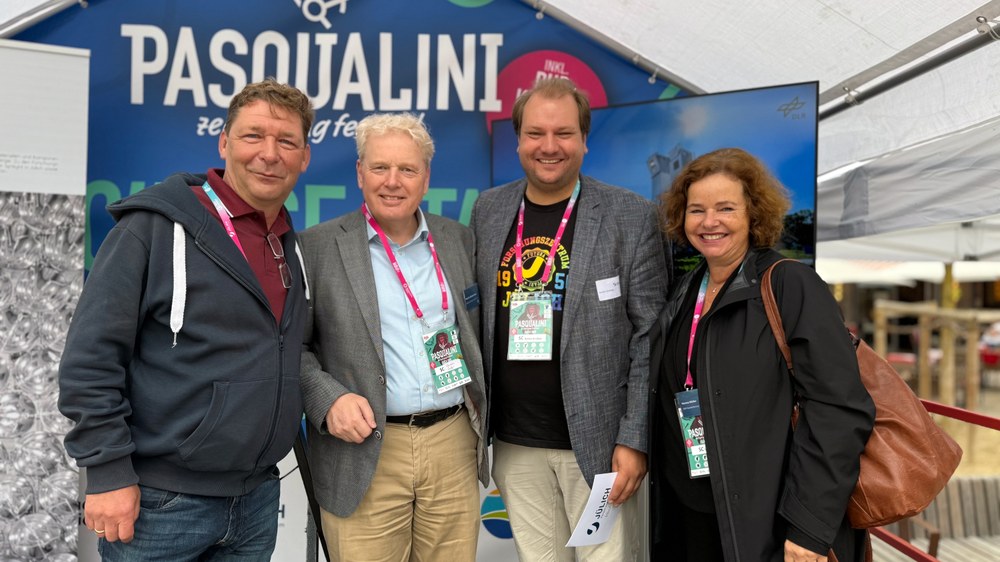
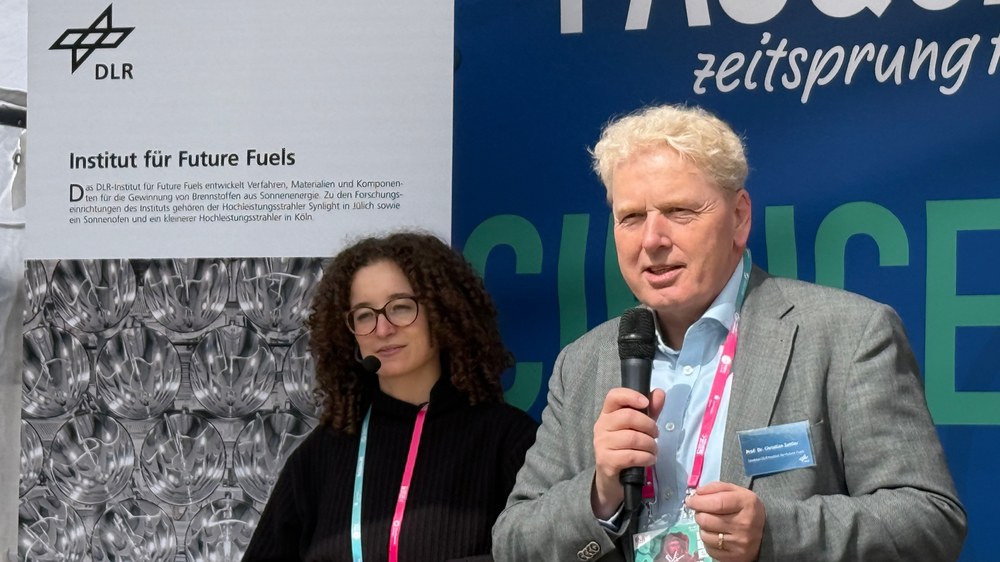
At the PASQUALINI time jump festival in Jülich at the weekend, two researchers from the Institute of Future Fuels gave presentations on their scientific work. Mayor Axel Fuchs opened the science stage on the market square together with Institute Director Christian Sattler and Armin Großek from Forschungszentrum Jülich (FZJ). Numerous Jülich citizens had already gathered there.
In her exciting presentation, researcher Jana Barabas began by explaining how DLR aims to save large amounts of CO2 in the CemSol project and contribute to a more sustainable and green production of cement. She also gave insights into what drives her personally as a researcher and what fascinates her about the topic. She then answered numerous interested questions from the audience. The first irradiation tests of the CemSol reactor in the nearby Synlight solar simulator are imminent.
What Albrecht Dürer has to do with today's animated films
In his presentations on Saturday and Sunday afternoon, scientist Cord Bleibaum captivated the audience with a historical journey from Albrecht Dürer to modern computer graphics. The so-called ray tracing developed by Dürer as a method of light simulation has made many modern computer games and animated films possible in the first place. Using practical examples, Bleibaum explained the development of ray tracing through to its application in current projects and irradiation experiments at the Institute in Synlight.
The opening of the Science Stage
Christian Sattler welcomed the audience with an overview of DLR's research activities at the Jülich site. Jana Barabas (in the background) then began her presentation.
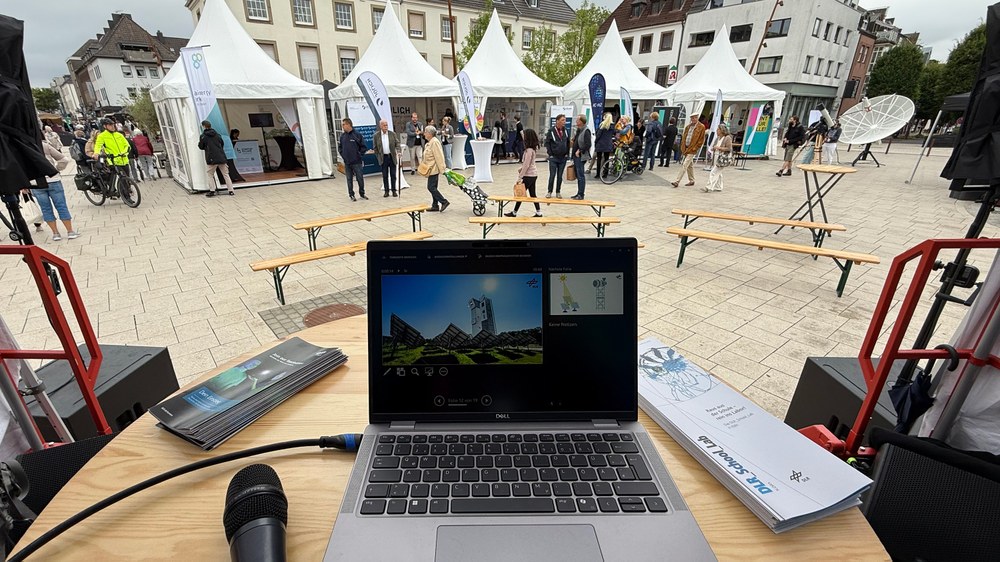
Jülich stands for modern research. The PASQUALINI time jump festival presents hands-on science - with experiments, interactive stations and lectures. DLR, the University of Applied Sciences, the Research Centre and other partners create a programme on the marketplace that makes you curious - and smart.
The PASQUALINI time jump festival took place for the first time at the weekend. With a two-day programme and exhibitions on culture, science and history, the event built a bridge between the past, present and future. All in the spirit of the Italian master builder Alessandro Pasqualini, who gave Jülich a revolutionary cityscape with the citadel in the 16th century.