
Science in the pub - Georgios Arvanitakis at the Pint of Science 2025 in Cologne


- Pint of Science brings research to the public – science meets pub culture
- Researchers presented current projects in a relaxed atmosphere and engaged in direct dialogue with the audience.
- Georgios Arvanitakis from the DLR Institute of Future Fuels presented a process for sustainable hydrogen production using sulphur dioxide.
- His presentation showed how industrial waste materials can be converted into sustainable energy sources.
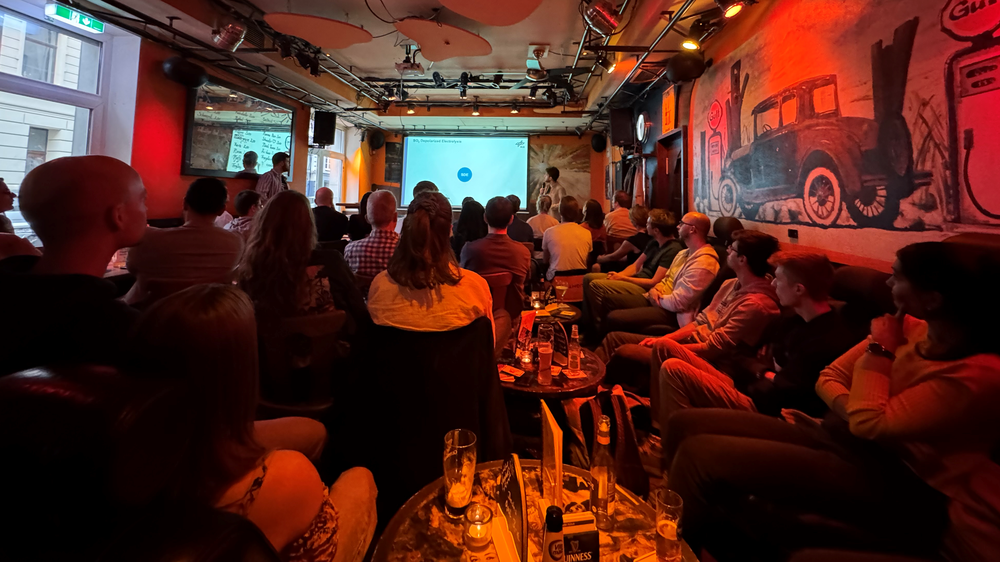
"Pint of Science" brings research to where you least expect it: directly to the pub. On 21 May, the "Tankstelle" in Cologne was transformed into a forum for science and exchange over beer. The popular format offers researchers the opportunity to present their projects to a wide audience in a relaxed atmosphere.
Georgios Arvanitakis, a doctoral researcher at the DLR Institute of Future Fuels, was one of the speakers on this evening, who spoke passionately and honestly about his research, including what it means to be a scientist. From an early age, he was enthusiastic about science, especially maths and physics, later also chemistry. "I was simply interested in how the world works. I wanted to understand more."
After leaving school, he decided to study chemical engineering. For him, this means not only understanding how things work, but above all putting new ideas into practice and bringing about real change. As he says: "This is the point of being a chemical engineer: making the future more sustainable, cheaper, accessible and more fair.” This idea drives him to put scientific findings directly into practice and thus actively help shape the world.
His presentation "Hydrogen Production of a SO2 Depolarised Electrolyser" was part of the thematic block "Back to the Future – Reloaded: New Technologies for the World of Tomorrow", which also dealt with quantum computers and artificial intelligence in air traffic control, among other things. Georgios, on the other hand, focused on a completely different topic for the future: the efficient and sustainable production of hydrogen using sulphur dioxide, a waste product from industry.
Hydrogen from sulphur dioxide – a new path for sustainable energy sources
Georgios Arvanitakis presented a promising technology that has the potential to fundamentally revolutionize hydrogen production: sulphur dioxide-assisted electrolysis. In contrast to the classic process, in which water is split into hydrogen and oxygen, this concept replaces the oxygen with sulphur dioxide, an industrial waste product. The result: hydrogen and sulphuric acid, both valuable substances that can be produced much more energy-efficiently.
"The special thing about our approach is that we achieve two things at the same time: We produce hydrogen while utilising an unwanted gas to turn it into sulphuric acid," explained Georgios. The energy saved in the process not only makes it more sustainable, but also economically attractive. Especially if the required heat comes from solar thermal sources. "If you obtain this heat from the sun, it is virtually free and enables a closed cycle for sulphur."
He emphasised that it is not just about basic research. His aim is to develop the process step by step: from laboratory scale to initial pilot plants and industrial implementation. "What we are doing is not just new, it is also applicable," he said. It is precisely the practical relevance of the research that drives him. "If it works, it may not change the whole world, but it can really make a difference on a local scale."
It's a long road to get there, but Georgios feels that working at DLR is a great support: "I realised right from the start that I have the freedom and resources here to develop my own ideas. It's not just a project that you work on, you can help shape it." He particularly appreciates the close collaboration within the team and the space for critical discussions. For him, it is clear that good research is created when people challenge each other, question each other openly and think ahead together.
Science that inspires and encourages thinking
The "Tankstelle" was full, the atmosphere relaxed, but the interest in the topic was serious. Visitors asked questions, joined in the discussion and were carried away by the passion of the speakers. Georgios was particularly looking forward to this direct dialogue: "I'm very excited to see how well I can communicate what we're working on in an understandable way. My aim is to communicate science: what we do and why it's important."
He impressively demonstrated how scientific content can be communicated in an exciting and accessible way, even for laypeople. With a great deal of humour, clear language and lots of vivid images and animations, he got to the heart of even complex issues without coming across as lecturing. His use of insights into everyday laboratory life at DLR was particularly successful: through photos and personal experiences, he created an atmosphere in which even people without a technical background felt involved, a real "aha" experience for many in the room.
He didn't want to give the audience a prefabricated message: "I can't say what people should feel in the end. But I hope that they take something with them, maybe not even from my talk, but from something that evening. Something they'll still be thinking about the next day."
More than just a pub night: Inspiration for the future
Pint of Science is more than just an entertaining evening in the pub. It is a platform for exchange, curiosity and sometimes also for the first spark of scientific enthusiasm. Georgios also believes in the impact of such events: "It's enough for someone to say, 'I want to read more about this.’, or asks a chemistry teacher how something works. That can be a start."
On Wednesday evening in Cologne, Georgios came a lot closer to his goal of actively shaping the energy world of tomorrow and getting people excited about it. Cheers to that!
Contact
Sigrun Damerau