June 15, 2026

CemSol, Future Fuels and Moon Dust on 3sat NANO

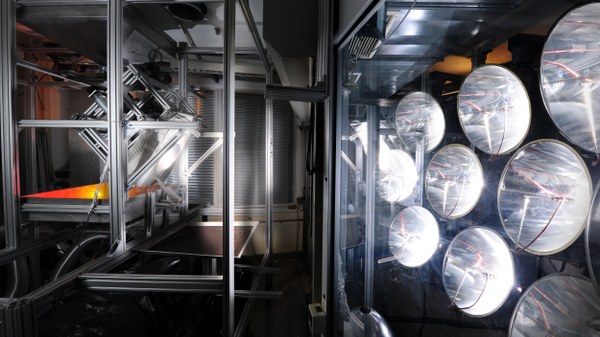
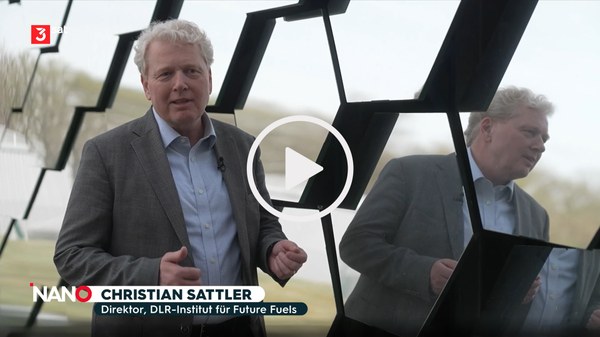
How can solar energy be harnessed to make energy-intensive industrial processes, such as cement production, sustainable, climate-neutral and resilient? This question is the focus of a recent ARD feature, which has already been appeared on the 3sat science programme NANO. The television crew visited the DLR at the High-Flux Solar Furnace in Cologne to find out more. Head of Department Martin Roeb and Director Prof. Christian Sattler provided fascinating insights into the latest research.

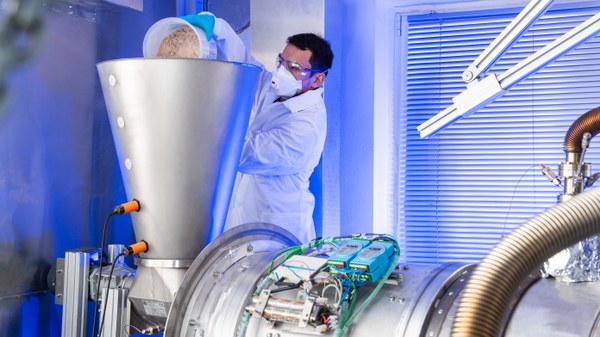
This feature focuses on the CemSol project. As part of this project, the DLR is investigating how the high-temperature heat required for cement production can be generated using concentrated sunlight. The aim is to make the particularly emission-intensive calcination process more sustainable, to significantly reduce CO₂ emissions and to become less dependent on fossil fuels.

The feature also highlights the potential of the sun as an energy source for fuel production, whilst looking further ahead to the future of space travel: researchers at the DLR are working on ‘baking’ lunar dust using concentrated solar radiation, thereby producing building materials for future lunar missions directly on site.

We would like to thank you for a fascinating feature for everyone interested in energy research, sustainable industrial processes and innovative space technologies!

https://www.3sat.de/wissen/nano/260601-sendung-vapen-ist-bei-jugendlichen-in-nano-100.html

In the NANO magazine programme from 22:11

Contact

Dr. rer. nat. Martin Roeb

Head of Department
German Aerospace Center (DLR)
Institute of Future Fuels
Solar chemical process development
Linder Höher, 51147 Köln-Porz
Germany

Christian Siegel

Communication Officer
German Aerospace Center (DLR)
Institute of Future Fuels
Im Langenbroich 13, 52428 Jülich
Germany
Tel: +49 (0) 2461 93730-328