"Zukunftstag" Jülich looks to the future: How can the city and the region develop?
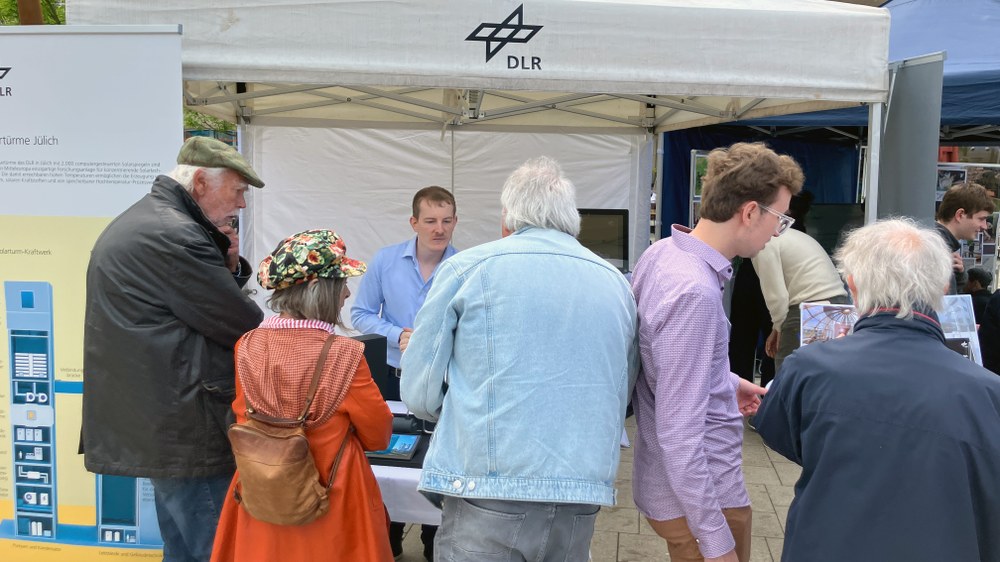
Citizens were able to engage in dialogue at various information stands.
The DLR Institutes of Future Fuels and Solar Research were also present.
What can the future of the city of Jülich and the Rhenish mining region look like? Engaging in an open dialogue with citizens – that was the focus of the Jülich "Zukunftstag". The DLR Institutes of Future Fuels and Solar Research were there to present their research work on the marketplace.
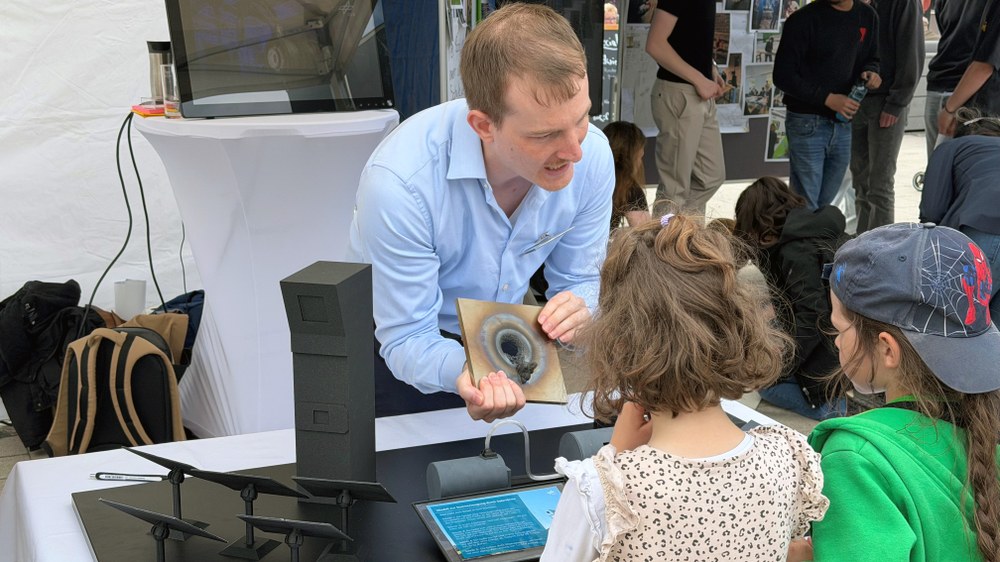
They had a new model with them that illustrated how electricity is generated by the sun's rays in DLR's Solar Towers in Jülich. The reflecting mirrors (heliostats) attracted visitors young and old to the stand.
Zukunftstag Jülich
How can electricity be generated using the sun's rays? The "Electricity generation by Solar Towers" model demonstrates this to visitors of all ages.
There was a great deal of curiosity about how the towers work, how the electricity generated is utilised and why the model is steaming. The announcement of further presentation dates in the visitor pavilion of the Solar Towers was also very well received.
Structural change in the Rhenish mining area
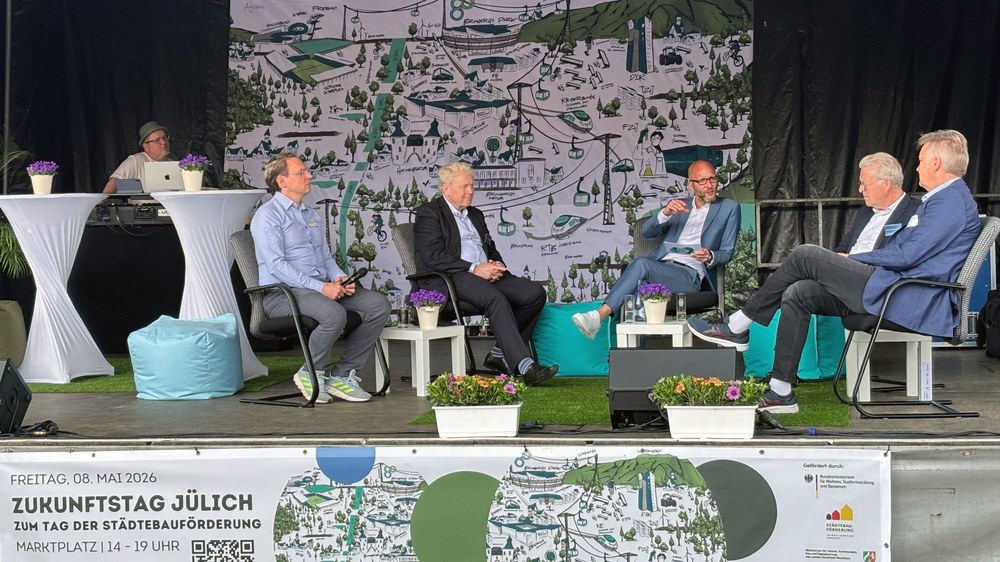
During a panel discussion, Institute Director Prof. Dr. Christian Sattler presented the German Aerospace Center's energy research with a focus on its relevance in the Rhineland region. Prof. Dr. Bernhard Hoffschmidt, Director of the Institute of Solar Research and Co-Managing Director of Brainergy Park Jülich GmbH, focused on the transfer of research into implementation with the aim of achieving a high level of local added value.
Zukunftstag Jülich
At the DLR information stand, visitors were given an insight into research at the DLR institutes of Future Fuels and Solar Research.
The plans for the future development of the city of Jülich and the entire region were presented in a vivid and tangible way with a variety of activities for the whole family. Representatives from the fields of urban development, open-cast mining and accompanying initiatives, water management, the labour market, education and youth work as well as science and research were available on site for discussions, insights and questions.