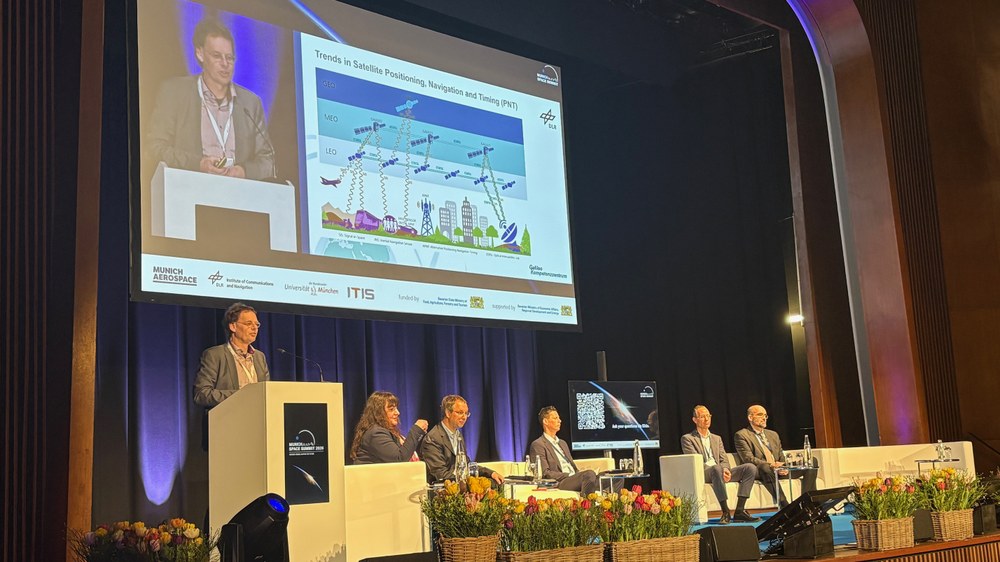
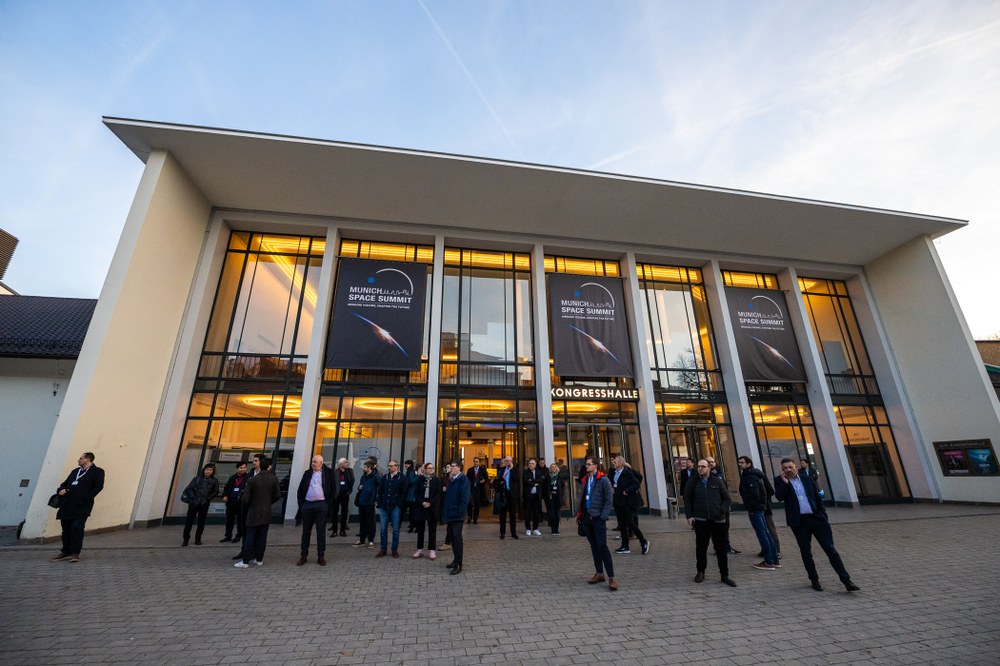
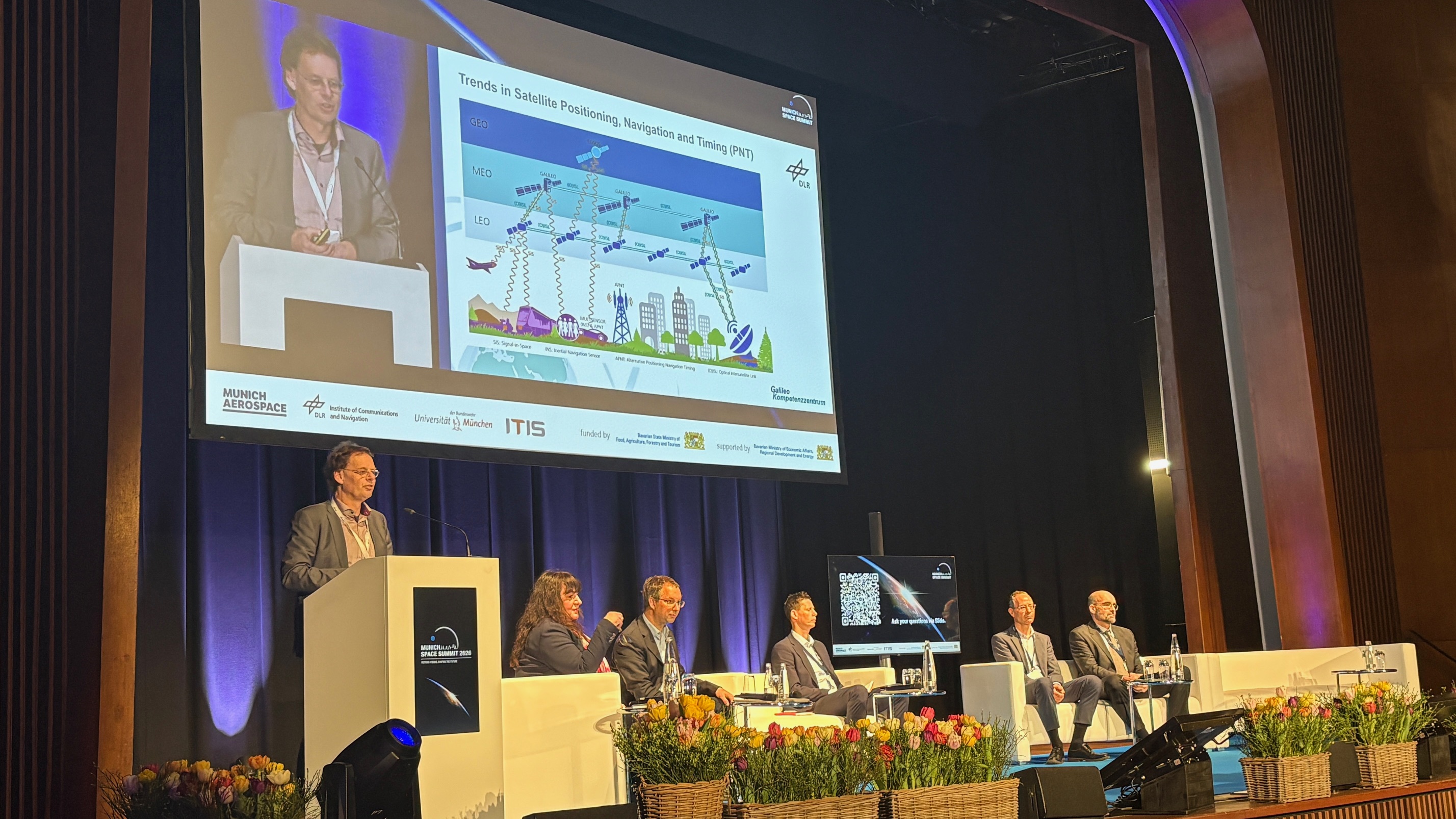
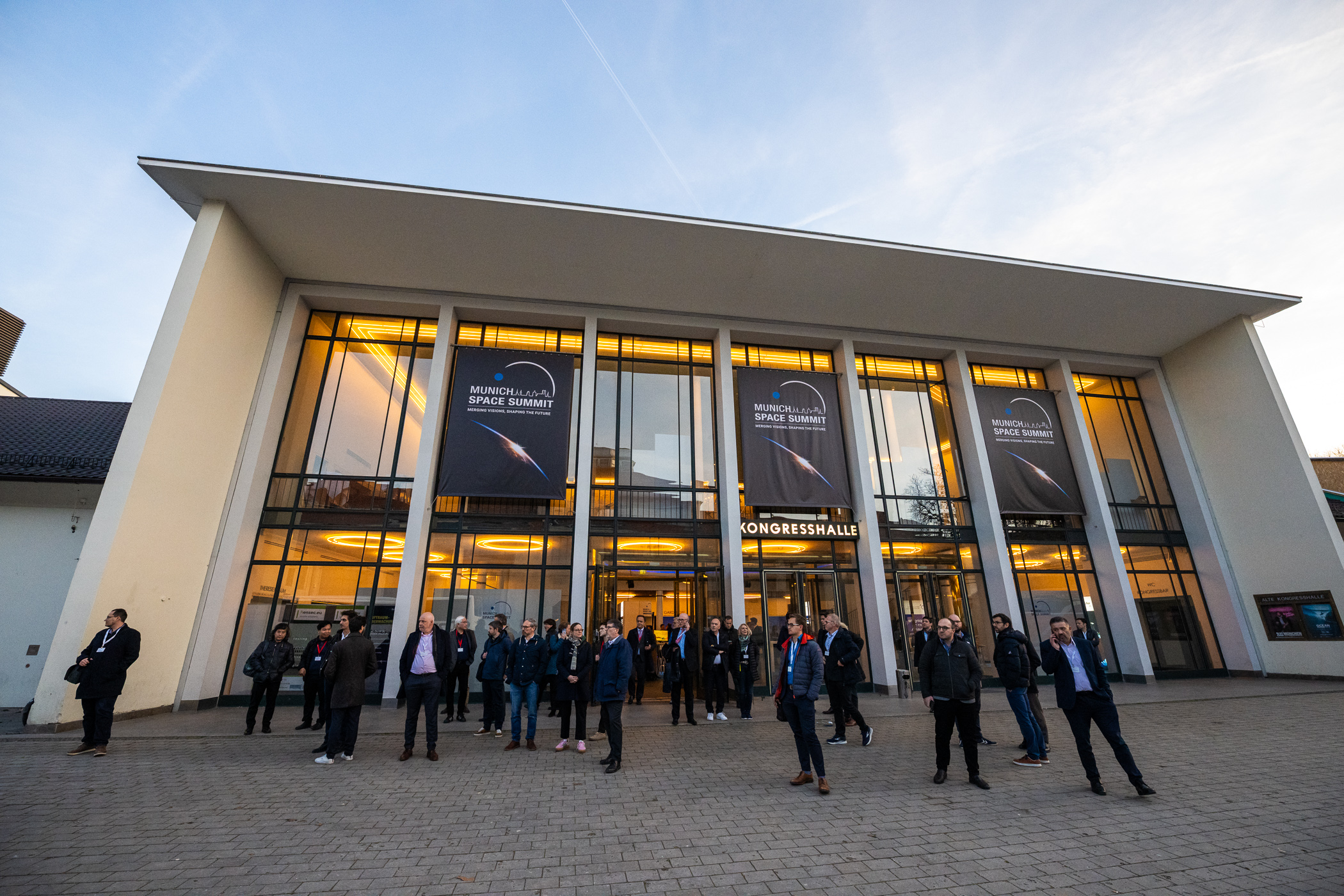
The Galileo Competence Center (GK) participated in this year’s Munich Space Summit 2026 with its own booth, presenting ongoing projects. The event brought together the Bavarian space ecosystem alongside international stakeholders from industry, research, and institutional organizations.
A key focus of the discussions was the evolution of resilient and robust navigation systems. Established Global Navigation Satellite Systems (GNSS) in Medium Earth Orbit (MEO) are increasingly complemented by new approaches. In particular, Low Earth Orbit-based PNT (LEO-PNT) concepts are considered a central element of future architectures, with many programs targeting operational capability in the early 2030s. At the same time, international actors are pursuing their own, partly independent navigation solutions.
The need for redundancy and interoperability—while avoiding fragmentation of the global system landscape—was highlighted as a major objective. In the context of safety-critical applications, aspects such as signal resilience, robust timing and frequency distribution, and the capability to operate without GNSS availability are becoming increasingly important. The demand for secure and encrypted services for governmental, defense, and critical infrastructure applications was also emphasized.
Several technological trends became evident:
increasing deployment of LEO constellations, including small satellite platforms such as CubeSats
growing use of frequency bands such as C-band to enhance resilience and user performance
integration of artificial intelligence for the operation and management of complex space systems
rising importance of advanced sensors and signal-resistant technologies
In addition, programs such as IRIS² were discussed as key elements for a sovereign European infrastructure, although challenges in integrating innovation remain from an industry perspective.
Adjacent domains are also gaining importance. In Space Situational Awareness (SSA) and Space Domain Awareness (SDA), enhanced asset protection, autonomous mission capabilities, and flexible, virtualized ground segments were key topics. Furthermore, increasing lunar missions and the expansion of large satellite constellations underline the dynamic development of the sector.
Overall, the Munich Space Summit 2026 highlighted the strategic importance of resilient, interoperable, and sovereign PNT systems, as well as the strong momentum driven by New Space approaches, security requirements, and international developments.