Building on the Moon and concentration problems in microgravity
May 20, 2026 | 46th DLR parabolic flight campaign under way
Building on the Moon and concentration problems in microgravity
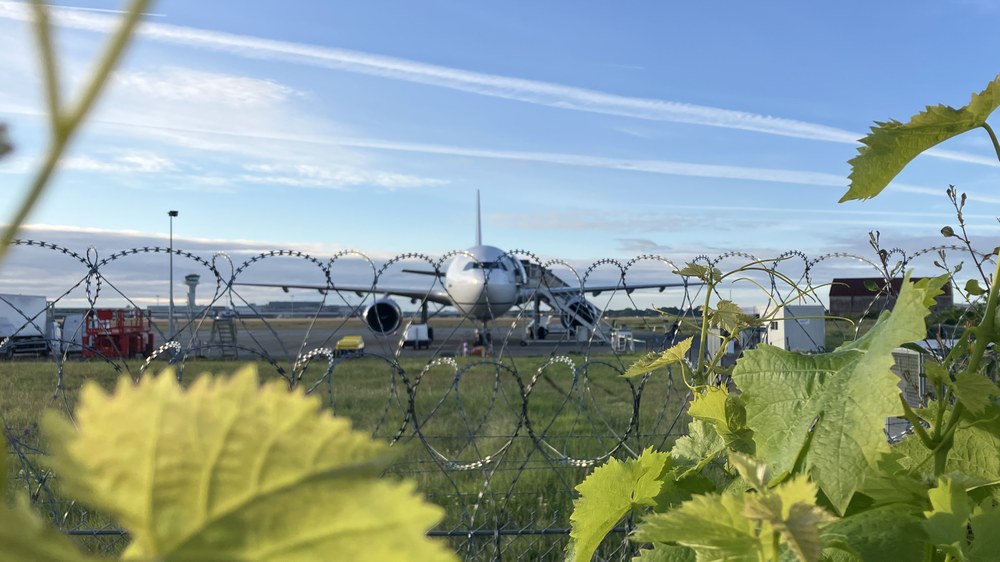
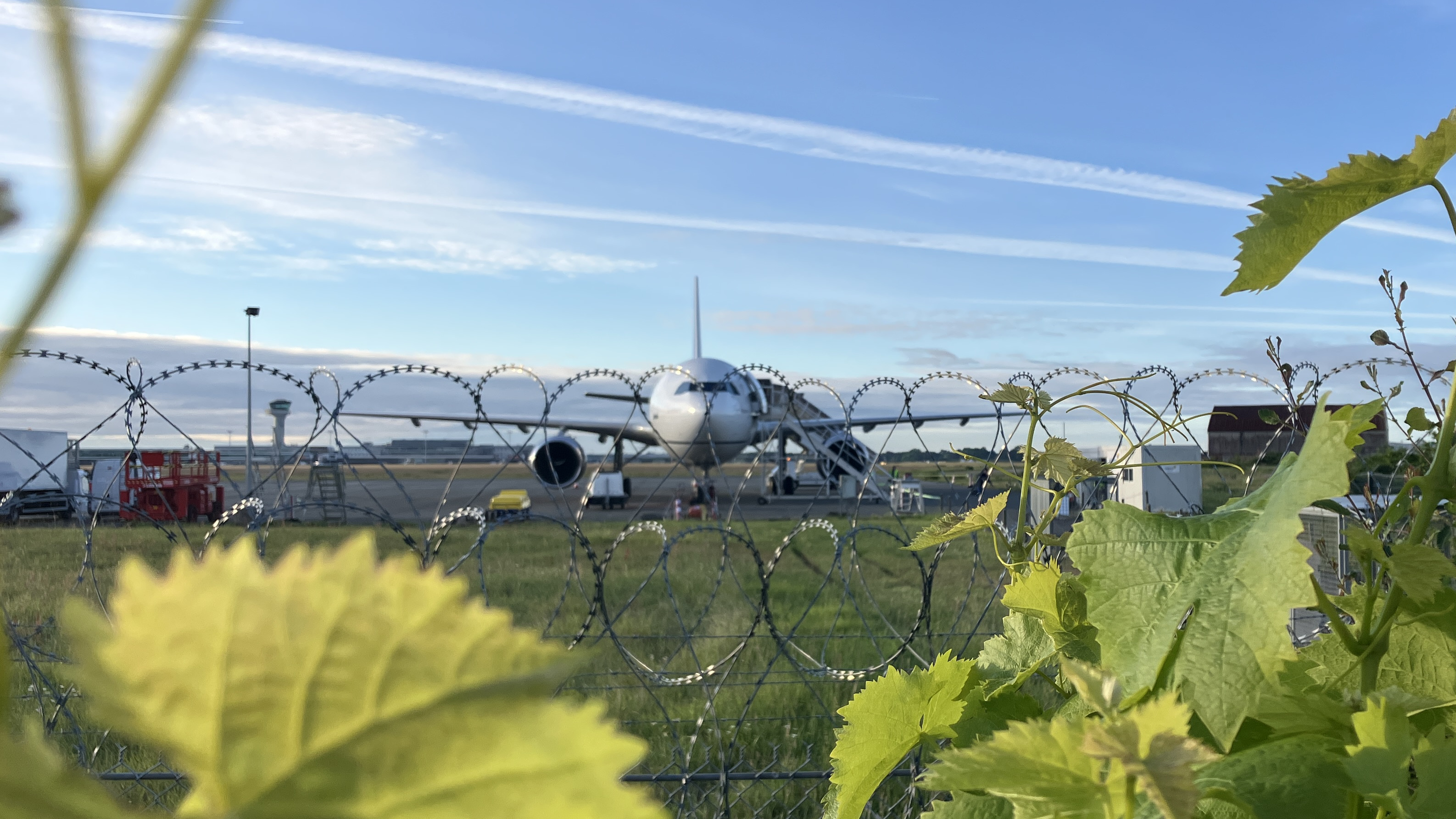
The Airbus A310 Zero-G is ready for the 46th DLR parabolic flight campaign
The German Space Agency at DLR's 46th parabolic flight campaign is taking place from 11 to 22 May 2026 in Bordeaux, France. During the campaign, eight experiments from German research institutions are being conducted on board. A typical campaign consists of three flight days, each lasting approximately four hours, during which 31 parabolas are flown. Each parabola provides approximately 22 seconds of microgravity, resulting in a total of approximately 35 minutes of microgravity per campaign – alternating with normal and nearly double Earth's gravity – which researchers can exploit for their experiments. Up to 40 scientists can participate in a single flight.
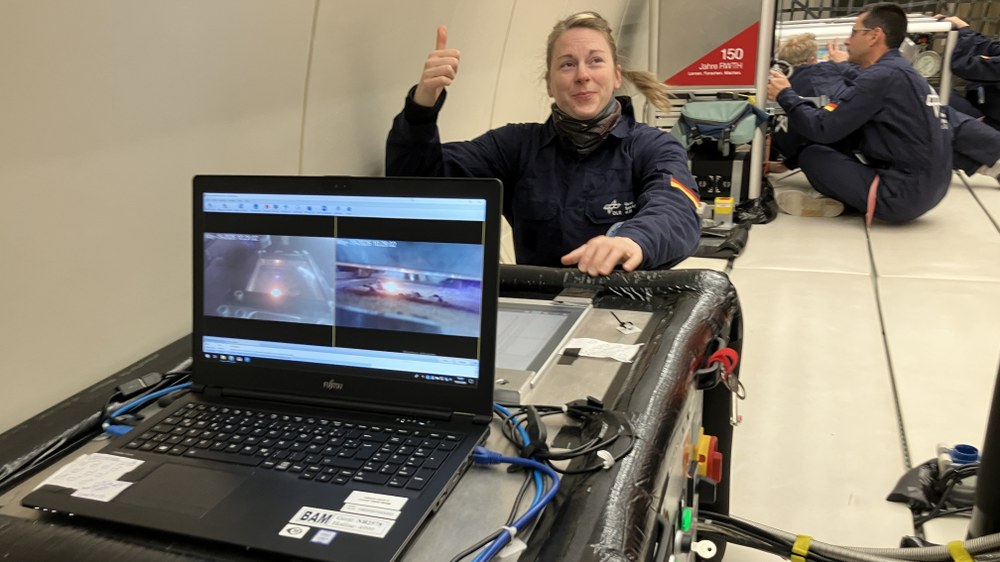
For the experiment conducted by the Federal Institute for Materials Research and Testing, a device has been developed that can melt lunar regolith under vacuum using laser radiation over an area approximately ten millimetres in diameter. During the parabolic flights, researchers are investigating how vacuum conditions and varying gravitational forces affect the melting process. The experiment is part of the 46th parabolic flight campaign organised by the German Space Agency at DLR from 11 to 22 May 2026.
Concentration and reaction speed in weightlessness
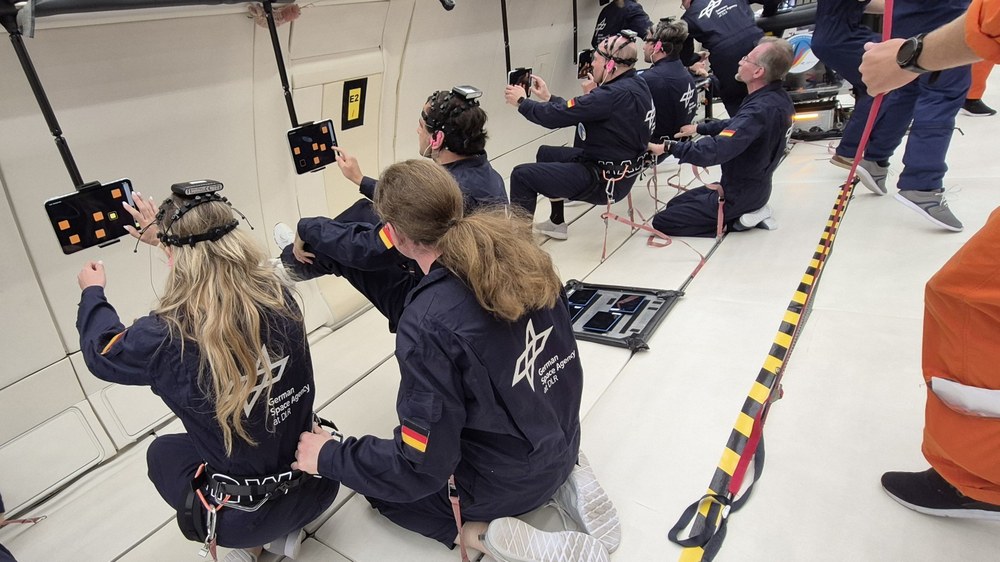
Weightlessness can immediately impair attention, memory and reaction times, increasing the risk of serious errors. Experiments on Earth have shown that mental performance improves when the vagus nerve is stimulated by weak electrical impulses. In the University of Magdeburg's experiment, some participants receive genuine stimulation of the vagus nerve, while others receive a placebo stimulation. The participants' cognitive and psychomotor performance is then recorded before, during and after the flight. The experiment is part of the German Space Agency at DLR's 46th parabolic flight campaign, taking place from 11 to 22 May 2026.
The 46th parabolic flight campaign of the German Space Agency at DLR is taking place from Bordeaux from 11 to 22 May 2026.
A total of eight experiments in biology, physics, technology and materials science are on board.
Topics include the melting of lunar dust and concentration problems in microgravity.
Focus: Spaceflight, research in microgravity
On 19 May 2026, the Airbus A310 Zero-G took off at 09:30 CEST from Bordeaux-Mérignac Airport to carry researchers and their experiments into microgravity. This marks the first of three consecutive flight days during the 46th parabolic flight campaign of the German Space Agency at DLR (Deutsches Zentrum für Luft- und Raumfahrt; German Aerospace Center).
During the current campaign, a total of eight experiments are being conducted on board by German research institutes, universities and colleges.
Melting lunar rock
Exploring the Moon will require infrastructure such as habitats and roads. Transporting materials for this from Earth would be extremely costly, so it would be considerably simpler to use lunar regolith – loose, fragmented dust and rocks on the Moon's surface – instead. Current research is focused on melting lunar regolith and using it in a process similar to 3D printing. The advantage of this method would be that only the technological equipment need be transported to the Moon; the energy required for melting could be generated using solar panels.
For the experiment conducted by the Federal Institute for Materials Research and Testing (Bundesanstalt für Materialforschung und -prüfung; BAM), a system was developed that can melt regolith under vacuum conditions using laser radiation across a diameter of approximately ten millimetres. During the parabolic flights, researchers aim to investigate how vacuum and varying gravity levels affect the melting process.
The experiment will also investigate whether and how the melting process could contaminate the laser optics and thus render them unusable. The Moon has no atmosphere and, compared to Earth, low gravity. Forces that have little effect on Earth – such as pressure from space radiation – can therefore cause dust particles to be trapped or blown away.
Concentration and reaction speed in microgravity
As human spaceflight continues to advance, a key question comes into focus: How can the cognitive and psychomotor performance of crews be maintained during space missions?
Weightlessness can directly impair attention, memory and reaction times, increasing the risk of serious errors.
Experiments on Earth have shown that cognitive performance improves when the vagus nerve – one of the major cranial nerves – is stimulated by weak electrical impulses. Among other things, it is involved in attention control and cognitive processing.
In the University of Magdeburg's experiment, participants receive either genuine stimulation or a placebo. Their cognitive and psychomotor performance is then measured before, during and after the flight.
If the method proves effective, it could open up possibilities for using portable, non-invasive systems to support the performance of astronauts.
DLR's parabolic flight campaigns
Since 1999, the German Space Agency at DLR has regularly organised its own parabolic flight campaigns for biological, human physiological, physical, technological and materials science experiments from German research institutions. The research aircraft – the A310 Air Zero-G operated by French company Novespace – is used not only for DLR's scientific campaigns but also by other space agencies such as the European Space Agency (ESA) and the French space agency CNES.
A parabolic flight campaign typically consists of three flight days, each taking approximately four hours, during which 31 parabolas are flown. Each parabola provides approximately 22 seconds of microgravity. Over the course of a campaign, this adds up to approximately 35 minutes of microgravity – alternating with periods of normal and nearly double Earth's gravity – that researchers can use for their experiments. Up to 40 scientists can participate in a single flight, with around ten experiments conducted on board.