
DLR expertise on air traffic tax in the German Bundestag
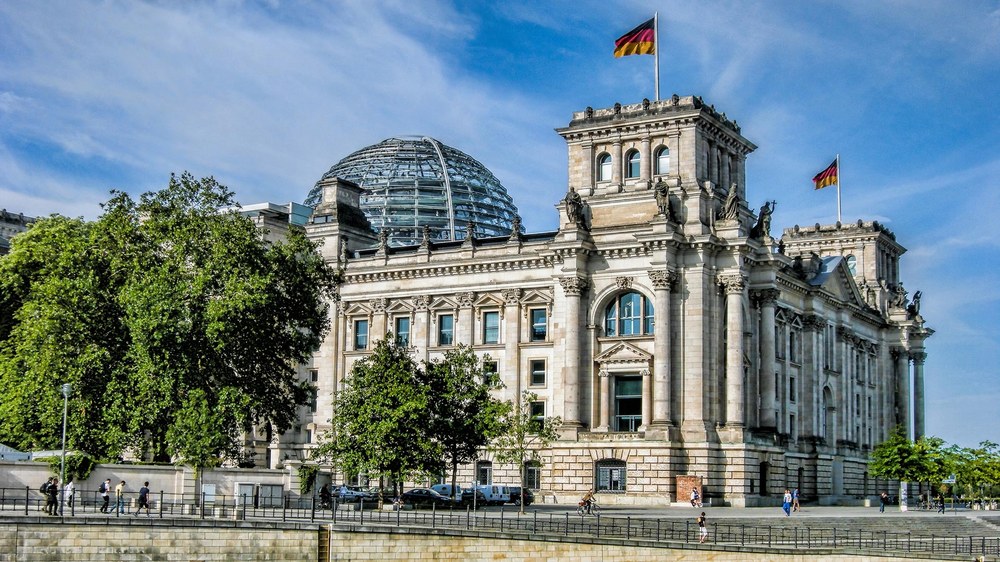

ArTo - stock.adobe.com
- DLR expertise on the aviation tax was presented in a hearing of the Finance Committee of the German Bundestag.
- The public hearing focused on the impacts of the planned reduction in aviation tax on the economy, mobility, and climate.
- Focus areas: aviation, policy relations
Dr. Sven Maertens from the Institute of Air Transport at the German Aerospace Center (DLR) took part on 18 May 2026 as an expert witness in the public hearing of the Finance Committee of the German Bundestag on the Second Air Traffic Tax Amendment Act. The focus of the hearing was the impact of the planned reduction in the air traffic tax on competitiveness, connectivity, employment, as well as the climate and environmental effects of aviation.
Maertens emphasised that the aviation sector needed an important signal. His statement was based, among other things, on a DLR location cost assessment from 2025. This shows that the air traffic tax is a statistically significant factor in the weak development of Germany as an aviation location – although not the only one. In addition to the weak economic development, Maertens pointed to structural changes such as the increasing use of video conferencing and rail services, geopolitical developments, and changes in the airline market.
He also addressed the continuing slow recovery of the German aviation market following the coronavirus pandemic. Domestic air traffic in 2025 was still only at just under 53 per cent of the pre-COVID level of 2019. Likewise, passenger volumes within Europe had not yet returned to 2019 levels across Germany.
According to the DLR’s assessment, the planned moderate reduction in the air traffic tax would likely generate only limited additional demand effects of up to one per cent. A full abolition, by contrast, could lead to a significantly stronger increase in traffic of four to eight per cent.
At the same time, Maertens highlighted the climate and environmental impacts of aviation, including CO2 emissions, non-CO2 effects such as contrails, as well as local impacts from air pollutants and noise. Against this background, in addition to a reduction or abolition, a more differentiated design of the air traffic tax – for example based on route length or travel class – could also be appropriate.